
People in a culture that values positivity and performance say “I’m fine” without even thinking about it. But psychologists say that more and more people use this phrase as a shield instead of saying how they really feel. The result is a strange paradox: lives that seem stable on the outside, but something very wrong is going on inside.
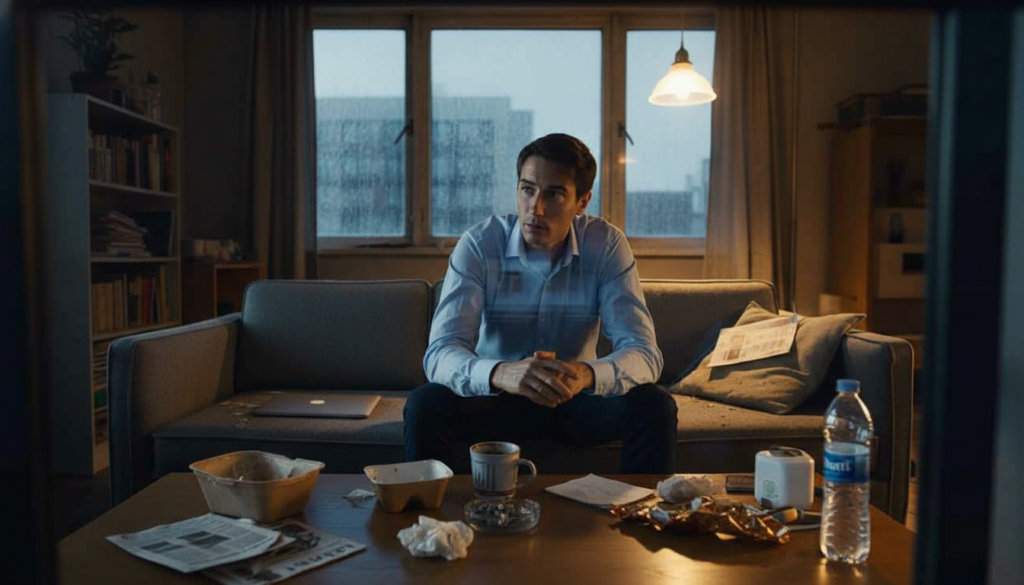
The secret price of always looking good
Psychotherapists now use the term “high-functioning distress” to describe people who keep working, socialising, and making jokes even when they are close to emotional burnout. They don’t often fit the mould of someone who is having trouble with their mental health. They get there on time, meet deadlines, and respond to texts quickly.

When someone is having a hard time but hides it behind a convincing smile, friends, coworkers, and even doctors can miss the warning signs for years.
People who act like everything is fine often have a lot of the same habits. Each behaviour seems safe by itself. They make a carefully built mask together.
1. The skill of changing the subject
People who aren’t doing well often get very good at making small talk. If you ask them how they are, you’ll quickly start talking about your own life instead.
They could:
Give vague answers or jokes when asked questions
Go right to your problems or the news.
Give good advice without giving away too much personal information.
This plan lets them stay in charge. They lower the chance that their own pain will show up where others can see it by keeping the conversation away from feelings.
2. Schedules that are too full to let you feel
Having a lot to do can make you look ambitious. For a lot of people, it’s a place to hide. They can’t sit quietly with their own thoughts because they have meetings, social events, and projects all the time.
Research indicates that an active lifestyle promotes brain health and provides structure. But there is a fine line between being active and using activity as a way to calm down. When there is no time to think, reflection goes away, and emotional needs go even further out of sight.
Being busy all the time can be like noise-cancelling headphones for the mind, blocking out pain until you can’t take it anymore.
3. Humour that keeps people away
In every group, there is usually one person who is always ready with a joke. A lot of them are really light-hearted. Some people use humour as a shield.
Self-mockery can hide real pain, especially when it comes to your own. The joke works, everyone laughs, and the conversation goes on. The pain in the punchline is still there, hidden behind the excuse, “I was just kidding.”
4. Too much empathy that makes you forget about yourself
Some people use their energy to help other people. They are the friends who will drop everything to answer a call at night or help a coworker who is having trouble.
People usually really care. But it can also be a way to get your mind off of things. They put off dealing with their own problems by focusing on someone else’s. Being “the reliable one” makes you feel good and gives you a sense of purpose, but it can also quietly drain your reserves without you even knowing it.
5. Wearing the mask even when you’re by yourself
For a lot of people, the show doesn’t end when the door closes. They make an effort to stay productive, positive, or efficient even when they’re alone. It feels like failure to rest. It feels dangerous to cry.
This constant self-control wears me out over time. Feelings that you never let out don’t go away; they build up under the surface and show up as headaches, trouble sleeping, or sudden outbursts over small things.

6. Making their own pain smaller
“It’s not that bad.” “Things are worse for other people.” These phrases might sound humble. When done every day, they become a way to ignore real pain.
Minimising distress creates a gap between what a person feels and what they let themselves admit.
It can be harder to ask for help when there is a gap. You might feel bad about asking for help if you keep telling yourself that your problems aren’t that big.
7. Great listeners who don’t often talk about themselves
People who are hurt but don’t say anything often become very good at listening. They notice small changes in tone, remember details, and respond with a lot of empathy. That sensitivity often comes from their own experiences with pain.
Listening takes their mind off of things and gives them a break from the storm inside their head. The listener’s load stays the same, but it’s better hidden, while others leave the conversation feeling lighter.
8. Choosing to be alone as a way to stay safe
Time alone can be good for you. For people who are pretending to be fine, being alone can feel like the only safe place where the mask can come off, even just a little.
They might cancel plans at the last minute or not show up for long periods of time, not because they don’t want to, but because they want to save their limited emotional energy. If this withdrawal goes on for weeks or months, it can make people feel even more invisible and make them think that no one would notice if they completely cut themselves off from social life.
9. A strength that looks strong but feels weak
People often think these people are very tough from the outside. They keep going, change, and make it through tough times that might throw other people off. That strength is real; many people have learned how to deal with tough situations over the years.
But being strong doesn’t mean you don’t need help. People who are known as “the strong one” may not need to be checked on because those around them may not realise they do. The person may feel trapped by their reputation and be afraid to let anyone see the cracks.
Being strong doesn’t mean you have to deal with things on your own. It means being able to bend without breaking, which sometimes means needing help to stay steady.
Why it feels safer to lie than to tell the truth
People feel like they have to pretend to be fine for a number of reasons. There is still a lot of stigma around mental health in families and at work. A lot of people are afraid that if they admit they are having trouble, they will be seen as weak, dramatic, or unreliable. Some people grew up in homes where emotions were ignored or made fun of, so they learned to hide their pain early on.
| Pressure | Typical inner thought |
|---|---|
| Professional expectations | “If I show strain, they’ll think I can’t handle my job.” |
| Family role | “I’m the stable one here. I can’t fall apart.” |
| Social media culture | “Everyone else seems happy. I must keep up.” |
| Past criticism | “Last time I opened up, I was told I was overreacting.” |
What to watch for in yourself and others
Recognising these habits does not mean diagnosing someone. Many people enjoy humour, privacy or a busy life without being in crisis. The warning signs usually appear in patterns and changes: a friend who suddenly becomes hyper-available for others but never talks about themselves, or a colleague whose workload explodes just as a major personal stressor arrives.
Simple, concrete gestures can open small cracks in the armour. Saying “You don’t have to be strong with me,” or “You seem more tired lately, I’m here if you want to talk,” signals that honesty will not be punished. Checking in more than once matters, especially if the first answer is the automatic “I’m fine.”
From survival mode to genuine support
Psychologists differentiate between survival strategies and healing strategies. Pretending to be okay often belongs to the first category: it keeps life moving during a crisis but does not resolve the underlying strain. Healing strategies involve safe conversations, rest, professional help, and small changes in daily habits that allow emotions to be felt rather than buried.
For someone who has worn a mask for years, dropping it overnight can feel impossible. A more realistic scenario is gradual: admitting to a friend that work feels overwhelming; booking a GP appointment to talk about sleep and anxiety; setting aside one evening a week without plans, screens or alcohol to notice what comes up. Each step is small, but together they shift life away from performance and closer to something honest enough to be sustainable.