
The little boy is screaming in the supermarket aisle, fists clenched, and tears streaming down his face because he didn’t get the bright blue cereal box. His mother stands still, her jaw tight, and says what she heard on a podcast: “Go ahead and express your feelings; don’t hold anything back.” Some people smile at this “modern parenting” as they walk by, while others roll their eyes. The boy’s screams get louder. Ten minutes later, he’s still angry, red, and tired. His mum looks just as tired.
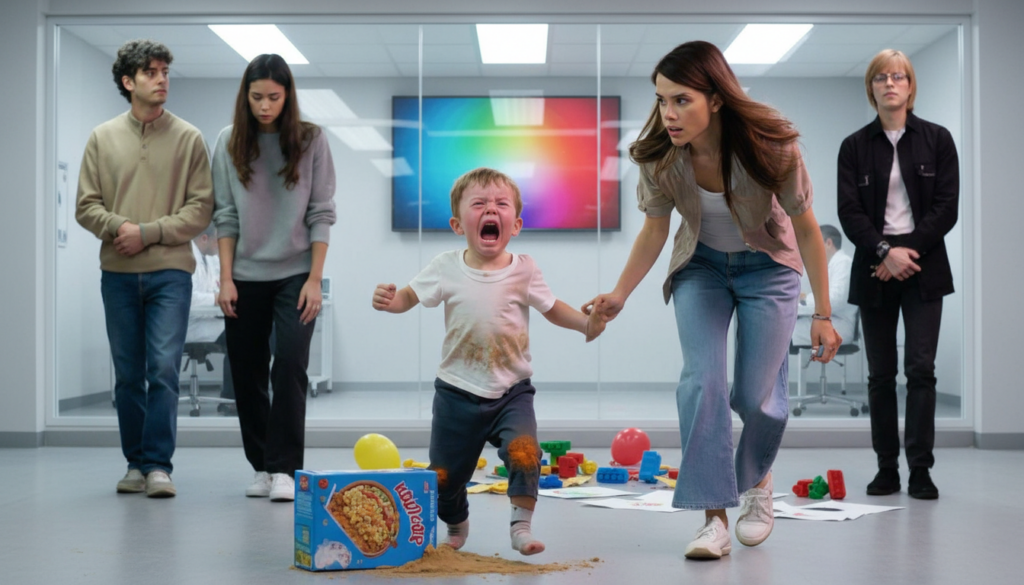
People on social media often call this scene “emotionally healthy.”
But psychologists are starting to say that this isn’t quite right.
 Goodbye steaming : the best way to cook broccoli to keep nutrients plus easy recipes to try
When “express all your emotions” doesn’t work out as planned
Letting kids say everything is a new mantra that has spread among parents in the last ten years. Anger, annoyance, boredom, jealousy, and rage. There shouldn’t be any “blocks.” At first, it sounds warm, forward-thinking, and even healing. Parents want to do the opposite of what they did for generations: “Stop crying or I’ll give you something to cry about.”
But there is something strange going on in schools, therapy offices, and workplaces. Teenagers and young adults come with one skill that is perfect: they can describe how they feel in great detail.
They often can’t control it, though.
Talk to any experienced teacher about “big feelings” in the classroom. They’ll talk about 7-year-olds throwing chairs when a game ends, 10-year-olds leaving when they lose, and 14-year-olds sending angry emails to teachers who gave them an 8/10. A lot of these kids grew up in homes where nothing emotional was ever “too much.” People have told parents that they should let every wave crash.
Clinical psychologists observe a similar trend. Children are very emotionally literate; they can name anger, anxiety, injustice, and frustration. But they can get really angry very quickly. When an adult says no, it feels like an attack on you, not a limit. When you disagree with a friend, it feels like betrayal instead of a normal fight.
So what’s the deal? There are two very different things that psychology talks about: holding back emotions and keeping them inside. Suppressing means acting like nothing is wrong, holding back tears, and shutting down. To contain an emotion, you have to recognise it, name it, and then not let it control everything that happens in the room. When we tell a child to “let it all out” all the time, we sometimes mix up freedom with having no limits.
A nervous system that never hits a wall doesn’t learn how to slow down. It learns that every storm inside needs thunder outside. That has long-term effects, like trouble with authority at school, weak relationships, making snap decisions at work, and always thinking, “If I feel it strongly, I have to do something about it.”
Teaching kids to feel things without letting their feelings control them
So what should parents do instead? Many psychologists agree that the best way to deal with emotions is to acknowledge them and then guide how they are expressed. This looks less exciting than the viral Instagram advice, but it’s much more effective. A kid screams because they lost a game. You don’t say, “Don’t be silly, it’s just a game.” You also don’t say, “Yes, let it all out on your brother.“
You get down on one knee, look them in the eye, and say something like, “You’re really mad that you lost.” I understand. But we don’t hit when we’re mad. “First, let’s breathe together.” The feeling is welcome. The behaviour isn’t. That little difference is where emotional maturity begins.
Many parents worry that by stopping their kids from having emotional outbursts, they are going back to the way they were raised. They remember being told to “toughen up” and don’t want to hear it again. So they go to the other extreme and say that every explosion is real. But kids don’t feel safer when things are crazy. They feel safer when adults are not mirrors but containers.
To be honest, no one really does this every day. Some nights, you just want the tantrum to end. To keep the peace, you’ll agree to the extra screen time or the new toy. The issue is that if this becomes the norm, the child learns that big, dramatic feelings are the best way to change things.
Psychologist Lisa Damour says it plainly: “Emotions are like the weather.” We can’t stop the rain, but we can teach kids not to flood the house every time it storms.
Step 1: Say what you’re feeling: “You’re upset,” “You’re angry,” or “You’re scared right now.” The brain calms down when you name things.
Step 2: Set the frame: “You can tell me how angry you are, but you can’t break things or insult me.”
Step 3: Give them a safe way to let off steam, like drawing, jumping, hitting a pillow, or going to another room for a few minutes.
Step 4: Talk about what happened and what they could do next time when things are calm.
Step 5: Do it again— not perfectly, but often enough that the nervous system starts to expect limits.
The thin line between repression and chaos
We’ve all been there: when your child throws a tantrum in public and you feel like everyone is looking at you. The theory goes away in those seconds. The old voice in your head says, “Stop it right now,” and the new social pressure says, “Respect their feelings!” The truth is somewhere in the middle of all the mess. Kids really need to feel like their inner world is welcome. They also need to know that other people are real and that their feelings aren’t a magic key that opens every door.

*It’s a trap to raise a child who thinks every feeling is beautiful and that every feeling must lead the show.
Psychology does not advocate for the suppression of a child’s emotional expression. It says that making unlimited expression a good thing is not a good idea. A child who is allowed to scream at their parents, insult their teachers, threaten their friends, or cry to get their way learns that emotional pressure is what gives them power. That looks like a tantrum on the floor at 5. It can seem like emotional blackmail when you’re 15. At 25, it can lead to burnout because no one at work gives in to every storm.
These kids might have trouble with love as adults, too. People who disagree with each other are seen as enemies, not people with their own needs. Every fight feels like being left behind.
A calm, steady repetition of three messages helps: “Your feelings are real.” “They will pass.” “They don’t make all the decisions.” Compared to the big promises of some parenting trends, these sentences sound small and almost boring. But they help people learn how to control their emotions, which is the ability to feel a lot, think a little, and then act.
The simple truth is that having emotional freedom without knowing how to use your emotions is not freedom; it’s dependence. Relying on how you feel, what you want, and how other people react. We are not taking away a child’s ability to be spontaneous when we teach them to stop, breathe, and wait a few minutes before reacting. We’re giving them a future where they don’t just do what their inner weather tells them to do.
| Key point | Detail | Value for the reader |
|---|---|---|
| Emotion is not the enemy | Children need their feelings named, validated and welcomed | Reduces guilt around “negative” emotions and lowers everyday tension |
| Expression needs a frame | Unlimited outbursts teach kids that intensity brings power | Helps parents set limits without feeling harsh or old‑fashioned |
| Teach regulation early | Breathing, pausing, safe outlets, and post‑meltdown talks | Builds long‑term resilience at school, in friendships and later at work |
FAQ:
Question 1Does psychology really say children shouldn’t express all their emotions?
Answer 1 Psychologists encourage children to feel and name all emotions, but warn against letting every feeling explode outward without limits or guidance.
Question 2Isn’t limiting expression the same as emotional repression?
Answer 2 No, repression denies the feeling, while healthy limits acknowledge it and then channel behaviour in a safe, respectful way.
Question 3What long‑term damage can unlimited expression cause?
Answer 3 It can create low frustration tolerance, conflictual relationships, difficulty with rules and authority, and impulsive reactions in adult life.
Question 4How can I respond in the moment during a tantrum?
Answer 4 Stay calm, name the emotion, state one clear limit, and offer a concrete alternative like breathing together or moving to a quieter space.
Question 5What if I’ve already let my child “run the show” with emotions for years?
Answer 5 You can still reset by calmly introducing new boundaries, explaining them briefly, and holding them with warmth and consistency over time.