
She saw the stain after it had already dried. A dark stain on the light grey fabric of the passenger seat, right where her friend had dropped that takeaway coffee cup. She used a tissue, then a wet wipe, and finally that “universal” dashboard spray that smells like fake lemon. The mark stayed still. It might have spread a little, like a bruise on the car’s skin.
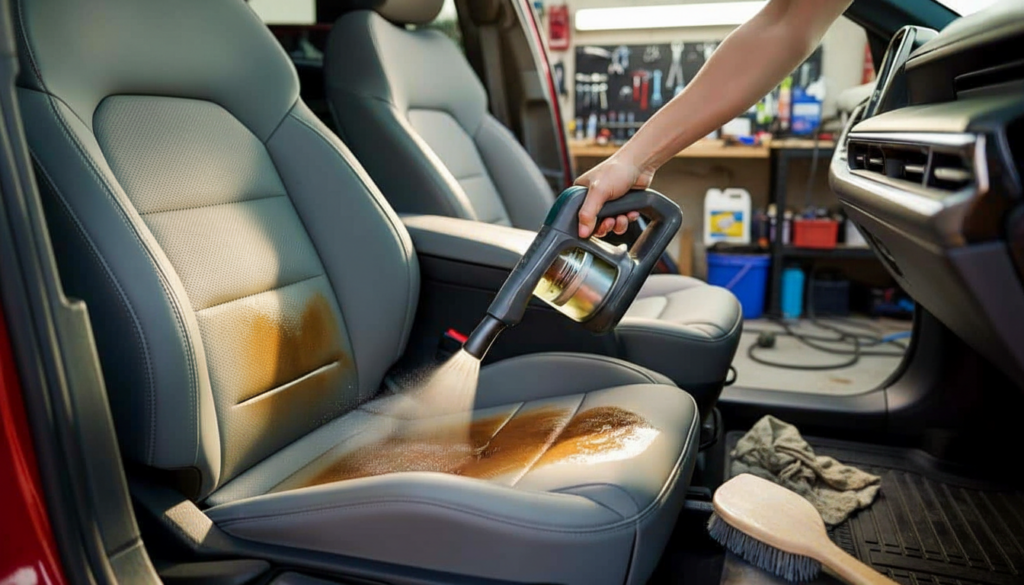
No vinegar, no baking soda: the detail pros don’t talk about it.
On Saturday mornings, you can see the same thing at any cheap car wash: vacuums buzzing, carpets being slapped against walls, and someone waving a microfibre cloth like a flag. But seats often get a quick spray and a quick wipe. It looks clean from a distance. The ghost of old stains is still there, but it’s lighter and blends into the fabric when you look closely. Most of us don’t realise that cleaning seats isn’t about using magical products. It’s about how the fabric lets liquid flow through it. About not soaking the foam underneath and not making the stain worse by doing the wrong thing. A car seat is like a sponge with a shirt on it. If you treat it like that, the game changes. For instance, Lisa. Two kids, one dog and a five-year-old hatchback that also serves as a moving snack bar. One day, her youngest spilt a whole cup of orange juice on the back seat. She freaked out, threw paper towels at it, then poured water on it, and finally dabbed it with a kitchen sponge. The juice mark went away for a week. After that, a ring showed up. When the sun hit the seat, it started to smell a little sour.
She was close to booking a full detailing session for €90. Instead, a friend who works in a body shop told her to use a sprayer with a mild upholstery cleaner mixed with warm water, a soft brush, and most importantly, a wet–then–dry extraction method. Not with a big machine, just a small, cheap wet vacuum. After two careful passes, the stain was gone, along with the smell and the halo. This method works really well for a reason. Vinegar and baking soda are great home remedies, but they weren’t made for layered fabrics glued to foam and sometimes heated parts. Vinegar is acidic, which can make some fabrics weaker and leave a smell that sticks. Baking soda is a fine powder that can get stuck deep in the foam, where it can attract water and leave light spots.

Professional cleaners use upholstery cleaners with a neutral pH or a slightly alkaline pH that break down grease, sugar, and proteins without burning the fabric. The real magic happens when you combine a light spray with brushing and then quickly removing the dirty moisture. You’re not just wiping the stain; you’re pulling it out of the seat’s lungs. It’s hard to go back to dabbing with wet wipes once you see the dirty water in the tank.
The easy “spray-brush-extract” trick you can do at home
This is the basic trick without all the marketing fluff. You will need a soft-bristle brush, a mild upholstery cleaner (or a little bit of dish soap), and some kind of wet vacuum or small extractor. It could be a small carpet cleaner, a handheld upholstery extractor, or even a basic wet/dry shop vac with a narrow nozzle. First, hoover the seat well while it is still dry. Cleaning is harder when there are crumbs, dust, and hair around. After that, lightly spray the area with your diluted cleaner. Not soaking wet, just a light mist that makes the surface evenly wet. Use small circles to work the product in with the brush, but don’t press too hard. You’re pulling the stain toward the surface, not pushing it into the foam. After you brush, use the wet hoover. Most people don’t do this important step.
Put the nozzle on the wet spot and pull in long, overlapping lines. You’ll see cloudy water rising in the tube. That’s the stain leaving the seat. Go over the same area two or three times until the water looks clearer. If the mark won’t come off, don’t flood it; instead, do the spray-brush-extract cycle again. Leave the doors open or the windows slightly cracked so that the seat can dry on its own. A fan helps. *The goal is to have a seat that dries in hours, not days.* That’s how you get rid of that old-car, musty smell that makes even a new car feel tired. A lot of us mess up here. We freak out, throw everything we own at the stain, and then wonder why a week later there is a faded spot and a weird smell. We all know what it’s like to crumple up a paper towel and scrub like you’re trying to erase history. The truth is, aggressive rubbing just spreads the pigment and damages the fibers.
Sometimes, less is better. One detailer told me, “Your job is not to fight the stain.” You need to gently persuade it to go.
If you don’t want to set protein stains like blood or milk, use lukewarm water instead of boiling water.
Before cleaning the visible area, try the cleaner on a hidden corner of the seat.
If you don’t have a wet hoover yet, don’t rub; just blot. Then come back later for a full cleaning.
To avoid rings, start cleaning from the outside of the stain and work your way in.
Press down with a dry towel to soak up any extra moisture on the surface.
Having a car that doesn’t tell stories in stains
Your relationship with cleaning your car changes if you stop thinking of your seats as an indestructible grey block and start thinking of them as fabric and foam. You stop throwing powder and acid at every mark and start to think in steps: dry cleaning, controlled moisture, gentle agitation, and quick extraction. It sounds complicated, but it’s almost like a meditation, like washing your hands after gardening. To be honest, no one really does this every day. That’s okay. You can use the spray–brush–extract trick when something happens in real life, like when you spill a latte before a date, get a muddy paw print after a hike, or have a juice box disaster on the way to school. You don’t want your car to be perfect like in a showroom; you just want it to not tell every passenger about your accidents.You might start to wonder what else in your daily life could be easier than the internet makes it look once you see that old, forgotten stain go away without vinegar or baking soda.
| Key point | Detail | Value for the reader |
|---|---|---|
| Dry first, then wet | Vacuum thoroughly before using any liquid | Prevents mud, crumbs, and dust turning into new stains |
| Spray–brush–extract | Light mist of cleaner, gentle brushing, immediate wet vacuum | Removes stains from deep in the foam, not just the surface |
| Avoid harsh home remedies | Skip vinegar and baking soda on layered textiles | Protects fabric, avoids smells and pale halos on the seats |
Questions and Answers:
Question 1: Is it okay to use dish soap instead of a special cleaner for upholstery?
A small amount of gentle dish soap with little or no scent mixed with warm water can work. Use only a few drops per litre, and always rinse with clean water after.

Question 2What should I do if I don’t have a wet vacuum or extractor?
You can still spray and brush, and then wipe with clean microfibre towels. Press down hard to get the moisture out, and change towels often. The result won’t be as deep, but it’s still better than just scrubbing.
Question 3: Is this method safe to use on leather seats?
No. For leather, you need a special leather cleaner, a soft cloth, and a conditioner. Use the right products on fabric and leather separately if your home has both.
Question 4: How long should I wait before I can sit on the seat again?
Most of the time, it takes 4 to 6 hours in a warm, well-ventilated area. Give it more time if the seat still feels cool and a little damp. If you sit down too soon, the foam can get misshapen and the fabric can get marked.
Question 5: What can I do to keep stains from coming back?
You can use a fabric protector spray made for car seats after you clean and dry the seats completely. It makes a light barrier that keeps spills from soaking in right away.