
The towel looked like it had been in a war when it came out of the washing machine. This once-white tea towel is now a sad, gray-beige thing with a faint ring of tomato sauce and a ghost of yesterday’s coffee. I did what everyone else does: I washed it in hot water, added baking soda, and a little detergent, and then I had that desperate drumroll of hope before opening the door.
The towel still looked… tired.
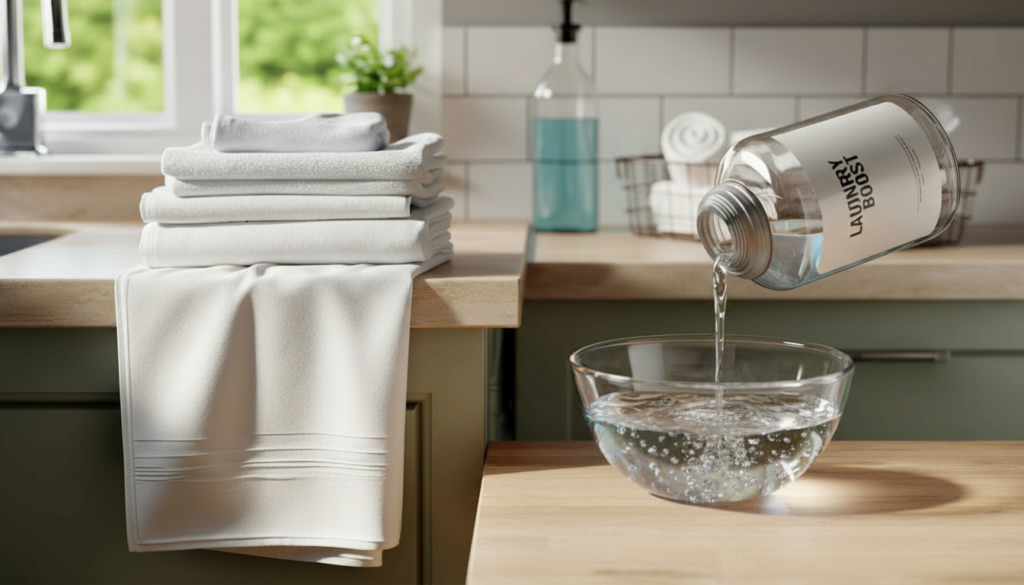
A friend quietly said to me, “You know, baking soda might be part of the problem, right?” and gave me a bottle that didn’t look like it would help at all. There is no neon label. No big promises.
A clear liquid and a simple idea changed how I use white kitchen towels.
An idea that makes you question everything you thought you knew about being “clean.”
Why your “miracle” baking soda routine isn’t working for your white towels
You can see it in any supermarket aisle: shelves full of “whitening” tricks and Pinterest boards turned into packaging. Baking soda is the favourite of all the hacks. It’s the cheap, magical powder that is supposed to get rid of yellowed tea towels and mystery stains.
But some days, when you open your washing machine, your towels still look old. Not dirty, but not new. A washed beige colour with that faint, stubborn smell that no amount of scented softener can completely hide.
We’ve all had that moment when you hold a towel up to the light and wonder, “Was this white before?”
For example, Emma, who is 34 years old, cooks most of her meals at home and uses three or four tea towels every day. She said she had a weekly routine: soak the towels in hot water with baking soda and then run them on a long, high-temperature cycle.
The change was real at first. The old stains faded, and she said the towels looked brighter. After a while, things changed. The fibres became rough. The grey that crept in never really went away.
She added more detergent and baking soda, and made the washes hotter. One night, as she took a clean but dirty towel out of the machine, she said out loud, “I’m doing all this, and they still look dirty.” That was the opening that let a new idea in.
The truth is that baking soda is good for some things, but it won’t magically fix your clothes. If you use it too much in the wash, it can change the pH balance, leave behind residues that trap dirt instead of releasing it, and make your detergent work less well.
Your towels pick up grease, tea and coffee tannins, coloured pigments from sauces, and tiny bits of food. Baking soda by itself doesn’t break down all of that. In some cases, it just masks smells and makes things look “clean” while deep stains settle in.
If your whites still look dull even though you’re “doing everything right,” you’re not crazy. You’re just using the wrong product for your hero.
The shocking choice: oxygen power and a new way to wash whites
The bottle my friend gave me wasn’t another scented detergent. It was a stain remover that worked with oxygen and had the words “percarbonate” or “active oxygen” on the label in small print. No fizzing trick on TikTok. It’s just a stable powder that opens up when it touches hot water.
The process is easy. Fill a sink or basin with very hot water, add your regular detergent and then a spoonful or two of oxygen whitener. Mix. Put your dirty kitchen and tea towels in here. Let them soak for 30 to 60 minutes before washing them like you normally do.
The water turned a cloudy brown in just a few minutes when I did this. That brownish grey? Nothing that baking soda had ever really lifted.
The first wash was almost too much to handle. I was ready to put the towels on “floor duty,” but they came out noticeably brighter, with that crisp white that makes your kitchen feel cleaner right away. The yellow rings around the old tea stains got a lot less bright.

Hanging up a towel that looks like it did when you bought it gives you a quiet kind of happiness. No need for a filter. There was no “before/after” drama; it was just a simple feeling of “Ah, so this is what clean is supposed to look like.”
To be honest, no one really does this every day. You don’t have to. A focused soak every week or two cleans your towels in a way that baking soda never could.
There are, of course, traps. Using too much oxygen whitener can make fibres weaker over time, especially if you mix it with boiling water and fast spin cycles. That “nuclear” method might make you feel good, but your towels will suffer.
A gentle routine with clear rules works better. For deep-refresh sessions, use oxygen whitener; for everyday washes, use your regular detergent; and don’t mix a bunch of random products together on a whim. Your washing machine is not a lab for chemistry.
You can protect your towels and your wallet in the long run by dialling things back and using the right product on purpose.
Claire, a home baker who goes through more flour and dishcloths than most of us see in a month, says, “Once I stopped dumping baking soda into every load and started doing one proper oxygen soak a week, my towels actually looked whiter and felt softer.” “I thought I’d spend more, but I ended up buying fewer new towels for emergencies.”
Change your “hero” item
Instead of using baking soda every day, use an oxygen-based whitener in the right places.
Think about how often
Only use whitening soaks when your towels look dull, not every load of laundry.
Before washing, rinse off greasy towels.
Before soaking, give towels that are very dirty a quick hot rinse or hand scrub.
Use cooler cycles more often.
Washing at 30 to 40 degrees Celsius every day protects fibres. Use high heat only for deep cleaning every now and then.
Put away towels that are really dead.
When fibres are thin, rough, and stained beyond repair, you can feel good about using them as cleaning rags.
A new way to think about “white” in your kitchen besides baking soda
When you stop using baking soda as your go-to solution, something interesting happens. You start to pay attention to how you use your towels as well as how “white” they are.
That tomato splash you used to dab half-heartedly? Right away, rinse it with cold water. The coffee spill that used to sit there until the next wash? It gets a quick rub under the tap before it has time to settle in. *You start to see every mark as either new and easy to remove or old and easy to avoid next time.
Small acts can make a big difference.
People don’t talk about the emotional side of laundry very often, but it’s there. The grey towels tell you a story without saying a word: of shortcuts, rushed evenings, and “I’ll deal with it later.” When you first open the machine and see that your tea towels are white, they send a different message.
You know you don’t need a cupboard full of miracle powders; all you need are a few good products and a simple, repeatable routine that works. You stop looking for shortcuts and start trusting a process that respects both the fabric and your time.
That’s when doing your laundry stops feeling like a chore and starts to feel like a small act of care every day.
It’s not about being perfect or living in a kitchen that looks like a showroom. It’s about getting back to a simple, almost old-fashioned standard: a white towel that is really white, without all the chemical drama and constant disappointment.
You might want to quietly put away that box of baking soda after you try the oxygen method and see how much brighter your towels get. It can still clean your sink, make your fridge smell better and scrub your pans. Just don’t act like you’re the hero of your whites.
You might even tell a friend about this little secret one day, just like someone told you. “Stop putting baking soda in every wash,” you’ll say. “There’s a better way.”
Main pointDetail: What the reader gets out of it
Oxygen-based whitener works better than baking soda.Gets rid of deep stains and grey hair without affecting how well the detergent works.Kitchen and tea towels that are whiter and fresher and don’t need to be washed as often
Soak first, then washSoak towels in hot water with detergent and oxygen whitener for 30 to 60 minutes before using them.Gets rid of stains and brings back brightness without going to extremes
A gentle, steady routineUse whitening soaks every now and then, cooler cycles every day and quick rinses after heavy stains.Keeps laundry simple and easy to do every day, saves money, and makes towels last longer.