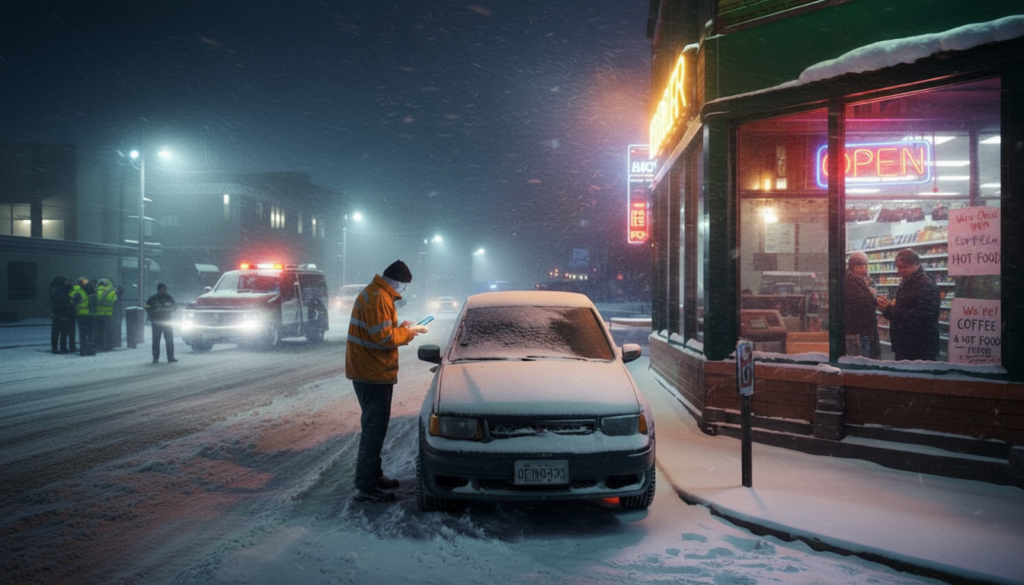
The first thick flakes start to fall at 4:37 p.m., drifting past the neon ‘Open’ sign of a diner on the edge of town that is almost empty. The owner wipes down a counter that is already clean inside. He looks at the TV, where a red banner says, “Heavy snow expected tonight.” Officials are telling drivers to stay home. In the parking lot, a delivery driver checks his phone and reads the same alert and then a text from his boss that says, “We’re still on for tonight.” Need you.
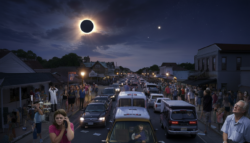
The sky gets darker, the traffic slows down, and a strange tension fills the streets.
Who decides what’s worth the risk when the roads turn white?
When the sky turns white and the city is split in two
The first real snowstorm of the year always shows where a city is weak. One side listens to the emergency alerts, fills the car with groceries, and pulls it off the road. The other side keeps the lights on, sends out shifts, and hopes the ploughs can keep up.
The forecast for tonight is clear: a fast-moving system, heavy wet snow, strong winds, and almost no visibility on open stretches of road. Officials in the area are asking people to stay home unless they have to travel. But that phrase means something else if your rent is based on how many hours you work. For some people, staying home makes them feel safe. For some, it feels like a treat.

On the north side, a family-run pizza place is running a “storm special” that gives discounts on deliveries “as long as the wheels can turn.” Marta, the owner, has three kids and her lease ran out last spring. She stands by the ovens with her phone to her ear and tells one of her drivers, “Don’t come if you don’t feel safe.” But I can’t shut down. If we lose tonight, we won’t catch up.
The county sheriff holds a press conference across town, which is the kind of thing people mostly see on social media. He talks about the spinouts from the last storm, the truck that jackknifed and blocked the highway for hours, and the emergency workers who slept in cots at the station. “We are strongly asking people to stay off the roads,” he says. Those words have moral weight. They don’t get rid of bills that haven’t been paid.
This fight between warnings and work is more than just a one-night drama behind the scenes. Local chambers of commerce quietly tell their members to “keep doing business as usual when possible” to avoid another hit in a season that has already been hurt by inflation and slow foot traffic. City managers are worried that if businesses close every time there is a winter storm warning, the downtown area will empty out even faster.
But public safety directors know the maths of risk by heart: more cars on icy roads mean more accidents, longer response times and crews that are tired and stretched too thin. The drama of tonight’s snow is really an old, boring argument: how much risk are we willing to give to the people who keep the lights on and the doors open?
People don’t talk about the quiet ways they stay home, stay open, and stay safe.
When the alerts start coming in on phones, the first real choice isn’t about the storm. It’s all about power. Who really gets to choose whether they stay home or go out into the dark, swirling mess?
On nights like this, a lot of workers do something that is very simple but very effective: they write down everything. Screenshots of weather alerts, texts from bosses, and pictures of how the streets are doing. They want to know what they were told to do in case they slide into a ditch or miss a shift. It doesn’t fix the problem, but it does make a small shield in a system that doesn’t bend very often. In the middle of the storm, it can seem like collecting receipts is the only way to stay alive.
For small business owners, the maths is just as hard, and sometimes worse. The owner of a bar in the city keeps the doors open during storms because regulars still come over from nearby apartments. He tells his bartenders in a quiet way that they can stay home without getting in trouble, but he doesn’t put that on social media. He shrugs and says, “I’ll do it myself if I have to.”
People who work, on the other hand, talk in group chats. They talk about who gives paid time off when the city tells people to stay home and who doesn’t, and which places will help you call a rideshare and which ones will make you dig your car out at midnight. Let’s be honest: no one really reads the “inclement weather policy” in the employee handbook until they are stuck in a blizzard and have to clock in.
Some businesses are trying to break the old pattern, at least to protect their good names. Every time there is a severe weather alert, a regional grocery chain now follows a certain set of rules. They cut back on store hours, provide hotel rooms near the store for essential employees, and pay double time and a half on storm nights. A manager says, “We can’t close the grocery store when people are freaking out, but we also don’t want anyone to die on the way to stock the bread aisle.”
Dr. Lane Fitzgerald, an expert in risk management, says, “Every storm is a negotiation.” “Between staying safe and staying alive, between public messaging and private pressure.” It’s sad that the people with the least power to negotiate have to deal with the most.

Ask your boss in writing, if possible, what the exact storm policy is well before winter starts.
Put a blanket, snack, water, phone charger, ice scraper, and cheap flashlight in a small “storm go-bag” in your car.
Don’t just look at the weather forecast; use live traffic and police scanner apps to see what’s going on right now.
If you don’t feel safe driving, let them know in a text or email so they can keep track of it.
When officials tell people to stay home, pay attention to which businesses close. This will tell you a lot about their values.
The fight behind the storm: what this fight really says about us
The snow that falls tonight will melt. The ploughs will clear the roads and push the last dirty slush into frozen ridges. Then life will go back to what we call normal. But the arguments that are going on about this storm are about something much bigger than just a weather warning.
When officials tell people to stay off the roads and businesses quietly say, “We’re still open,” we have to think about who is responsible for our economy. The nurse who works the night shift, the server who closes the restaurant, and the warehouse worker who loads trucks at 3 a.m. They don’t fit well with those messages about public safety.
People say what they really feel when things are quieter, away from the flashing alerts and the high-stress briefings. Some people don’t like being told to choose between their health and their job. Some people don’t like seeing other people work from home while they scrape ice off of windscreens in the dark. Some business owners don’t like being called bad guys when they’re just a week away from closing for good.
We’ve all been there, standing at the door, looking out at the blinding snow, and asking ourselves, “Is this worth it?” That’s where the discomfort comes from: so many people don’t feel like they have a real choice.
There isn’t a simple answer or rule that works for every city, job, or storm. But this conflict between safety and making money is like a mirror, and storms like tonight make us look at it.
What would happen if more businesses based their operations on official safety warnings instead of just sales forecasts? What would change if emergency alerts included protections for hourly workers instead of just telling people to stay home? And what if the next time it snows, the question isn’t “Who has to risk the drive?” but “How can we share the risk more fairly?”
The prediction will move on. The argument isn’t going anywhere.
Main point Details Value for the reader
Tension between safety and survival Officials say people should stay home, but businesses want to stay open.Helps readers figure out why every storm brings mixed messages
Strategies for quiet workersWriting down messages, checking live road reports, and reading policiesGives you useful tips on how to stay safe when you can’t just stay home
What employers doSome change their hours, pay, and expectations based on weather alerts.Gives you standards to use to see if your workplace is fair when it comes to storms
| Key point | Detail | Value for the reader |
|---|---|---|
| Safety vs. survival tension | Officials urge people to stay home while businesses push to stay open | Helps readers understand why mixed messages keep appearing every storm |
| Quiet worker strategies | Documenting messages, checking real-time road reports, reading policies | Gives practical ways to protect yourself when you can’t simply stay home |
| Role of employers | Some adjust hours, pay, and expectations based on weather alerts | Offers benchmarks to judge whether your workplace treats storms fairly |
Questions and Answers:
Question 1: Is it legal for my boss to make me work during a heavy snow warning?Yes, in most places, unless the government says you can’t travel or your contract says otherwise. It’s important to check your written policy and the laws in your area because labour laws are different in each area.
Question 2What if I don’t feel safe driving, but I won’t get paid if I stay home?A lot of people are stuck in this tough middle ground. Put your worries in writing, suggest other options like working from home or a different shift, and keep track of all the answers.
Question 3: If I crash on the way to work in a storm, are businesses to blame?Where you are, what kind of work you do, and whether you are “on the clock” while travelling all affect who is responsible. After an incident, talking to a union rep or labour lawyer can help you understand your rights.
Question 4: How can small businesses keep their employees safe while still making money?Clear storm protocols, shorter hours, pre-planned staffing lists, and temporary hazard pay can help spread the risk more evenly without closing down completely.
Question 5: What should I look for in a good “bad weather” policy?There are clear rules about pay and attendance, specific triggers for official alerts, and flexibility for people who have long commutes. There is also clear language about not punishing workers who raise safety concerns.