
It’s 7:12 p.m., and the first real cold snap of the year has hit. The whole street smells like burning wood and memories. Your neighbour is outside, struggling with a wheelbarrow full of logs and breathing heavily like an old steam train. You look at your almost-empty woodpile and feel a little twist in your stomach. If you feed the stove like you did last year, this winter is going to cost a lot.
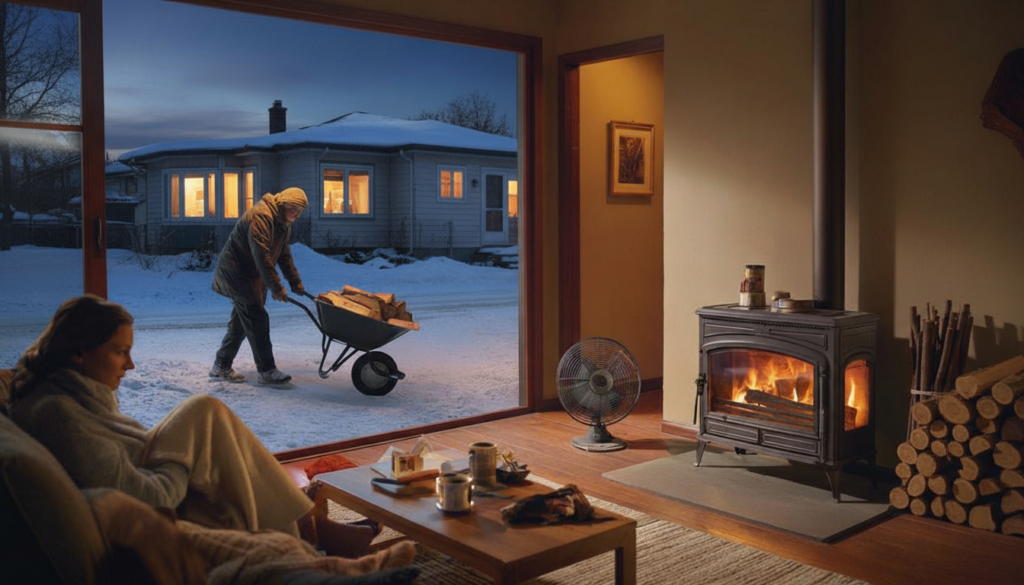
The fire is already crackling inside, but you know that half of the heat is going straight up the chimney. You can almost see the money turning into smoke.
What if you could burn half the wood and still stay warm?
Why some people burn a lot of wood for no reason
If you watch people light their stoves on a winter night, you’ll see the same thing over and over. The door was open for a long time, smoke was coming in, the wood was stacked any which way, and the vents were being messed with like a broken radio. Then they say their stove “doesn’t heat very well” and that wood “burns so fast these days.”

It’s not usually the stove or the logs that are the problem. The way the fire is handled, almost like it’s on autopilot, is the problem.
We treat a wood stove like a campfire, and then we wonder why the house is cold at 3 a.m. For instance, Pierre lives in a stone house on the edge of town. He went through six full cubic meters of oak and beech before the end of February last winter. That number makes your back hurt just thinking about it. He was running the cooker all day with the door half open and big, roaring flames that looked great on Instagram stories.
What happened? A living room that was warm at 8 p.m., cool at midnight, and freezing in the morning. His chimney sweep told him straight out, “You’re heating the birds, my friend.” This year, he used the same stove, the same house and the same logs, but three small changes cut his use almost in half. People don’t believe him until they go to his house and touch it.
It’s cruelly easy to understand the logic. A badly used cooker sends calories flying out the window, takes warm air out of the room and makes you reload all the time. A well-used cooker works like a battery that slowly and steadily heats things up. More embers and less flame. More stability, less drama.
We worry too much about “big fires” when we should be looking for clean, long burns and soft radiation from the metal or stone. *Fire shouldn’t be fun; it should help you while you do other things. And that’s where your log pile goes: right in the space between flashy fire and useful fire.
Seven smart ways to use less wood (and make your neighbours mad)
The first trick is very simple: start your fire at the top, not the bottom. The “top-down” method doesn’t seem right at first. You put the big logs at the bottom, the medium logs on top, and the kindling and firelighters on top, like a sandwich in reverse. You only light the top layer and close the door quickly, with the air supply open at first.
Instead of a quick firestorm, the fire slowly and gracefully moves down through the pile. Less smoke, fewer reloads, and steadier heat. The cooker body starts to radiate gently, which keeps the room warm longer instead of giving you a 20-minute heat show that ends in disappointment.
Second tip: Don’t treat your logs like random sticks; treat them like food. They need to be kept dry, in the right place, and with air moving around them. That means not being thrown in a wet corner under a tarp, where it will rot by November. We’ve all been there: you pick up a log that feels strangely heavy and hear the hiss of moisture in the fire. That sound is your heat turning into steam and leaving the room.
When wood is dry, it burns slower, hotter, and cleaner. Your chimney creosote goes down, your glass stays clear, and you don’t have to reload as often. Your neighbour might still be out there splitting “green” logs in December while you burn last year’s stash like a smug squirrel.
The third trick, which changes everything, is to close the main air more than you think you can when the fire is going and the stove is hot. Not so much that the fire goes out, but enough to stop the flames from screaming. Set your flames to be calm and lazy, not loud.
Marc, a chimney sweep who has been cleaning flues for 25 years, says, “If your flames look like a rock concert, you’re wasting wood.” “The best burns I see are so boring to watch. The glass is clear, the stove is hot, and the logs are slowly falling into a bed of embers.
Start hot with a lot of air, then slowly cool down.
Don’t reload on three sad black chunks; reload on a good ember bed.
Use smaller logs to get heat quickly and bigger logs to burn for a long time.
Don’t poke the fire every five minutes.

To be honest, no one really does this every day. But the people who come closest are the ones who make it through winter with half a woodpile still standing in March.
Why your neighbours will hate you by February
There is a strange social effect of using wood to heat your home. Your neighbours are stomping through the snow to get ‘just one more load’, but you’re quietly reading on the couch with your feet warm and the stove humming like a happy cat with only two logs inside. Your curtains don’t smell like smoke, your living room doesn’t smell like a bonfire, and you don’t spend every Saturday cutting and stacking.
At some point, they’ll ask, “You’ve already ordered more wood this year?” and you’ll have to say, “Not yet, I still have a lot from last winter.” That’s when the real, quiet hate starts.
The fourth sneaky trick is to guide the heat to where you live, not where you walk through. Close the doors to rooms you don’t use, play with the curtains, and use a simple fan on low speed to gently move warm air toward the coldest part of the house. A small fan on the floor that points toward the stove can break the “heat bubble” and spread warmth more evenly.
Your neighbour might turn up the heat in the bedroom at the back to sauna levels just to feel something. You move the air, not the logs, on the other hand. Every degree you gain by circulation is one less log you have to burn.
The fifth trick is mental: put up with a house that is a little cooler but more stable. Instead of trying to get the temperature to 24°C at 8 p.m. and then 15°C when you wake up, aim for a steady 20–21°C. Your body gets used to it, your nights are better, your mornings are less awful, and your woodpile barely moves.
You stop doing the “emergency reload at 11:45 p.m.” and start planning calmer, earlier reloads with bigger logs that burn slowly into the night. That steady comfort is hard to resist. It also strangely shows who is really wasting wood on your street. Their chimneys puff like an old diesel engine, and the smoke is thick and dark. Yours sends up a faint ribbon that is almost invisible.
Living with less wood and more heat
Once you’ve experienced what a well-run stove can do, it changes the pace of your winter without you even realising it. You stop counting how many logs you burn to see how comfortable you are. Instead, you pay attention to other things, like how the floor feels under your feet, how quickly your mug of tea cools, and how the room stays warm when the fire goes out.
You start to think of each log as a piece of time, like 45 minutes, an hour, or two hours of sun from a summer that is long gone. It seems a little silly to have spent those hours so wildly. You burn slower, you look at the rest of your stack with a mix of pride and relief, and you start to tell your friends about these little tricks, even though you’re afraid they’ll think you’re obsessed.
Some people will shrug, some will listen, and a few will secretly hate that your living room is warmer than theirs, with fewer deliveries and fewer afternoons that make their backs hurt.
In the end, the real trick is not to have the most wood, but to need it the least.
Main point Detail: What the reader gets out of it
Fire starts at the top Fire lit from the top for a slower, cleaner fall of flamesLess smoke, less reloading, and smoother heat over time
Logs that are dry and stored wellWood that has been stored in a ventilated area for at least 18 to 24 monthsMore heat from each log, less creosote, and cleaner glass and chimney
Stable temperature and controlled airLess air flow once the fire is going, with a steady target of 20–21°CLonger burns, fewer logs used, and a more comfortable indoor climate