
“If I keep coming every three weeks,” she said, “it’ll grow faster, right?” The stylist paused, meeting my eyes in the mirror with that familiar look reserved for a myth she’d already heard too many times that day. Outside the salon window, people rushed by — some with sleek blowouts, others with messy buns — all chasing the same goal: longer, healthier hair, as quickly as possible. The belief that frequent trims boost growth has quietly survived for years, passed along in bathrooms, group chats, and well-meaning advice, even though the science has long moved on.
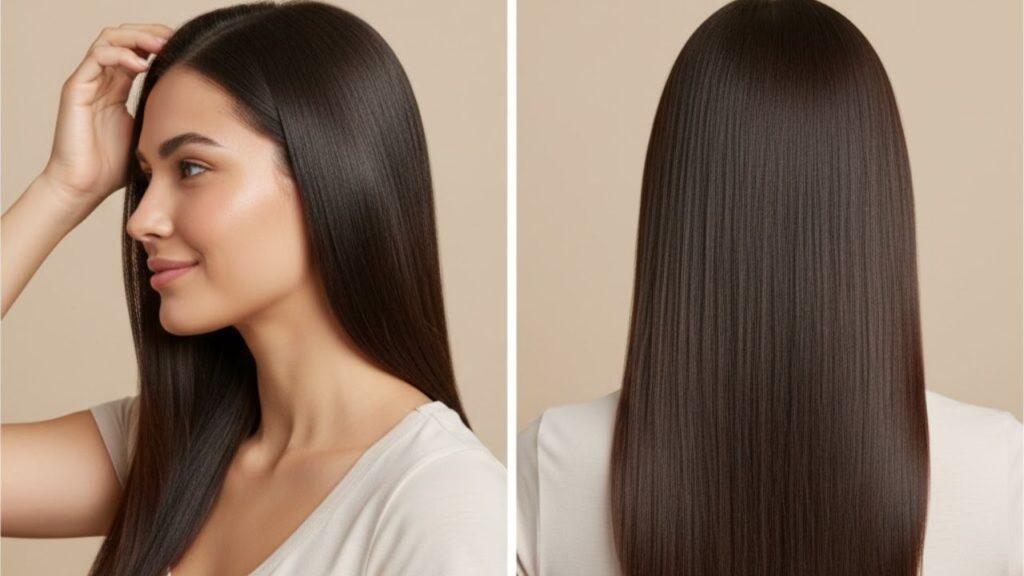
The strange thing is that the more often we cut, the less we tend to understand what’s actually happening at the root. Hair growth doesn’t respond to scissors. It follows its own rules, far beneath the surface.
Why the Idea of “Trim to Grow” Still Feels So Convincing
Step into almost any local salon on a weekend and you’ll hear it: “Just a small trim, I’m growing it out.” The words come with hope, as if those tiny clippings on the floor might somehow signal the scalp to speed things up. The logic feels intuitive. Trim plants and they grow back fuller. Shave and hair seems thicker. The mind connects dots that, biologically, don’t belong together.

In reality, hair growth begins inside the follicle, completely unaffected by what happens at the ends. Scissors never reach the living part of the strand. Still, the myth persists because a fresh cut looks like progress. Ends appear smoother, shapes look cleaner, and hair moves better. Visually, it feels like growth.
This belief is reinforced everywhere. Many people swear that once they started trimming every few weeks, their hair suddenly flew past shoulder length. A 2023 UK haircare survey found that nearly 60% of women believe regular cuts speed up growth. Add comparison pressure, social media advice, and oversimplified success stories, and the haircut becomes the hero — while genetics, hormones, stress, and nutrition quietly disappear from the narrative.
The biology tells a calmer story. Hair grows from the root, where cells divide and push the strand outward. Once it leaves the scalp, the hair is essentially dead material. Cutting the tip sends no message upstream. What trims actually do is remove split ends, reducing breakage higher up the shaft. Hair doesn’t grow faster — it simply breaks less. You’re not accelerating growth; you’re preventing loss.
What Actually Makes Hair Appear Longer and Healthier
The most effective strategy for visible length is simple: trim based on the condition of your ends, not a fixed calendar rule. For some people, that means every eight weeks. For others, every four months. The goal is to remove damage while preserving as much healthy length as possible. It’s about pruning splits, not policing growth.
When frayed ends are regularly removed, hair falls in a cleaner line. Light reflects better, and the length you already have becomes more noticeable instead of thinning out at the tips. A micro-trim of half a centimeter can prevent a much bigger cut later. Over a year, this gentle approach protects the inches you’re trying to keep.
The classic “every six weeks” rule often works against people growing their hair. If hair grows around 1–1.25 cm per month and you cut off 2 cm each visit, the math is unforgiving. Progress stalls, sometimes for years, while the real issue isn’t age or hair type — it’s how much gets trimmed each time.
There’s also an emotional side. Regular appointments feel like control. Sitting in the chair, cape on, can feel like an investment in future hair. On a hard week, a fresh cut acts like a reset. That feeling is real. The problem starts when the ritual turns into a superstition that quietly works against your goal.

How to Encourage Length Without Chasing the Wrong Habit
A smarter approach is focusing on your hair survival rate rather than trim frequency. Notice when your ends begin to feel rough, tangle more, or show white dots. For some, this happens around week ten; for others, much later. That’s your real trim schedule.
Between cuts, treat your ends like delicate fabric. Detangle gently, avoid harsh towel-drying, and apply a small amount of leave-in conditioner to the last few centimeters. Low-friction pillowcases, looser hairstyles, and avoiding tight elastics all help preserve length. None of this makes hair grow faster — it simply protects what you’ve already grown.
Most people aren’t failing at growth. They’re losing length through quiet, daily damage: rushed brushing, quick heat styling without protection, sleeping with wet hair twisted tight. These habits target the oldest, weakest part of the strand — the ends. When progress stalls, scissors get blamed or praised, depending on the mood.
As London trichologist Dr. Hannah Reed puts it, “Cutting the ends doesn’t send a memo to the roots.” Regular trims protect your investment. Growth is what you earn; preventing split ends is how you stop losing it without noticing.
A Simple Reminder Before Your Next Salon Visit
- Ask exactly how much needs cutting — in centimeters, not vague phrases.
- Cut less than your average growth if length is your goal.
- Watch your ends, not the date: rough or dotted tips mean it’s time.
- Prioritize scalp health, nutrition, and gentle handling over frequent appointments.
- Remember: trims maintain health; they don’t speed up root growth.
Redefining What Hair “Progress” Really Looks Like
There’s something freeing about accepting that hair follows its own steady rhythm. It won’t suddenly double its speed just because you book more salon time. When you let go of the myth, attention shifts from acceleration to preservation. The cycle of trimming, waiting, and complaining finally loosens its grip.
Instead, more meaningful questions appear. How does stress affect your hair over a year? What changes with better sleep, hydration, or gentler care? These aren’t dramatic fixes — they’re quiet habits that your follicles actually respond to.
The next time you say, “I’m growing it out,” it can mean something more intentional. A micro-trim instead of a cleanup. Saying no to that extra centimeter because you understand your own growth rate. Less hair on the floor, and more control over what happens at the root.
- Haircuts don’t increase growth speed: Growth happens in the follicle, not at the ends.
- Regular trims reduce breakage: Removing splits helps retain length.
- Daily habits matter most: Gentle care and health outweigh rigid trim schedules.