
The alarm rings at 6:30. You hit snooze with your hand, and for a few seconds, you’re in that blurry space where time doesn’t exist. The phone lights up with emails, alerts, and a calendar that looks like Tetris. You stand up to drink your coffee. You can eat breakfast while you scroll through your phone. Your heart is racing by 10 a.m., and you can’t remember what song was playing in the background. You are tired even though the day hasn’t even started yet.
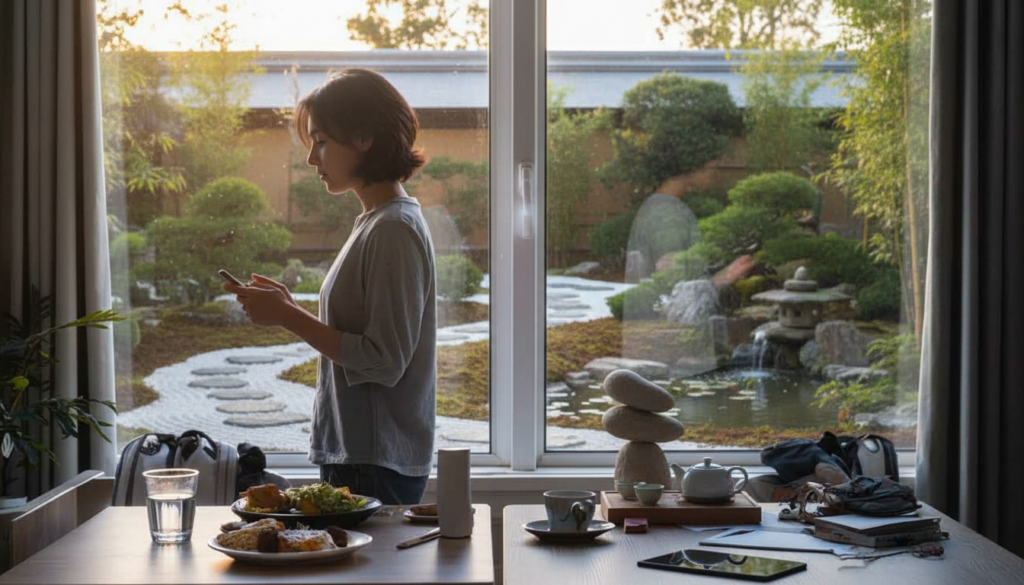
You’re wide awake at night, scrolling again, and you don’t know why you feel both wired and drained.
Your body isn’t just worn out.
It’s not in sync.

Why your body secretly wants rhythm
You can see it when you watch a baby sleep on someone’s chest. Their little body relaxes to the slow rise and fall of their breathing and the almost-musical beat of their heart. The first language our nervous system learns is rhythm.
We like to think we’ve grown out of that as adults. We live by traffic jams, Wi-Fi speed, and notifications. Cells are still keeping time, hormones are pulsing in waves, and the temperature is going up and down like the tide. Your body is more like a drum circle than a machine. When one drummer speeds up or drops out, the whole song sounds wrong.
Check out what happens when you cross a lot of time zones in one night. Jet lag doesn’t just make you tired. You get hungry at random times, your mood drops, and it feels like your concentration is stuck in mud. Studies on people who work shifts say the same thing: having an irregular schedule can make you gain weight, feel more anxious, and have more metabolic problems.
It’s not just about getting enough sleep. For instance, nurses who work the night shift often say they have stomach problems, brain fog, or even feel “flat” emotionally on their days off. Their bodies are always trying to figure out if it’s day or night. The hormones in your body, like cortisol and melatonin, are playing the wrong song at the wrong time, and every system has to figure out how to make it work.
This is what really happened. Circadian rhythms are tiny timekeepers in your brain and almost every organ that help your body run. They work together with light, food, movement, and social cues. When those signals get mixed up, your system loses its point of reference.
You might think you’re “lazy” or “undisciplined,” but your body is just confused. Your nervous system has lost its normal pattern of tension and release, so sleep gets lighter, cravings get louder, and small stressors feel bigger. *Rhythm isn’t just a nice thing to have for your health; it’s what keeps you balanced.
How to get your body to trust a new daily rhythm
Start with one simple rule: get up at about the same time every day, even on weekends. Not perfect, not like the military, just in the same 30 to 45 minutes. As soon as you can, open your curtains and let some natural light hit your eyes for a few minutes, even if it’s through a window. You are resetting your brain’s main clock.
Choose a second anchor: a real meal at the same time, and if you can, sit down. Not a complicated ritual, just one time your body can count on. These signals tell your body, “This is morning, this is midday, this is night,” over and over again. That’s how your inner drummer gets back on the beat.

The trap that most of us fall into is going all out. We make a plan: starting tomorrow, we’ll have the perfect bedtime, diet, workout, and no screens after 9 p.m. Two days later, things go wrong, the plan falls apart, and we feel like failures.
To be honest, no one really does this every day. In real life, there are sick kids, late dinners, deadlines, parties, and trouble sleeping. There aren’t strict rules for rhythm. It’s about giving your body more “predictable patterns than chaos” every week. You can skip a night and still be rhythmic as long as you stick to a few simple habits that repeat.
A sleep researcher I once talked to said, “Your body loves repetition more than intensity.” “It would rather have a consistent average bedtime than a perfect one that changes every night.”
Anchor 1: Morning light within 1–2 hours of waking up tells your brain to start the daytime cycle. This makes you feel more awake earlier and sleepier later when it’s dark.
Anchor 2: Meals Having breakfast and lunch at about the same time every day helps your metabolism and gut bacteria stay on track, which stops those random energy crashes.
Anchor 3: Moving A short walk or stretch every day at the same time works like a rhythm cue, calming your stress system and reminding your body when to be active and when to relax.
Finding your own rhythm in a world full of noise
It’s not about copying the routine of an influencer at 5 a.m. It’s about paying attention to the speed of your own life and turning the volume down a little. Maybe you are naturally more focused in the late morning, or you feel better emotionally after a slow walk in the evening. Sundays might be the only day when time seems to slow down and you breathe differently.
You realize your body has been trying to talk to you all along when you start to notice these patterns, even for a week. It pushes you with yawns, hunger pangs, bursts of creativity, and sudden drops. You can ignore it and keep running from one thing to the next. Or you can talk it over: mornings that are a little more stable, a couple of non-negotiable breaks, and a bedtime that is “good enough” most days. Things will stay crazy in the world. Your schedule won’t suddenly become simple and peaceful. But there can be a quiet inner beat in the middle of the noise, and once you feel it, it’s hard to go back.
| Key point | Detail | Value for the reader |
|---|---|---|
| Daily anchors calm your system | Consistent wake time, light exposure and meals help synchronize internal clocks | More stable energy, less brain fog, easier sleep |
| Rhythm beats perfection | Regular “good enough” habits are more sustainable than extreme routines | Less guilt, more long-term balance without burnout |
| Body signals are data | Observing hunger, mood and focus patterns reveals your natural tempo | Lets you design a routine that fits your real life, not an idealized version |