
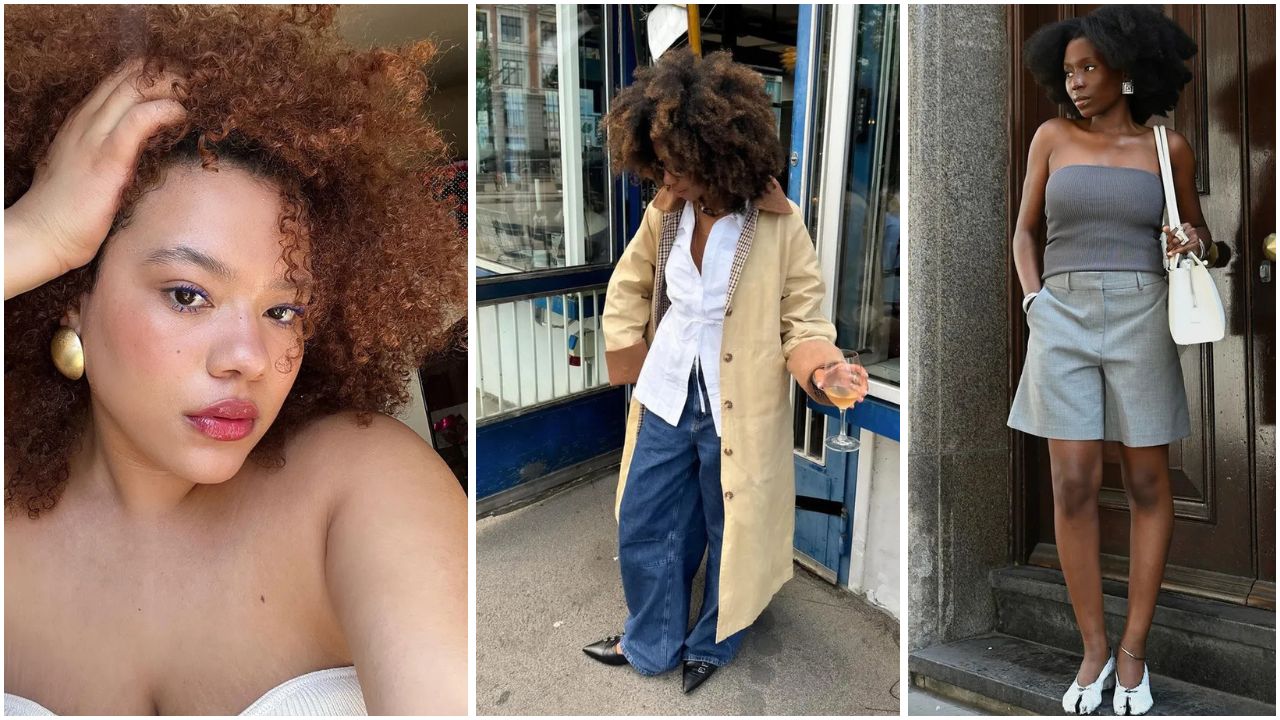
A few years ago, making the decision to return to natural hair can feel like a major turning point. For many people, this journey begins with cutting away chemically treated strands and allowing their natural texture to grow freely again. While the change can feel empowering, it also comes with a learning curve. Your old haircare habits may no longer work, and your product shelf often needs a complete refresh.
One of the most helpful ways to understand natural texture is by learning about curl typing. Popularised by celebrity hairstylist and educator Andre Walker, the curl-typing system helps identify whether hair is wavy, curly, or coily, and what each texture usually needs to look and feel its best.
To better understand different curl patterns and how to care for them, curl experts often recommend looking closely at the shape, thickness, hydration needs, and behaviour of your strands. Whether you are starting your natural hair journey, updating your current routine, or simply trying to understand your curl pattern more clearly, this guide breaks down the main curly hair types and how to care for each one.
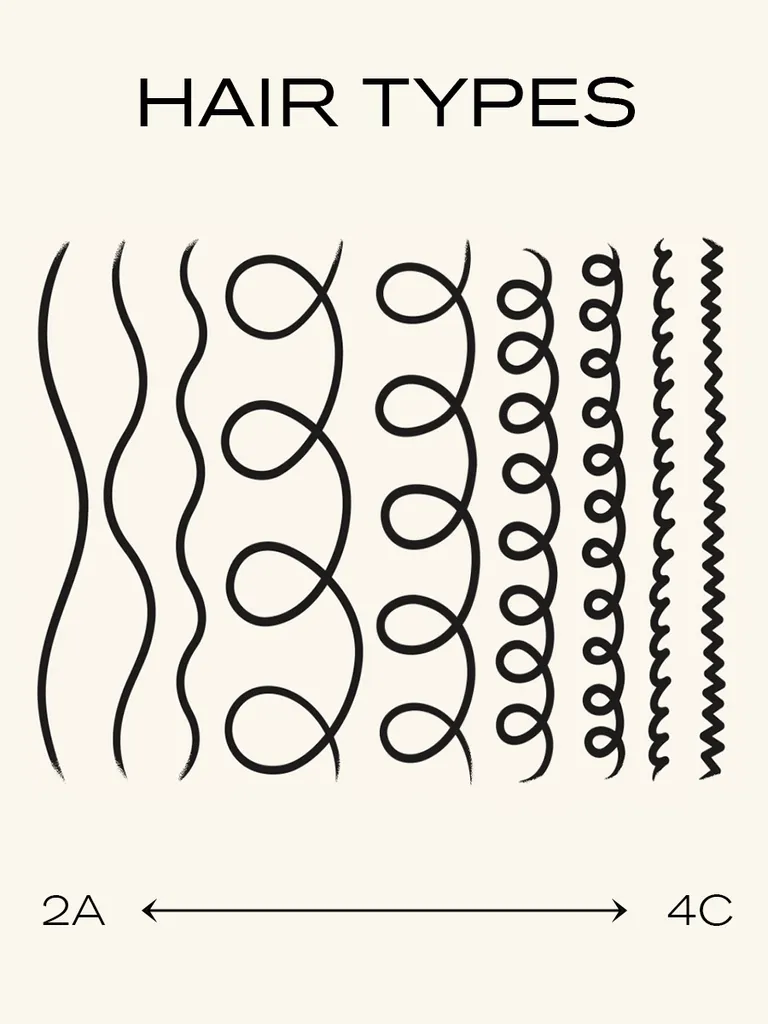
The Different Curl Types
The term “curly hair” covers a wide range of textures. It can include soft waves, defined ringlets, tight coils, and dense zigzag patterns. Hair is also commonly described as fine, medium, or coarse, depending on the thickness of each individual strand.
Your curl type gives a general idea of how your hair may behave. For example, type 1 hair is straight and may struggle to hold curls, while type 4 hair has a tighter coily pattern and often needs more moisture and gentle handling. However, texture and curl pattern are not always the same thing. Someone with tight coils can still have fine, delicate strands.
A simple way to identify your curl pattern is to look at how the strand naturally bends or loops. If the hair circles back toward itself and sits close to the curl above it, it is likely coily. If the strand forms a curl but drops lower as it moves into the next curl, it is probably curly. If the hair bends into a soft S-shape without fully looping around, it is usually wavy.
It is also completely normal to have more than one curl type on the same head of hair. Some areas may be looser, while others may be tighter or more defined. Curl patterns can also change over time because of heat styling, chemical treatments, hormonal changes, damage, or health-related factors.
Another important factor is hair porosity. Porosity refers to how easily your hair absorbs and holds moisture. High-porosity hair may soak up water quickly but lose it just as fast, while low-porosity hair may resist moisture at first but hold it for longer once it gets in. Knowing your porosity can help you choose the right amount of leave-in conditioner, cream, gel, or oil for your routine.
Type 2: Wavy Hair
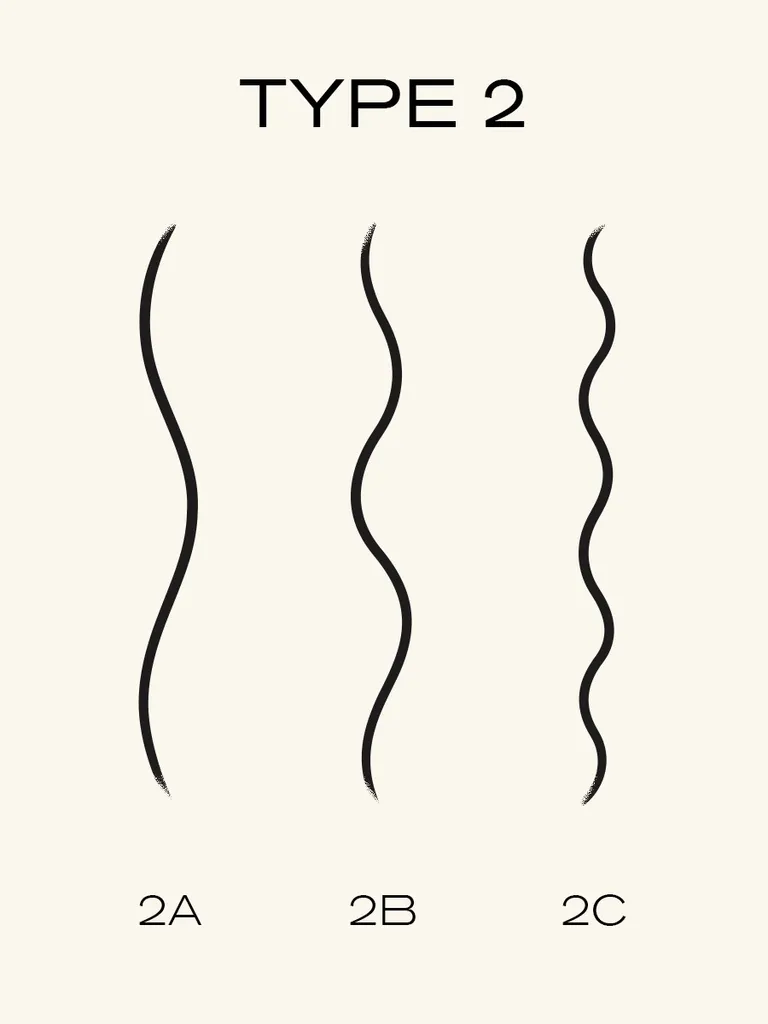
Type 2 hair includes wavy textures. These waves can be fine, medium, or thick, and they usually form an S-shaped pattern. Wavy hair is flexible and can often be styled in different ways, but it may become flat at the roots if heavy products are used.
For type 2 hair, lightweight styling products usually work best. Diffusing can help boost volume and definition, while a light holding spray can help waves last longer without making the hair stiff or weighed down.
2a Hair
Type 2a hair has a soft, loose wave pattern and is usually fine in texture. It can often be straightened easily and may lack natural volume, especially near the roots.
To add body, use a lightweight mousse or volumising foam. Apply it mainly near the roots and mid-lengths to create fullness without making the hair feel heavy or greasy.
2b Hair
Type 2b hair tends to sit flatter at the crown, with more noticeable S-shaped waves beginning around the mid-lengths. The strands are usually slightly thicker than 2a hair and may need a bit more support to hold shape.
A sea salt spray or light texturising mist can help bring out the natural wave pattern. Avoid very rich creams, as they may make this hair type look limp.
2c Hair
Type 2c hair has stronger, more defined waves that often begin closer to the roots. This texture is usually thicker and more prone to frizz, especially in humid weather.
To keep 2c waves smooth and defined, try a sulphate-free co-wash between regular wash days. A styling cream layered with mousse can help lock in moisture, reduce frizz, and give the waves better structure.
Type 3: Curly Hair
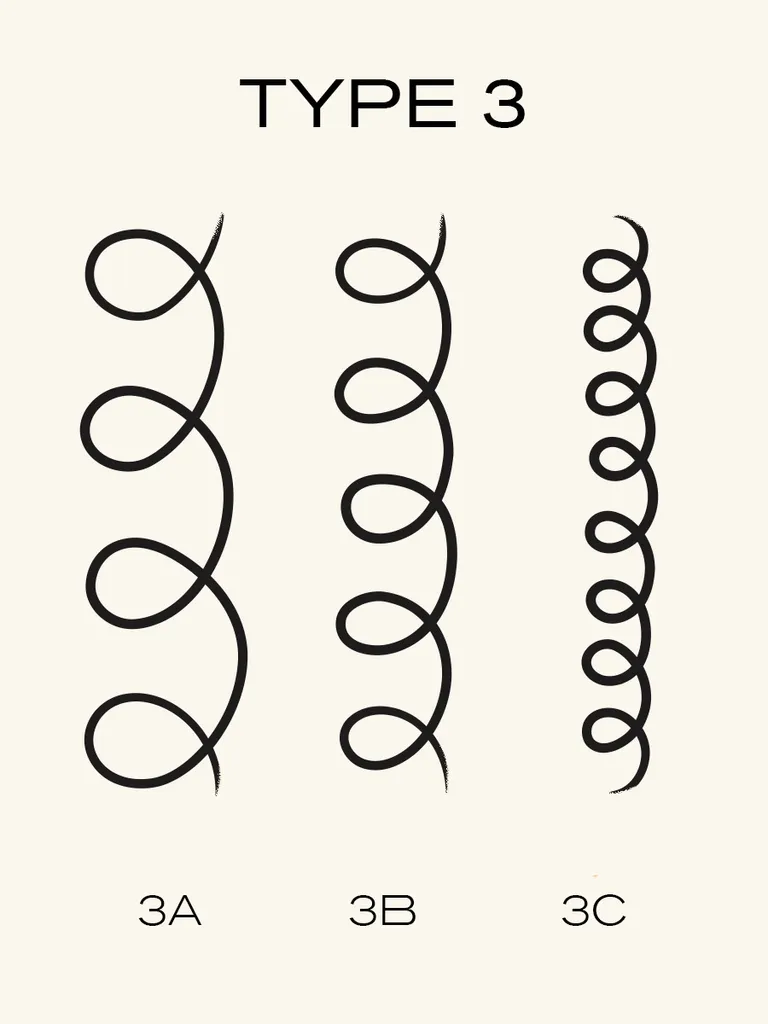
Type 3 hair includes true curls, ranging from loose loops to tighter corkscrew ringlets. These curls often have shine and bounce, but they can also become dry or frizzy if they are not properly moisturised.
The key to caring for type 3 curls is hydration, definition, and frizz control. Many people with this curl type benefit from layering products, such as a leave-in conditioner followed by cream, mousse, or gel.
3a Hair
Type 3a hair usually has large, loose curls with a shiny finish. The curl pattern is visible but not extremely tight. This hair type can be delicate, and too much touching, brushing, or towel-drying can create frizz.
For 3a curls, apply a curl-enhancing cream or lightweight styling product to damp hair. Scrunch the product upward to encourage the curl pattern, then refresh the curls later with a light curl spray if needed.
3b Hair
Type 3b hair forms springy, well-defined ringlets. These curls have more volume and bounce than 3a curls but can dry out more easily.
A curl gel with moisture-attracting ingredients such as aloe vera, glycerin, or hyaluronic acid can help maintain definition. This type of product helps reduce frizz while keeping curls soft and hydrated.
3c Hair
Type 3c hair has tight, dense curls that are packed closely together. It usually has a lot of natural volume and can be affected by humidity, which may cause frizz or shrinkage.
To keep 3c curls healthy, choose creamy, sulphate-free cleansers and follow with hydrating conditioners. Apply mousse, styling cream, or gel while the hair is still wet to help seal in moisture and shape the curls before they dry.
Type 4: Coily Hair
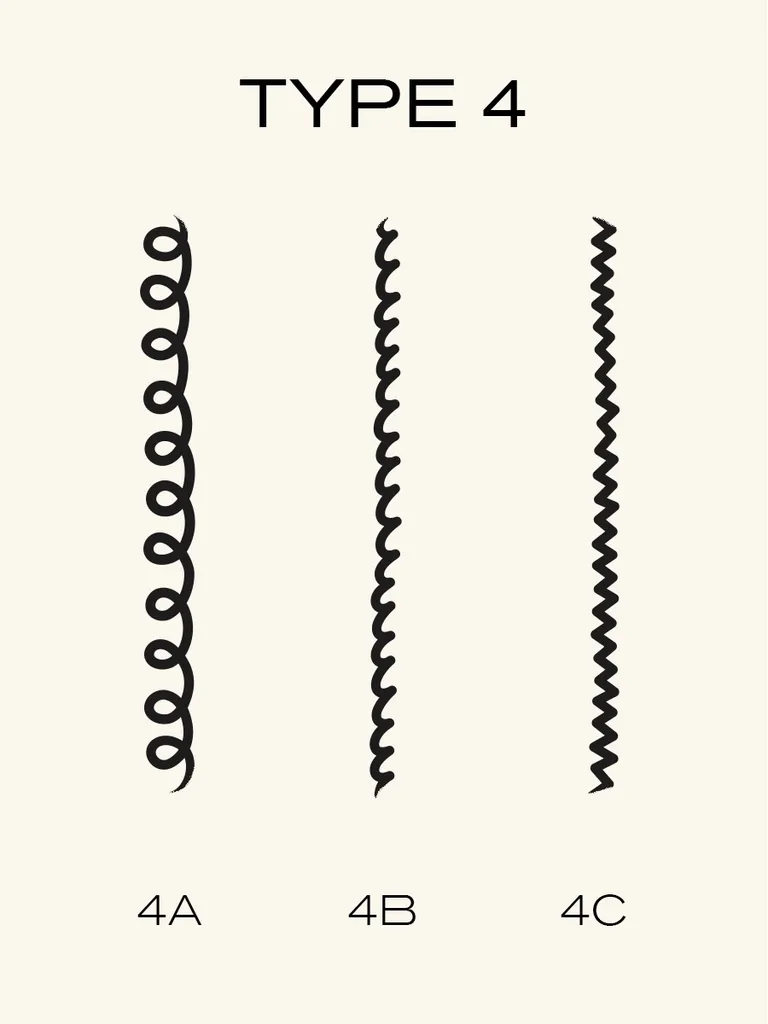
Type 4 hair is often described as coily, kinky, or Afro-textured. It has a tighter curl pattern and may form small coils, zigzags, or a combination of both. This hair type is naturally more prone to dryness because scalp oils have a harder time travelling down the bends of the strand.
Type 4 hair can be fine, medium, or coarse, and it often experiences shrinkage. Moisture is extremely important for keeping this texture soft, manageable, and healthy.
4a Hair
Type 4a hair has a clearly visible curl pattern with small, springy S-shaped coils. The curls are usually densely packed and can look very defined when properly moisturised.
A good routine for 4a hair may include a leave-in conditioner, curl cream, and occasional scalp care. Using a scalp massager can help loosen buildup and support a cleaner, healthier scalp.
4b Hair
Type 4b hair has a tighter pattern with more of a Z-shaped bend rather than a rounded coil. This texture is very versatile and can be worn in many styles, but it often needs extra moisture to stay soft.
Because 4b hair can become dry quickly, use hydrating sprays, leave-in conditioners, and rich curl creams between wash days. Layering moisture carefully can help improve manageability and reduce breakage.
4c Hair
Type 4c hair has a very tight zigzag pattern that may not always be easy to see. It often has the most shrinkage of all curl types and needs gentle care to prevent dryness and breakage.
Avoid harsh shampoos or products that contain drying sulphates. Instead, look for moisturising leave-ins, creams, and natural oils such as argan oil, coconut oil, shea butter, or similar nourishing ingredients. The goal is to keep the hair moisturised, protected, and easy to detangle.
Building a Curly Hair Routine
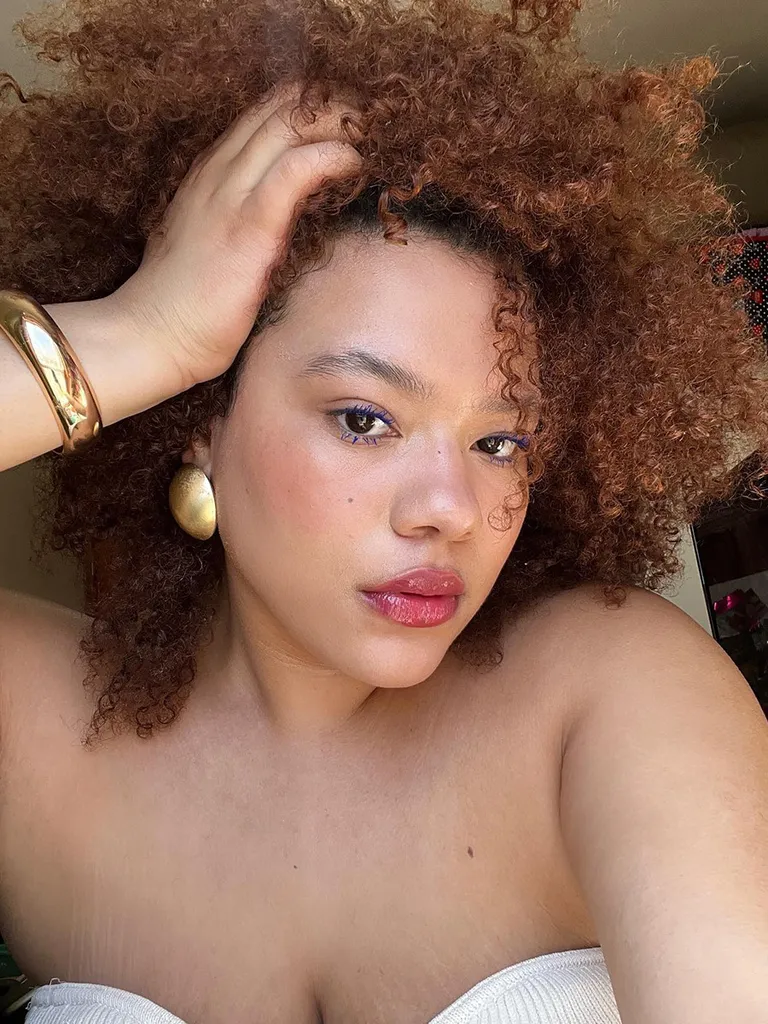
If you are just starting to understand your curls, it is best to keep your routine simple. Instead of using too many styling products at once, focus first on hair health. This includes regular trims, moisture treatments, gentle cleansing, conditioning, heat protection, and nighttime care.
Trimming your hair every 10 to 12 weeks can help remove split ends and keep curls looking fresh. Pre-wash oil treatments, repairing masks, leave-in conditioners, and protective styling habits can also make a major difference.
Nighttime protection is especially important. Sleeping directly on cotton pillowcases can cause friction, frizz, and moisture loss. A silk or satin wrap, bonnet, or pillowcase can help preserve your curls and protect the products you applied during the day.
The Lock In, Ease Out, and Maintain Method
A simple curly hair routine can be divided into three main steps: hydration, styling, and maintenance. This method helps curls stay moisturised, defined, and longer-lasting.
Lock In: Hydrate the Hair – Start by washing your scalp with a moisturising shampoo. A formula with protein or strengthening ingredients can help support the hair while keeping it clean. Follow with a conditioner or hair mask, then use a wide-tooth comb or wet brush to distribute the product evenly.
After rinsing, gently squeeze out extra water and apply a leave-in conditioner. This step helps prepare the hair for styling and keeps the curls soft as they dry.
Ease Out: Style and Set the Curls – Once your hair is hydrated, apply your styling product. Depending on your curl type, this may be a mousse, curl cream, styling gel, or a combination of products.
Allow your curls to dry and form their shape. When the hair is fully dry and the product has created a light cast, apply a small amount of oil or serum to your palms. Tip your head forward and gently scrunch the curls to soften the cast and add shine.
Maintain: Make Your Curls Last Longer – To extend your style, protect your curls while sleeping. A silk scarf, satin bonnet, or smooth pillowcase can help reduce frizz and dryness overnight.
Try not to overwash curly hair, as frequent washing can remove natural oils. Instead, refresh your curls between washes with water, leave-in spray, or a small amount of styling product where needed.
Finding the right curl products can take time. What works beautifully for one person may not give the same result for someone else, even if they appear to have a similar curl type. Hair density, porosity, thickness, damage level, climate, and styling habits all play a role.
If you are new to curly haircare, start with a moisturising cream or leave-in conditioner. Once you understand how much hydration your hair needs, you can decide whether to add more hold with mousse, gel, or styling foam.
Do not be afraid to experiment, but avoid changing too many products at the same time. Testing one product at a time makes it easier to understand what your hair likes and what it does not. Curly hair is not one-size-fits-all. From soft waves to tight coils, every curl pattern has its own needs. The best routine is one that keeps your hair hydrated, protected, and easy to manage.
Once you understand your curl type, porosity, and moisture needs, building a routine becomes much easier. With the right products, gentle styling methods, and consistent nighttime protection, your curls can look healthier, more defined, and more vibrant.
