
A small tree from South America is quietly starting a fight on a balcony on the fourth floor in Lisbon. The neighbours to the right love it and wink as they pass a bowl of shiny orange berries over the railing. While they sweep the tiles, the neighbours on the left complain a little too loudly about “that invasive thing dropping seeds everywhere.”
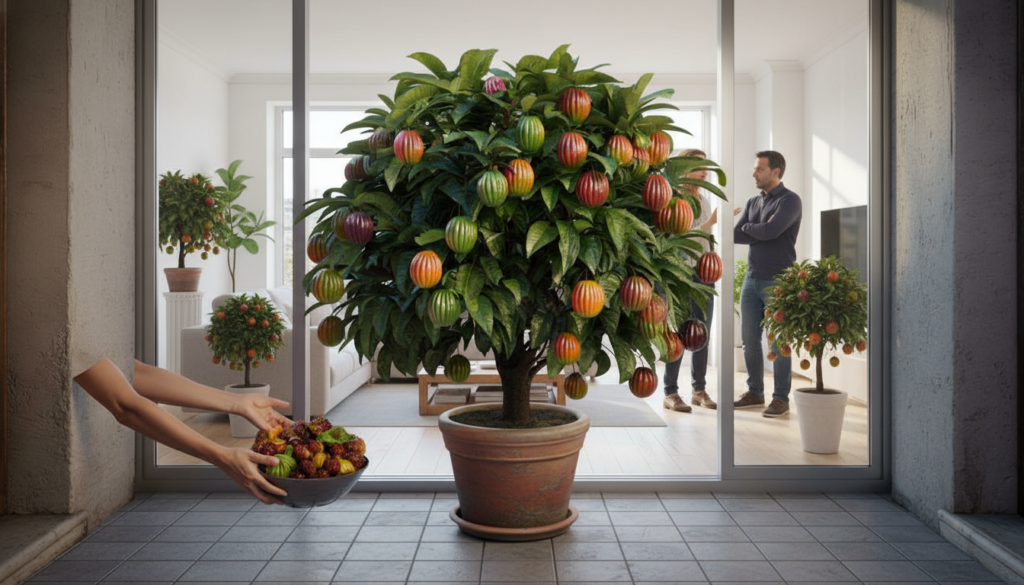
The tree in question is no bigger than a coffee table, but it has caused a lot of noise among plant lovers. People say that the Brazilian cherry tree, which is also known as the pitanga or Surinam cherry, is the next “must-have” indoor fruit tree. Some people say it doesn’t belong near a sofa, let alone in every living room.
Is this cute or is it trouble in a pot?
When a tree with tropical fruit comes into the living room
It looks like magic when you see a Brazilian cherry tree growing well in a simple terracotta pot for the first time. In the spring, it has dozens of delicate white flowers that smell faintly of honey. The leaves are shiny and the bushy shape is neat. Then, weeks later, the berries show up. They look like ridged, pumpkin-shaped balls that change colour from green to bright red, and sometimes even dark purple.

This is where the obsession begins. You can’t stop eating it after one bite because of the strange mix of sweet, slightly resinous, and almost spicy flavours. Some people say it’s like a stubborn baby between a mango and a tomato. When people post pictures of their balcony harvests on Instagram, the comments come in fast and loud.
If you look through gardening forums, you’ll see the pattern. A woman in Berlin proudly shows off a picture of her first bowl of pitangas, which she picked from a plant that was 60 centimetres tall and put in a recycled paint bucket. Someone below says, “This tree should never leave South America; it goes wild.” Another user responds with a screenshot from a nursery site that says, “Perfect for pots.” No problems at all. Perfect for balconies.
In the meantime, small urban garden centers are doing very well. A shop owner in Madrid says that his stock of dwarf Brazilian cherry trees sold out twice this spring. Most of the buyers were people who lived in apartments with balconies that were “smaller than a yoga mat.” The plant fits the fantasy: you can have fresh fruit right at your fingertips without having to have a garden, a greenhouse, or a botany book.
The fight starts when you remember that this same cute tree is considered invasive in some parts of Australia, Florida, and some islands in the Indian Ocean. Birds eat the fruit and spread the seeds, which is how pitanga hedges suddenly appear where no one planted them. *In Perth, a houseplant in Paris can be a pain.
Scientists quietly wince when influencers call it “the perfect fruit tree for every living room.” They don’t mind growing it in pots; they just know how quickly gardening trends spread. One excited YouTube video, a few online plant stores, and a tropical shrub are all going from one continent to the next, right into the next environmental debate.
How to plant a Brazilian cherry tree in a pot (without starting a fight)
If you already love those shiny leaves and are looking at a little pitanga in a nursery, the good news is that the plant really does like pots. It has a small root system and grows into a bush on its own, so you won’t have to worry about a tree scraping your ceiling. Get a container that is about the size of a bucket and has real drainage holes, not the fake ones that look nice but don’t work.
A loose, slightly acidic potting mix is best. You can mix citrus or camellia soil with regular potting soil. Put the pot in the sunniest spot you can find, where it will get at least 4 to 6 hours of direct light. That can be great on a balcony. It’s pretty much torture in a dark living room. Light is what really makes fruit go bad.
Most balcony dramas start when people water their plants. People either water the plant a lot because they love it or forget about it for two weeks during a heat wave. This tree needs regular water, not mud or desert. Water it deeply until the water drains from the bottom, but let the top few centimetres dry out between waterings.
We all know that feeling when you poke the ground, say to yourself, “It’s probably fine,” and leave. Let’s be honest: no one really does this every day. That little habit, though, is what keeps the leaves shiny and the twig from getting grumpy and losing leaves one at a time.

Pruning is still easy. Trim the tips once or twice a year after the tree has produced fruit to keep it round and get rid of any branches that cross over each other. This keeps the tree small and lets light get to the leaves inside when it’s inside. It keeps your pitanga from leaning into your neighbor’s espresso break on the balcony.
Some farmers swear by a light, balanced fertiliser that is only half as strong during the growing season. Some people use compost and wait. One urban gardener in Porto said to me:
“I treat it like a flatmate who won’t leave.” I give it some food and a sunny spot, and it pays the rent with fruit.
A few useful habits can help you keep everything in check:
Pick up fallen fruit quickly so that seeds don’t roll away or grow in cracks.
Pick the fruit often; it tastes better and birds are less likely to eat it.
If the pot is on a shared balcony, put a saucer or mat under it to keep it from getting sticky.
Don’t throw away branches or seeds that have been cut off in natural areas or public parks.
Check with local gardeners to see if there are any rules about planting pitanga outside.
Does every living room really need a tree that grows tropical fruit?
It’s hard to go back to plain ficus after you’ve seen a Brazilian cherry tree with fruit by the TV. The difference is appealing: a plant that doesn’t just sit there being green; it actually feeds you. For people who live in cities and are used to supermarket fruit that tastes like cardboard, one balcony harvest can feel like a rebellion.
But that doesn’t mean this tree should be in every home or climate. Not everyone has enough light, time to water, or knowledge of what happens to seeds that end up in a nearby park or ravine. The same plant that makes you feel like you’ve won on a Paris windowsill could become a problem that takes a long time to fix if a lot of people start planting it outside in a mild area where it can’t be grown.
There’s also the personal side. Some people really don’t like the strong smell of overripe fruit or the resinous aftertaste. Some people live in small apartments and don’t want fallen leaves, sticky berries, or a pot taking up the only sunny spot. A lemon balm pot or a small chilli plant might make them just as happy, and there would be fewer fights over the hoover.
The current balcony debate hides a bigger question: what kind of relationship do we want to have with plants at home? Are they decorative and “safe,” or useful and a little unpredictable? You have to choose between two things when you see a pitanga tree. It doesn’t matter. It asks for light, care, and a little bit of responsibility for what happens outside of the pot.
So maybe the real trend isn’t “a Brazilian cherry tree in every room.” Perhaps this is a new way to think about exotic plants, where we enjoy the harvest but are aware of the effects. You can love the flowers that smell good and still care about the ecosystems outside your front door.
You might feel a little curious the next time you see those small orange-red fruits glowing over a city street. Would this tree fit on your balcony, in your house, or not at all? Would your neighbours be grateful for the fruit bowl, or would they complain about the seeds? The answer will probably tell you as much about your city, your habits, and your idea of home as it does about this beautiful, stubborn shrub.
Main point Detail What the reader gets out of it
Pitanga is good for pot culture.Small roots, bushy habit, does well in sunny pots with good drainageHelps readers figure out if their space and light can really support the tree
Ecology and controversySome places think it’s an invasive plant when it’s planted in the ground and spread by birds.Promotes responsible growth and keeps the environment safe from damage that wasn’t planned.
Care that is simple but steadyMost problems can be avoided by watering your plants regularly, trimming them lightly, and cleaning up the fruit quickly.Gives you a clear, low-stress way to enjoy fruit without any problems on the balcony.