
The parking lot at school looks like a traffic jam of stress that is moving slowly. Parents looking at their watches, kids dragging backpacks that seem heavier than they are, and teachers waving goodbye at the gate even though they know the day isn’t over yet. The real shift starts at 4 p.m. at kitchen tables, on living room carpets, and in backseats between activities: the homework shift.
Everyone is worn out. No one says it out loud.
A ten-year-old stares at a worksheet they already did well on in class, and their dad scrolls through his phone, acting like he doesn’t see how angry they are getting. The teacher is in another part of town grading a lot of the same worksheet. She is wondering if anyone is really learning from it.
This routine that we think is normal feels very wrong.
What if the kids aren’t the problem at all?
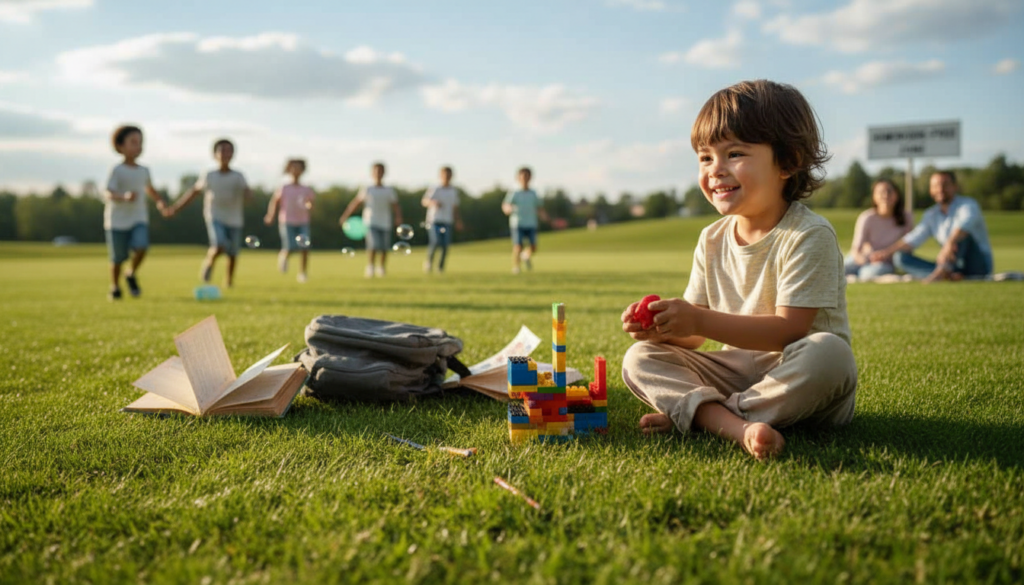
Homework is stealing childhood right in front of our eyes.
You can feel it when you walk into any house on a weekday night. The low-level tension in the air, the sighs, and the talks: “Finish your maths, then you can relax.”
Every night, homework time turns into a war zone where parents become unpaid tutors, kids become little overworked workers, and school slowly takes over every part of family life.
We talk a lot about discipline and learning. We don’t talk about the price as much.
It’s like attention is an endless resource, so kids who have already given six hours of solid focus are expected to sit down and give more. Adults don’t agree with that in their own work. But we think it’s wrong when a kid can’t.
One well-known study found that elementary school kids did an average of 30 minutes of homework each night. It looks good on paper.
When you see a real house at 7:30 p.m., it feels different. The dishes from dinner were piling up, the younger siblings were crying, a parent was trying to remember how to do long division the “new way,” and a child was blinking back tears because it was almost bedtime and the spelling sheet was still half-empty.
There are also the outliers that no one wants to talk about. The third grader who has to do 90 minutes of homework. The teen is logging three hours after practice for sports. The kid who lies and says, “I finished at school,” just to get one night off to relax.
That kid isn’t a slacker. That kid is very tired.

When researchers at Duke and Stanford looked at homework, they found something that could cause a lot of trouble. For students in elementary school, homework has almost no effect on how well they do in school. The effect is small for kids in middle school. For high school students, extra homework doesn’t help after a certain point; it actually makes things worse.
We tell ourselves that doing homework makes us more responsible and disciplined. What it often builds instead is anger, anxiety, and the feeling that learning is a chore, not something interesting to do.*If homework really worked the way adults say it does, kids would be happier and more curious, not burnt-out 12-year-olds who already sound like tired office workers.
The truth is that we’re protecting a tradition, not a tool.
What would kids do instead of doing homework?
Imagine this: the bell rings, and the kids go home without any worksheets, “read 20 minutes or else,” or colour-coded assignment logs.
A lot of adults are scared of what happens next. We picture kids staring at screens all day and doing “nothing.”
But if you talk to kids in places where they don’t have a lot of homework, like Finland or some experimental schools, you’ll see a different side of the story. Children go outside. They read things they really enjoy. They make up games, write songs, draw comics, and build Lego cities with kids from the neighbourhood.
That messy, unplanned time isn’t empty. It’s a place where creativity, problem-solving, and real self-motivation grow without anyone noticing.
For example, Lena, a 13-year-old, went to a middle school that stopped giving out traditional homework for a year. Instead of having to do homework every night, students could choose to do “challenge projects” or not.
Lena did what most of us would do at first: she watched a lot of TV, texted friends, and enjoyed the sudden freedom. Teachers got ready for grades to drop and students to lose interest.
What happened was even stranger. After a month, Lena began writing a fantasy story based on a history topic they had studied in class. She did this every night. She even looked up more information on her own because, as she put it, “No one told me I had to.”
Her grades stayed the same. She slept better. Her parents stopped being scared of weeknights.
When homework was over, learning didn’t stop. Forced learning did.
Unstructured time feels so radical right now for a reason. We’ve slowly come to terms with the idea that kids need to be “productive” almost all the time: school, homework, sports, enrichment, and so on.
But psychologists keep telling us that kids don’t need more lessons. They need to be able to make their own choices. They need to play. They need enough sleep so that their brains can put together what they learned in class.
When schools stop giving kids worksheets every night, something simple but important can happen. Parents go back to being parents instead of enforcers. Kids are kids again.
Let’s be honest: no one really does this every day with a smile. The yelling, the bargaining, and the “one more page.” That’s not a sign that you failed. It means that the system is working against everyone in the room.

How to learn more by giving less
Not allowing homework doesn’t mean you can’t learn after 3 p.m. It means changing how it looks.
Some schools have started a new tradition: “closing the day” before students go home. Teachers give students 5 to 10 minutes to go over what they learned, write down one question they still have, and one thing they are proud of understanding.
Then they send them home with a simple invitation, not an obligation: “Find something in the world that relates to what we did today.”
That could be a part of a pizza box, a metaphor in a song lyric, or a reference to history on TV.
Not a worksheet. Kids only have a mental lens to look through.
Once the nightly homework battle is over, parents can change their roles too. They can make their home a “learning-rich home” instead of hovering over their work. This doesn’t mean making it look like Pinterest; it means living there.
Books that aren’t neatly arranged in baskets. Dinner conversations that go from TikTok drama to climate change. Letting kids explain how to play a game, come up with a recipe, or make their case for a later bedtime like a little lawyer.
Don’t secretly rebrand homework; that’s the trap to avoid. Making every walk a quiz, every movie a lecture, and every weekend a secret project.
Kids can tell the difference between being curious and being in charge. One lets them in. The other one pushes them away.
A veteran teacher from Montreal told me, “Kids don’t need more hours of school at home.” “They need adults who believe that six hours of focused learning is enough and that the rest of the day is theirs.”
Set a “school stops here” limit: Choose a time after which school is not talked about unless the child does.
Set up a quiet area, not a “homework station,” where anyone in the family can read, draw, or work on something without a timer.
Instead of asking, “Did you finish?” ask, “What made you think today?”
Make sure that at least one weeknight is completely free: no homework, no activities, just free time.
Talk to teachers as partners, not enemies. Tell them what your evenings are really like at home and ask them what can be changed or dropped.
What kids really need from us right now
There is a quieter question behind the debate about homework: what do we really think childhood is for?
Is it a camp to get ready for your career, or a once-in-a-lifetime chance to explore, make mistakes, relax, connect with others, and learn more about yourself without having to worry about getting a bad review every day?
It sounds extreme to ban homework because we’ve made it so that being busy all the time feels safer than leaving space. But space is where real curiosity, motivation, and resilience come from.
Parents are worn out. Teachers are worn out. Kids are really tired.
Taking worksheets out of the evenings won’t magically solve all of education’s problems. Still, it would send a strong message: that we believe in focused classroom time, that we value family life, and that kids should have evenings that are theirs, not filled with a pile of photocopied homework.
Maybe the most courageous thing we can do right now is this simple: let them put down their books, go outside, and remember what it was like to learn when no one was watching.
| Key point | Detail | Value for the reader |
|---|---|---|
| Homework has low impact for young kids | Research shows minimal academic benefit in elementary school and diminishing returns later | Relieves guilt for parents who feel forced to enforce nightly assignments |
| Unstructured time is not wasted time | Play, rest, and self-chosen activities strengthen creativity and real motivation | Offers a new way to see “free time” as essential, not irresponsible |
| Small shifts can replace big workloads | End-of-day classroom reflection and simple home rituals support learning without worksheets | Gives concrete steps to talk about and test in families and schools |