
The notification ping wasn’t loud, but it felt like a punch. You’re in your kitchen, waiting for the kettle to boil, when all of a sudden your chest is tight, your jaw is tense, and your eyes are hot. There is no drama, no yelling, and no bad news. A Thursday, a cup of coffee that wasn’t too hot, and an email that wasn’t finished. But your body is acting like the world is on fire.
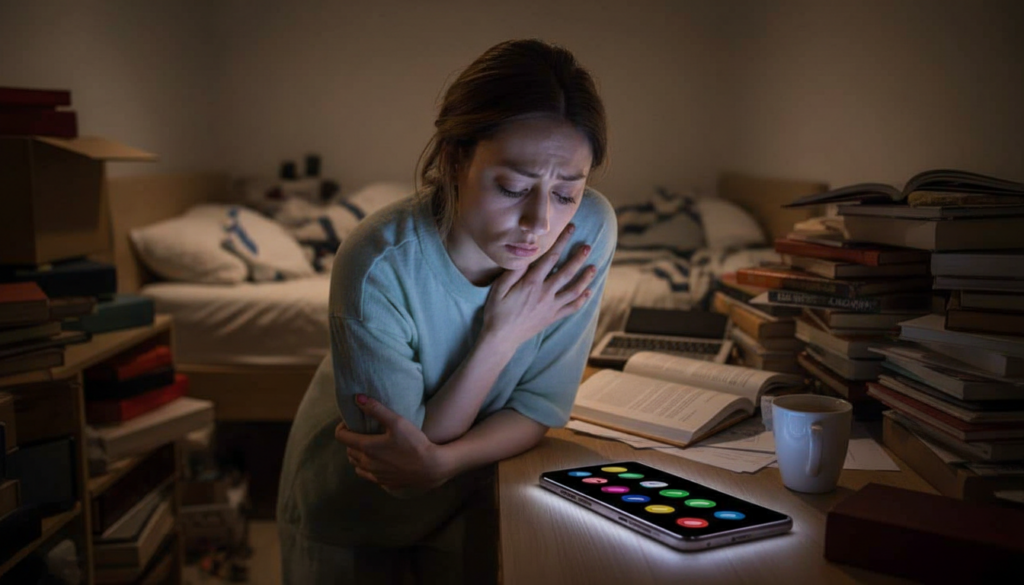
You scroll to get your mind off of things, but the videos get blurry. You try to reply to a message, but you start to cry for no apparent reason. When someone asks, “Are you okay?” the honest answer is, “I don’t know.”
And at the same time, it all feels like too much.
When your feelings are too much but nothing big is going on
When your life looks “fine” on paper but you feel overwhelmed, you feel a strange kind of shame. Not a breakup. No loss of work. There isn’t a big crisis to point to. Just a hundred little requests, worries, and tasks that aren’t quite done. They build up so quietly that you don’t notice the weight until one day a harmless comment or a dirty plate pushes you over the edge.
 We may not be saving birds but making them dependent—the debated research behind winter feeding
You yell at someone you care about. You cry in the toilet at work. You are stuck in your car outside the supermarket with your hands on the wheel. And you say to yourself, “What’s wrong with me?”
Imagine this. You wake up tired and go through your messages, answering three and ignoring seven. You eat breakfast quickly while mentally going over the things you’ve forgotten. Your work inbox fills up faster than you can empty it. You tell your friend you’ll “catch up soon,” but you really hope they don’t.
Your body is buzzing, your mind is foggy, and your patience is gone by the end of the day. That day, nothing bad happened. There isn’t one thing that makes the sound of the TV or the question “What’s for dinner?” feel like a threat. But your whole system is saying “too much.”
This is called emotional overload without a clear cause. A lot of the time, it’s because of low-level, chronic stress that never goes away. Your nervous system can’t tell the difference between a real emergency and a never-ending to-do list.
Notifications, decisions, performance, and self-comparison are all micro-demands that we aren’t built to handle all the time. So when your brain keeps juggling, your feelings will eventually come out. *The issue isn’t that you’re “too sensitive”; it’s that you’ve been taking in more than a person can handle in silence.
How to deal with “too much” when you can’t explain why
One surprisingly effective way to start is to say or write down what you are feeling right now. Not why. What? “Exhausted, on edge, angry, sad, wired.” That’s all.
This simple emotional vocabulary works like a small pressure valve. Your mind goes from “everything is chaos” to “this is stress, frustration, and sadness.” It’s a small act of control in the middle of a storm. No one needs to see it. You can write it down, say it quietly while you wash your hands, or think it while you look at your screen.
It’s easy to bully yourself into not feeling your feelings. You tell yourself that other people have it worse. You tell yourself that you have a job, a roof over your head, and food, and you feel bad for having trouble. You read self-help posts and feel like you can’t even be calm.

This inner speech doesn’t make you feel better. It just adds more stress: now you’re not only overworked, but you’re also “not grateful enough.” Let’s be honest: no one breathes deeply, drinks two litres of water, meditates every day, and never loses it. You don’t have to be perfect to deserve a break.
Hearing that you’re not the only one going through this strange, formless overload can sometimes be the most helpful thing.
“Nothing bad happened today, but I cried on the kitchen floor for twenty minutes when I got home. Not because of one big thing, but because they were “on” all the time.
Micro-pause ritual: Every time you unlock your phone or close your laptop, take three slow breaths. No study. Only three breaths.
The “one-screen” rule: Do one thing every day without a second screen. No phone with coffee. TV that doesn’t let you scroll. Give your brain one channel at a time.
Rest on a low bar: Instead of “self-care routine,” ask yourself, “What feels 5% less heavy right now?” A shower with music playing. On the floor. Two minutes of looking out the window.
Gentle boundary: More often, say, “I’ll answer this tomorrow.” You can let future-you live.
Check in with your body: Take note of one physical feeling: a tight jaw, clenched fists, and shallow breathing. Change just that, not anything else.
Living with too many feelings in a world that never stops asking
There is a quiet revolution going on in admitting that we aren’t always okay, even if there isn’t a clear reason. When you say it out loud to a friend, partner, or therapist, you can often see how relieved they are. “You feel that too?” All of a sudden, the weight is shared. In a world where people are always connected, your experience is no longer a personal failure but a human condition.
We’ve all had that moment when we realise that our lives look normal from the outside, but inside, they’re full of things. You are not broken. You’re reacting to a speed that isn’t good for a human nervous system. Wanting buffer zones doesn’t make you weak.
You don’t have to wait for a crash to change the volume. Little, almost invisible choices change your days over time: saying no to one extra task, waiting to answer messages, and letting yourself rest without having to work hard for it. These aren’t luxuries; they’re ways to stay alive.
The next time you want to cry for no reason, maybe you’ll stop and think before you judge yourself. You will remember that a thousand little things matter too. And you could give your busy self what you would give a friend right away: patience, kindness, and a little more space.
Important pointValue for the reader in detail
It can be hard to tell when you’re emotionally overloaded.It usually comes from a lot of small stresses building up, not one big problem.Lessens shame and self-blame, makes the experience seem normal
Little rituals help you let go of stress.Micro-pauses, naming feelings, and low-bar rest practicesProvides real-life tools that work on busy, messy days
Being kind to yourself is better than being hard on yourself. Letting go of the story that says “I have no right to feel this way”Promotes a kinder, more sustainable way to deal with things