
The smell comes first. That smell that smells a little sour and greasy is coming from what looks like a perfectly clean stack of kitchen towels. You take one out to clean a glass and see the faint yellow halo around the edges, the old tomato stain ghosting through the fibres, and the grey cast that never really goes away. You’ve soaked them in baking soda, run the hottest cycle your machine can offer, and tried every “natural” hack Instagram has to offer. Your tea towels still look… tired.
What about the other half? One word: risky.
From a comfortable kitchen routine to a dangerous science experiment
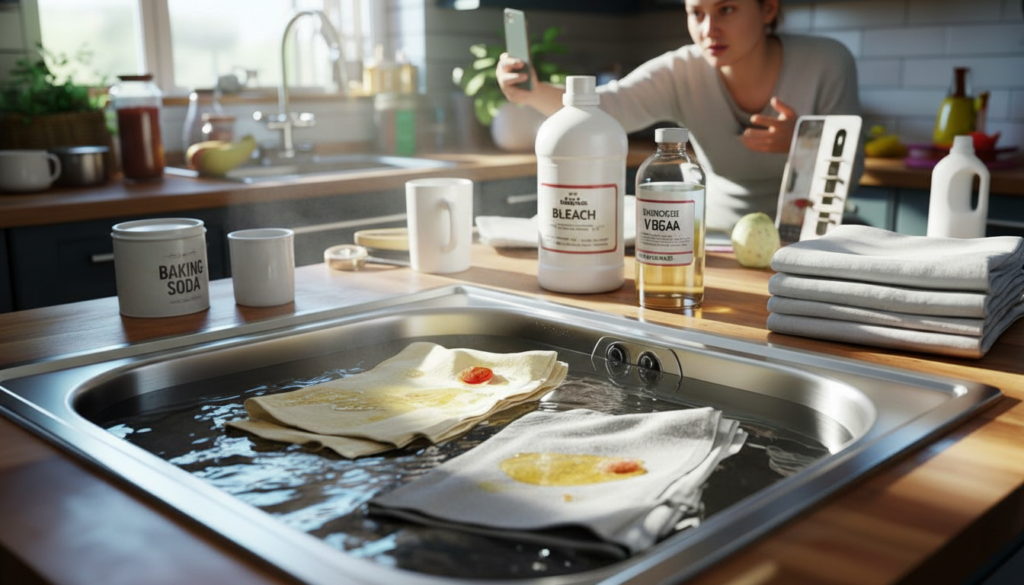
It usually starts on a Sunday night. The sink is full of dirty dishes, the coffee rings are all over the counter and the kitchen towels are piled up next to the washing machine. You scroll through your phone while the kettle boils and come across a video of a ‘pro’ pouring bleach and vinegar into a steaming washbasin of towels.
The camera zooms in a lot, the water gets cloudy, and a caption says, “Whiter than new in 10 minutes.” Your brain says, “That looks shady.” Your dirty towels say, “Do it.”

The recipe is almost always the same on social media. Water that is hot. Detergent that you use all the time. Then the twist: people would mix chlorine bleach and white vinegar in the same soak and even tell others to cover the basin “to trap the fumes for better cleaning.”
One viral video that got millions of views just showed brown, dirty water pouring out of the bucket, as if dirt alone were proof of safety. The person who made it called it a “deep detox for dirty dish towels.” What about the comments? A split screen shows thankful converts posting pictures of themselves before and after, while chemistry teachers yell in all caps about toxic gas.
Without the drama, it’s just basic chemistry. Bleach and acid, like vinegar, can let chlorine gas out. That greenish-yellow gas used to be on a World War I battlefield, not in your IKEA kitchen. It can make your eyes and lungs hurt at low levels, and at higher levels, it can send people to the ER.
But the algorithm loves the shock value, and the subtlety gets lost in the fast clips and dramatic music. *That’s how a cleaning hack goes from being useful to dangerous without anyone noticing.
People are really doing the “forget baking soda” trick.
If you look closely, this is what the controversial routine usually looks like. A big plastic tub or a washbasin made of stainless steel. Boiled water from a kettle or very hot tap water. A scoop of strong laundry detergent. Then add a lot of regular chlorine bleach and stir it with a wooden spoon.
This is about what you would expect from traditional stain removal so far. The “magic touch” comes next: a long pour of white vinegar straight into the bleached water while the towels are still soaking. You can see bubbles forming right away, and sometimes small bubbles race to the surface. Some people who make things even put their face close to “smell the clean.”
A lot of people say that their towels have never smelt or looked cleaner. One home cook said that when she took out her old tea towels, she “felt like I had just unboxed a 12-pack from the store.” She said that her kitchen felt cleaner and more organised, as if a reset button had been pressed on years of coffee and spaghetti sauce spills.
We all know what it’s like to feel like your kitchen is a living thing that is one step ahead of you. A quick, strong fix can feel like getting back what you lost. Especially when your usual baking soda and lemon routine looks boring and slow next to a foaming, dramatic soak.
From a chemistry point of view, the halo of cleanliness comes at a price. Bleach cleans by releasing active chlorine into water that is not acidic. Vinegar lowers the pH, which makes chlorine gas more likely to form. You are putting a respiratory irritant in a place where you cook and breathe every day, even if your kitchen is big and the dose is small.
Safety groups and laundry experts keep saying the same thing over and over: don’t mix acids with chlorine bleach. The problem is that next to a washbasin full of swirling white towels and dramatic music, that warning looks boring on a phone screen. Let’s be honest: most people don’t read the back of the bottle; they just want quick results.
A safer way to get new, white kitchen towels
So what do people do to get the same “wow” effect without making the kitchen look like a lab? A routine that is less showy and more methodical is the safest. First, separate the kitchen linens from the rest of your laundry. Those towels come into contact with raw chicken juice, coffee, and cleaning sprays, so they need their own cycle.

Fill your machine with **hot water and a strong, enzyme-based detergent** and run a pre-wash. That alone gets rid of grease and proteins. Use an oxygen-based bleach, which is often called “Oxy” or “percarbonate,” to whiten things. This kind of bleach releases oxygen in water instead of chlorine gas. It takes longer to work, but it’s much better for lungs and fabrics.
If you like vinegar, use it for the rinse instead of the soak. Adding a little bit of plain white vinegar to the fabric softener compartment helps get rid of detergent residue and smells without having to share a bathtub with chlorine-based products. What matters is the time between them.
A lot of people also skip what really works best: putting the clothes in the dryer on high heat or letting them dry in the sun. Heat and UV light really do kill bacteria and get rid of smells. But we forget the simple things that our grandparents used to do and focus too much on miracle additives. *Stop treating your towels like a science experiment and start treating them like tools that need regular, simple care. This will make them last longer.
One laundry trainer I talked to was very clear:
“People want hotel-white towels but don’t read the label or the safety sheet. There is one rule that never changes in the cleaning business: bleach and acids don’t expire. Always.
Then she told me the routine she gives to families who are sick of smelly tea towels but don’t want to be chemists:
Wash kitchen towels separately on the hottest cycle that the label says is safe.
For a load that is very dirty, use **full-dose detergent** instead of a “tiny eco scoop.”
For everyday washes, skip the chlorine and add oxygen bleach powder.
Never use vinegar and bleach together; only use vinegar in the rinse compartment.
Dry all the way through, either in a hot dryer or in the sun.
These small changes won’t get a million views, but they do fix the same problem without getting close to toxic gas.
Why this “dangerous hack” keeps coming back
The fact that this trend won’t go away says something. It’s not just about the towels. It’s about wanting to know that your home is clean in a world that seems messy and out of control. It’s very basic to watch brown water go down a drain. It tells your brain, “The dirt is gone.” You did something.
We are also pulled in two different directions: the soft, eco-friendly image of lemon and baking soda and the hard, industrial promise of bleach and “detox soaks.” The vinegar-and-bleach mix that some people don’t like sits awkwardly in the middle. It looks like a homemade tip but acts like a lab-grade process.
The truth is that most of the time, you won’t need extreme hacks if you wash your kitchen towels in hot water, often, and let them dry completely. But life doesn’t always look like a label. A pile of wet towels sits there. Kids wipe things on them that we don’t know what. Someone cleans up the juice from raw meat but doesn’t wash their hands right away. Risky shortcuts do best in that space between what people should do and what they actually do.
The real question might not be “Is this hack safe?” but “Why do we wait so long and then do something so extreme?” That’s when the talk gets interesting and personal.
Main pointDetail: What the reader gets out of it
Mixing products can be dangerousWhen you mix bleach and vinegar, you can let out chlorine gas.Helps you stay away from dangerous “deep clean” hacks
A safer way to whitenUse full-dose detergent, hot water, and oxygen bleach.Gets towels cleaner and whiter without any harmful fumes
Using vinegar wiselyOnly add it to the rinse, never to the bleach. Keeps deodorising benefits while being safe