
The woman in the mirror isn’t an Instagram model. She is 48 years old and still wearing her office blouse. The bathroom light is buzzing softly above her. Her roots are back, that stubborn silver stripe against the chestnut brown she chose five years ago and never really liked. The box dye on the shelf is waiting, like a tax she hates to pay every month. She lifts a piece, turns it, and squints. Instead of “How do I hide this?” for the first time, another thought comes to mind: “What if I just worked with it?”

She opens her phone and starts scrolling, and all of a sudden it’s everywhere. Shimmering gray, smoky blondes, and “peppery brunettes.” Women look strangely younger and fresher than they did with their old dye.
Things are changing quickly.

Why everyone is suddenly changing their minds about gray hair
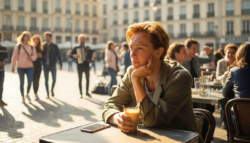
You can start to see it when you walk through any café on a weekday. Men and women who look more stylish than tired have silver streaks in messy buns, soft grey fringes, and glowing skin. They also have a slightly rock’n’roll “salt and pepper” look. For a long time, gray hair meant “I’ve given up,” but now it looks like the opposite.
What’s really interesting is that this change didn’t happen because of flashy ads. It came from blurry selfies, TikTok “grey transition” diaries, and women at the hairdresser whispering to each other, “I’m thinking about stopping dyeing.” Could it really work for me?
One Paris colorist told me that three years ago, she might get one client a month who wanted to “go natural.” Now, there are three a day. Not everyone wants full-on silver. A lot of them come with screenshots of “grey blending,” a new method that doesn’t get rid of white hair but instead wraps it in soft highlights and lowlights so it blends in with the rest.
Sara, who was 52 years old and dyed her hair dark brown every three weeks, is a good example. She thought her face was getting harsher and the contrast was too strong. After her first grey blending session, she walked out with a smoky, multi-tone brown shot through with silver ribbons. People at work asked her if she had been on vacation. No one could quite figure out what had changed.
The real twist is that gray is no longer “out” or “in.” It is being shaped, softened, and reframed. The trend isn’t about letting roots grow out of control. It’s about using new colors and styles to make gray hair look like it was meant to be there, like a custom filter on your head.
We’ve all had that moment when your roots show and you feel like you’ve aged ten years overnight. The new movement changes that. Hair actually lifts the face, especially around the eyes and cheekbones, by lowering the contrast and using lighter, cooler colors. A flat, opaque dye often looks more modern and surprisingly younger than this one.
The new way to hide gray… without “covering” it
So what do people do instead of using the usual permanent box dye? Grey blending is the new trend. Think of it as a filter that makes your roots look softer. The colorist works with the way your white hair naturally grows, not against it. They add very fine highlights and sometimes lowlights in colors that match your gray instead of fighting it.
On darker bases, that could mean espresso lowlights and cool beige highlights, so the silver looks like it belongs. For blondes, it can be champagne threads mixed with natural white. The secret is to use small pieces and see-through colors. No big “stripes” or heavy blocks. Just a thin layer of tones that makes regrowth almost impossible to see.
People often say that the biggest mistake they make is trying to go from dark hair to full gray hair overnight. That’s when they get harsh lines, strange orange undertones, and, to be honest, a shock every time they look in the mirror. The more kind way is to do it slowly: each visit, lift the dyed lengths a little bit lighter, add cooler highlights near the face, and let some of the natural gray show through.
To be honest, no one really does this every day. You can’t go to the salon all the time and get your hair done in fancy ways. That’s why the best grey transitions are easy to take care of. Less work on the roots, softer grow-out, and styles that look good with a little frizz or an undone wave. Hair that can live in the real world, not just in front of ring lights.
One colorist said it best:
“Grey isn’t the enemy,” she said. “Hard lines and flat color are. People can see their own face again, not just their hair, once we soften both.
A lot of stylists now use a simple checklist to get there:
To make the new gray less noticeable, make the base a little lighter.
- Put very fine, cool-toned highlights around the face.
- Leave some depth at the roots so the result doesn’t look dull.
- Use toners and glosses to get rid of yellow or orange and add shine.
- Change the haircut: make the layers softer, move them around the jawline, and add side-swept bangs.
*Most of the time, it’s the haircut that makes someone look five years younger.
A more gentle view of age, beauty, and upkeep
A quieter kind of rebellion is really starting to show up behind this trend. For a long time, the message was clear: cover, hide, and erase. More and more people are saying, “I don’t want to fight with my hair every three weeks.” I want something that feels like me. Grey blending and cool “anti-age” tones are less about looking like you’re 25 and more about looking like yourself at 42, 51, or 67.
The talks in salons are changing as well. Clients come in with screenshots, but they also have questions about their budgets, how tired they are, and how burned out they are from always having to keep things up. A lot of people don’t want a big “big chop” or a viral reveal. They want a smooth change, with one coworker noticing at a time, until one day the monthly panic about roots is no longer a part of their life.
| Key point | Detail | Value for the reader |
|---|---|---|
| Grey blending over full coverage | Fine highlights and lowlights that mix with natural silver | Softer regrowth, fewer emergency dye sessions |
| Lighter, cooler tones | Beige, ash, champagne shades instead of very dark, flat color | Face looks fresher, skin tone appears brighter and more even |
| Cut and texture matter | Soft layers, movement, and shine-enhancing products | Natural grey looks intentional and stylish, not neglected |
Questions and Answers:
Question 1: Does showing some gray hair always make you look older?
Answer 1: Not always. A harsh, dark dye with noticeable gray regrowth can make a face look older than a soft, blended look. To make the hair work with your skin instead of against it, you need to lower the contrast and add movement.
Question 2: How long does it usually take for a grey blending transition to happen?
Answer 2: It depends on how dark your hair is and how much dye you have on it. A lot of people notice a big difference after 2–3 appointments spaced out over a few months. Then they slowly refine their look. You don’t have to do everything at once.
Question 3: Is it possible to blend gray at home using box dyes?
Answer 3It’s hard to do true grey blending on your own because it needs micro-sections and custom tones. At home, you can use semi-permanent glosses or toners to cool down brassiness and add shine, but the detailed work is best in a salon.
Question 4: What if my natural gray is very uneven?
Answer 4Patchy gray can still look nice. A colorist can add lowlights to areas that are very white and highlights to areas that are still dark to make everything look more even. You don’t need to make everything look the same; just make sure the overall pattern looks good.
Question 5Will I have to do less work once I switch to this trend?
Answer 5: Most of the time, yes. You can wait 8 to 12 weeks between appointments instead of every 3 to 4 weeks because the regrowth is softer and closer to your natural color. You give up urgent root coverage in exchange for occasional shine and tone refreshes.