
Once a Pinterest must-have and the star of countless before-and-after photos, the kitchen island is now causing hesitation. Many homeowners stand in their pristine kitchens wondering why the space feels awkward. Often, the island is too large to ignore, too small to truly gather around, and ends up blocking light, movement, and everyday flow. Designers are increasingly removing them, not because they failed, but because daily living has quietly evolved. The emerging trend doesn’t add another feature. It gives back what was lost: space, air, and freedom of movement.
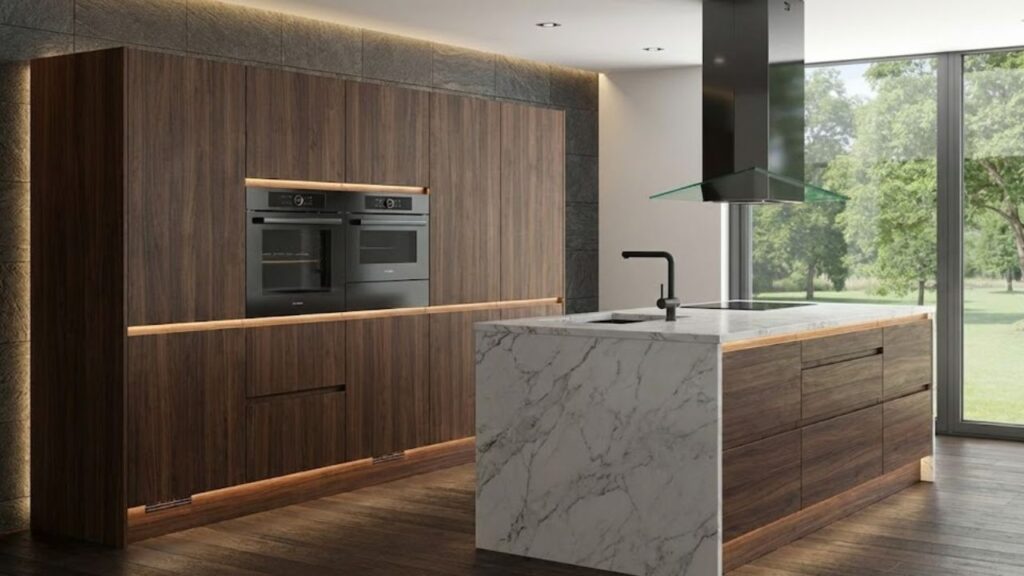
On a rainy Tuesday evening in London, interior designer Hannah Lewis watched her clients navigate around their flawless marble island. Children squeezed past each other carrying plates, a dishwasher door caused collisions, and even the dog ended up trapped between cabinets. Everything looked perfect, yet nothing felt comfortable.
“This island is beautiful,” Hannah said, “but it’s sitting in the middle of your life like a parked car.” The comment sparked laughter, mixed with hesitation. Only a year earlier, the family had invested heavily in installing it. Now, they were asking if it could be removed.

When the island was finally taken out, the room felt strangely bare. Then a slim, movable prep table and a warm dining bench by the window were added. That same evening, the family ate together in the kitchen for the first time in months. The space had changed, and so had the way it was used.
How Kitchen Islands Lost Their Status Symbol Appeal
Browse through property listings from the late 2010s and the pattern is clear: grey shaker cabinets, pendant lighting, and a large island placed squarely in the centre. Over time, it became a default choice rather than a thoughtful one.
Today, architects speak more about flow, negative space, and multi-use zones. Instead of a single block dominating the room, layouts are becoming lighter and more adaptable. What once symbolised success now risks resembling an oversized fixture from a previous era.
Sofia and Mark, a couple in their thirties, experienced this shift firsthand when renovating their 1970s semi-detached home. Their contractor repeatedly suggested installing a large island, promising added value. Friends had one. Estate agents recommended it. They nearly agreed.
Instead, they chose a different approach: a long, slim counter along the wall, a freestanding butcher’s block on wheels, and a generous dining table beneath a pendant light. Six months later, friends refer to their home as the place where everyone actually gathers in the kitchen. The table became the social centre, while the butcher’s block moved as needed.
This isn’t a rejection of islands altogether. It’s a quiet correction. Open-plan living expanded rapidly, but kitchen layouts didn’t fully adapt. The traditional image of a chef at the island with guests perched on stools no longer fits hybrid work, homework sessions, batch cooking, or overlapping video calls. The new direction favours flexible, lighter solutions that adjust to real, messy days.
Smarter Alternatives That Put People First
If moving beyond the island feels appealing, start with an honest question: where do you actually move and stand in your kitchen? Not the ideal version, but the real one. Think about where coffee is made half-awake, groceries are unloaded, and meals are prepared.
Measure those routes and sketch several smaller zones instead of one large block. This might include a wall-aligned counter with deep drawers, a narrow peninsula that defines space without blocking it, or a mobile prep table that shifts when needed.
Many designers now recommend creating a social edge: a slim ledge or breakfast bar along a wall or window. It gives guests somewhere to lean, work briefly, or enjoy a drink without interfering with cooking areas.

Another popular solution is the double-duty table. Sturdy, easy to clean, correctly sized, and placed near power and lighting, it adapts throughout the day. Morning work, midday prep, evening meals. The more roles one piece can play, the less need there is for a massive fixed island.
Problems often arise when homeowners try to force island functions into limited space. Narrow walkways, bruised hips, and blocked appliance access quickly follow. In reality, everyday life doesn’t allow for constant rearranging. This is why modern layouts prioritise built-in simplicity, clear paths, and open centres. The aim isn’t perfection. It’s forgiveness on busy days.
As interior stylist Julia Reid puts it, the best kitchens today don’t rely on a dramatic island. They offer a feeling: space to breathe, places to set things down, and comfortable spots to sit and talk while someone cooks.
Related Reading and Popular Topics
- Pellets: a lesser-known way to reduce heating costs before autumn
- A simple morning light adjustment that supports steady energy all day
- Centenarian shares daily habits behind her long life and independence
- The longest solar eclipse of the century now has an official date
- A budget-friendly use of wood ash gaining popularity in France
- One spoonful of a common kitchen liquid that keeps floors fresh for days
- Why chefs add a pinch of baking soda to tomato sauce to reduce acidity
- Why grocery shopping habits repeat and how to change them
Design Principles Replacing the Traditional Island
- Choose mobility over bulk: rolling carts and slim prep tables outperform oversized blocks
- Protect circulation: maintain at least one-metre walkways where movement is natural
- Highlight the table: comfortable tables often attract more daily life than islands
Living Without an Island: Daily Life After Removal
The first noticeable change after removing an island isn’t the missing surface. It’s the quiet. Without a large hard block reflecting sound, the kitchen feels calmer. The empty centre becomes a breathing space.
On busy school mornings, that openness matters. Children move freely, groceries land without congestion, and no one gets stuck between appliances. The room behaves more like a small plaza than a traffic bottleneck.
By evening, the same openness feels social. People lean, perch, sit, and drift naturally. Without a single focal block, conversation forms where it feels comfortable, not where furniture dictates.
Many also notice an emotional shift. Kitchens start to feel less like magazine spreads and more like homes. Rugs appear. Plants spread out. Chairs find corners. One designer described it as bringing softness back into hard spaces. Function remains. Pressure disappears.
Islands won’t vanish entirely. In large rooms or central open plans, a smaller, lighter version can still work well. However, the trend is clearly moving away from oversized, fixed monuments toward layouts that feel lived in, adaptable, and human.
When people say goodbye to kitchen islands, they’re often expressing a deeper desire. Homes that match real life: flexible, imperfect, and always changing. In many spaces, the island dominates without truly serving.
The new generation of kitchens doesn’t demand attention. It welcomes you in. Shoulders relax. Homework spreads across the table. Guests gravitate toward light, not stone. Perhaps the true luxury now isn’t a slab of marble, but a kitchen that lets you move freely and feel supported by the space itself.
- Flexible zones over fixed islands: peninsulas, movable carts, and wall counters offer adaptable layouts
- Flow before spectacle: clear paths and natural gathering points reduce daily stress
- Multi-use furniture: shared surfaces handle cooking, working, and gathering without crowding