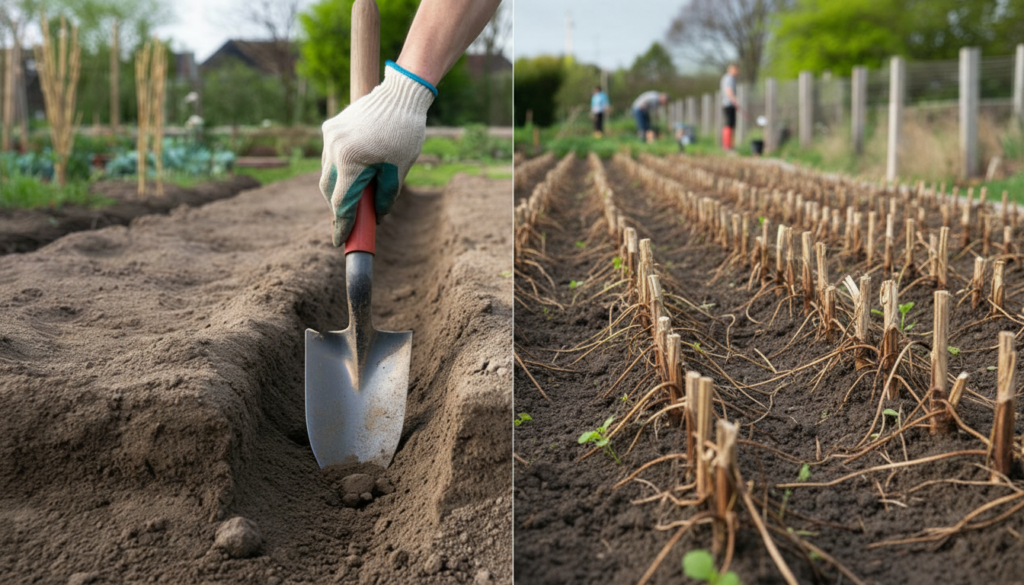
My neighbour thought I had given up on the garden the first time I left a row of dead bean plants standing. The pods had dried up, the leaves were gone, and all that was left was a mess of brittle stems and old stakes. After the harvest, I was tired and didn’t have the energy to pull everything out. I cut off the tops, threw them on the compost, and walked away, leaving the roots buried in the ground like a secret. Winter came, rain fell hard on the beds, and boots crossed the paths. I got ready for the usual spring problems: clods, compaction, and those stubborn bricks of dirt that break tools and tempers.
When I stopped pulling roots out of the ground
I put my hand on the bed where the beans had been when spring came. The ground gave way gently, like a sponge. The solid, lifeless slab I had fought with in the past was gone. It broke apart in my hands. It was dark, wet, and almost silky. Every handful of earthworms flickered away from the light. I stood there with my hand in the dirt, feeling strange pride for something I hadn’t really done.
What is the difference? Those roots are still down there, slowly breaking down.
I planted carrots in that same bed a few weeks later. I usually fight for straight, even rows. This time, the seeds went in easily on a smooth, fine surface. The carrots sprouted quickly and grew steadily, with thick, unapologetic leaves. When I pulled them, the orange roots came out of the ground with little effort.

I got the opposite on the bed next to mine, where I had ‘cleaned up properly’ the fall before by pulling out every last root. Germination is patchy, there are more forked carrots, and the soil is harder. Same seeds, same gardener, but a different story below the surface.
The logic behind what I found is very simple. Roots don’t just hold plants in place; they also shape the soil. As they get bigger, they push through small spaces, letting air and water through. When the plant dies, the roots don’t just disappear; they slowly rot and turn into tiny tubes filled with organic matter. Microbes come in. Fungi spread out. Earthworms use those paths like highways in the ground.
The end result is a network of pores and tunnels that looks like it was made by nature. My lazy autumn had set up a workshop of quiet workers who worked all winter to reshape the soil.
How to keep roots in place without ruining your beds
The basic gesture is almost too easy: instead of pulling the whole plant out of the ground, you cut it off at the base and leave the roots in the ground. I cut the stem just above the soil level with a sharp pruner or a serrated knife. The parts that are above ground go to the compost or a different pile. The parts that are underground stay where they are, hidden and busy.
For tougher plants like sunflowers or brassicas, I sometimes rock the stem gently to loosen it a little bit before cutting it as low as I can. The goal is to not disturb the soil too much. Think of it as shutting the door softly instead of slamming it.
I draw a few lines that make sense. I don’t leave roots from plants that are clearly sick, like cabbages with clubroot or tomatoes that are burnt by blight. Those go far away from the beds or into the city’s green waste. I also pull up couch grass, bindweed, and thistle, which are all perennial weeds with rhizomes. Those roots are not what you want to “feed” your soil system.
We all know what it’s like to want to leave everything behind and hope for the best.
This method is not that kind of neglect.
It’s a kind of laziness that you choose, where you let the right roots do the slow, underground work for you.
A friend who is a market gardener told me, “Once I stopped obsessively ‘cleaning’ my beds, the soil did what it had been trying to do all along: heal itself.” “I just had to move out of the way.”
At the end of the season, cut annual vegetable plants at the base and leave their roots in place.
If you see that a plant is sick, pull it out and throw it away so you don’t have to deal with the same problems next year.
Instead of letting invasive perennial weeds spread underground, pull them up completely, roots and all.
Put a thin layer of mulch on top of the dead roots to protect the soil and feed the plants.
Over the course of one or two seasons, look at how the texture and life of “root-kept” beds and fully cleared beds are different.
The silent change that is happening right under your feet
It’s hard to forget how your own soil got soft without you having to dig it in twice. You start to notice how rainwater sinks instead of pooling. How to help plants last longer during a dry spell. How to make it easier for your fork to slip in. It’s not magic; it’s structure. There are a lot of tiny holes left by dead roots that are filled with life and air instead of being compacted and frustrated.

Let’s be honest: no one really does this every day. Some seasons go by quickly, some beds get pulled up quickly, and some mistakes happen over and over again without you even thinking about it. But if you choose to leave those roots behind on purpose, even just one row, you open the door to a different way of gardening that relies more on biology than on brute force.
| Key point | Detail | Value for the reader |
|---|---|---|
| Leaving roots in place | Cut plants at soil level and let roots decompose underground | Improves soil structure naturally without heavy digging |
| Selective removal | Pull diseased plants and invasive perennials, keep healthy annual roots | Reduces disease risk while boosting soil life |
| Support with mulch | Add a light organic cover over dead roots | Enhances moisture retention and feeds soil organisms |
Frequently Asked Questions:
Question 1 After I pick tomatoes, I leave the roots in the ground.
Yes, as long as the plants were healthy and not sick with blight or any other serious disease. If your plant had disease problems, take it out completely, including the roots, and don’t compost them in a home pile.
Question 2: Will leaving roots bring in more bugs?
Not usually. Most pests eat leaves and fruit, not dead roots. Microbes and earthworms mostly eat decaying roots, which makes the soil healthier and helps plants fight off pests.
Question 3: Does this work in clay soils?
Yes, it works best in clay that is very heavy. Roots make channels that help break up thick layers over time, which lets air and water move more easily.
Question 4: How long does it take for roots to break down?
Fine roots can decompose in a matter of months. Thicker roots may take a year or more to break down, but as they do, they become part of the soil structure.
Question 5: Is it okay to plant seeds directly into a bed with old roots in it?
Most of the time, yes. Most roots that are breaking down don’t get in the way of planting. If you hit a thick root while making a furrow, just move it out of the way with your fingers or a small tool and keep going.