
Most people think that a fruit bowl like the ones you see in supermarkets is a good way to keep fruits and vegetables close by. In fact, one innocent way of storing onions quickly ruins them much faster than you might think.
Why your onions go bad so quickly
Onions are tougher than strawberries, but they can still break. They breathe, they lose water, and they react to things you put next to them.
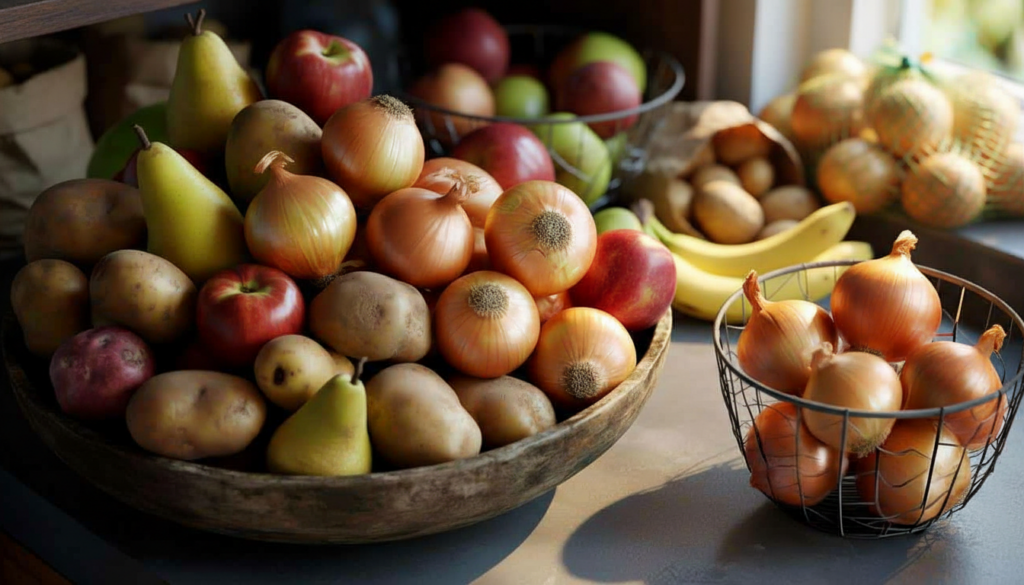
In a lot of homes, onions are stored with other fruits and vegetables in the same bowl, basket, or cupboard. It looks neat. It feels like it’s in order. But this is when the countdown to rot really starts to speed up.

Putting onions next to some fruits and vegetables, especially fresh fruit, makes them sprout, soften and rot by making a small gas chamber.
Ethylene is a natural plant hormone that is the main cause. As some foods ripen, they let out a lot of it. These gases affect onions, causing them to age quickly.
The biggest mistake is putting onions with potatoes and fruit.
If you ask a food scientist what not to keep with onions, they’ll tell you two things: potatoes and fruit that has a lot of ethylene.
A bad marriage between onions and potatoes in the cupboard
In a lot of kitchens, onions and potatoes are kept in the same dark cupboard or even the same bag. They really shouldn’t.
Potatoes “breathe” moisture, which makes a microclimate that is a little bit damp.
When there is too much moisture in the air, onions get soft and mouldy.
Both let out gases that make each other age faster.
What happens next is well-known: first, the onion skins lose their crunch, then green shoots show up, then a sharp smell and wet, mushy layers inside.
Never put potatoes and onions next to each other. They make each other’s shelf life a lot shorter.
Fruit bowls that quietly ruin onions
The classic fruit bowl is another big problem. In it, onions can sometimes end up next to apples, pears, or bananas.
Many fruits give off ethylene to help them ripen. When that gas gets stuck around onions, it speeds up the process of decay. Onions sprout earlier, their taste gets stronger, and the inner rings start to break down.
Where onions really stay fresh the longest
The good news is that you don’t need expensive gadgets or special containers to keep onions fresh and tasty. You just need the right space and the right place.
The best conditions for whole onions
When storing whole, unpeeled onions, think cool, dry, and airy.
The best temperature is between 7 and 15 degrees Celsius (45 and 60 degrees Fahrenheit), but room temperature works if it’s not too hot.
Use a wire basket, a mesh bag, or an open paper bag to let air flow through them.
Don’t let them get too close to heaters, ovens, or sunny windowsills.
Whole onions last the longest when they are kept in a cool, dry, well-ventilated place, away from direct light and other foods.
A pantry, cellar, or a shady spot in the kitchen is usually good enough. Just make sure they aren’t stuffed into a plastic bag, where moisture gets trapped and speeds up spoilage.
Do you need to keep onions in the fridge?
A lot of people make mistakes here. The fridge seems like the safest place, but it depends on how the onion is.
Whole brown or yellow onions should not be kept in the fridge. Instead, they should be kept in a dry, well-ventilated place.
Red onions also do well in a cool cupboard, but if your kitchen is very warm, the fridge can help.
Onions that have been cut or peeled must be stored in the fridge in a container that won’t let air in.
Spring onions (also called green onions) like to be in the fridge with a little moisture around their roots.

Whole onions can soak up smells and moisture from other foods in the fridge. Condensation on their skins makes them rot faster. That’s why it’s usually best to keep whole bulbs in a dry pantry.
How to keep spring onions, sliced, and peeled
Cut onions that are still good
When you cut or peel an onion, you break the layers that protect it. Bacteria and mould can get in more easily, and the flesh dries out quickly.
Put cut onions in a sealed container in the fridge and use them within a few days.
| Food stored next to onions | What typically happens |
|---|---|
| Potatoes | Both sprout sooner; onions go soft and mouldy |
| Apples, pears, bananas | Onions sprout and lose flavour quickly |
| Tomatoes, avocados | Mutual softening and faster spoilage |
| Garlic | Not as dramatic, but both dry out and sprout sooner when packed tightly |
Best way to do it:
Put chopped or sliced onions in a small, sealed box or a zip bag.
Put a date on the label and try to use it within three to four days.
Don’t let them eat cakes or dairy desserts because they pick up smells easily.
A little bit different story for spring onions
Green onions, also known as scallions or spring onions, act more like herbs. They wilt quickly on the counter, but if you take care of them, they stay fresh in the fridge.
Two simple ways:
Put them in a glass with some water, roots down, and cover them loosely with a bag. Put them in the fridge and change the water often.
Towel method: Put them in a bag that is only slightly closed and put them in the refrigerator’s crisper drawer.
Both methods keep the fragile green tops safe and stop the white bulbs from getting slimy.
Easy ways to make sure you don’t cook with bad onions
Onions are still organic products, even when stored carefully. They will get older and eventually break down. Before you cook, take a quick look to save your food and your stomach.
Look: Get rid of onions that have dark, watery spots, mould, or big green-blue patches.
Touch: They should feel solid. There are soft or hollow spots inside that are a warning sign.
Smell: A strong onion smell is okay, but a sour, fermented, or musty smell is not.
An onion that is slimy, smells bad, or is very discoloured should not be cooked; it should be thrown away.
This small habit is good for your health and your money.
At first glance, this seems like a small change to the kitchen. Keep onions separate and dry; don’t bury them under potatoes. But the effects add up over time.
Better storage means you won’t have to throw away as many onions and you won’t have to rush to the store at the last minute. You save money, cut down on food waste, and lower the risk of accidentally eating spoilt food, which can upset digestion or cause allergies in some people.
There is also a taste benefit. A clean and sweet onion is one that hasn’t been exposed to too much moisture or ethylene gas. When the main ingredient is still fresh and not about to rot, slow-cooked meals, broths, and simple sautés all taste better.
You can make a quick mental list by imagining three areas in your kitchen: a cool, airy place just for whole onions; a fridge area for cut and spring onions; and a separate basket for potatoes and most fruit. That little bit of space between foods can make the difference between an onion that is crisp and one that has fallen apart.