
The woman in the salon chair looks flawless from the shoulders down. A sharp blazer. Fine gold hoops. Sneakers that quietly signal she knows trends before they hit social feeds. Then she leans closer to the mirror, parts her hair, and exhales. A stark line of grey sits at the roots, cutting through her worn brown dye.
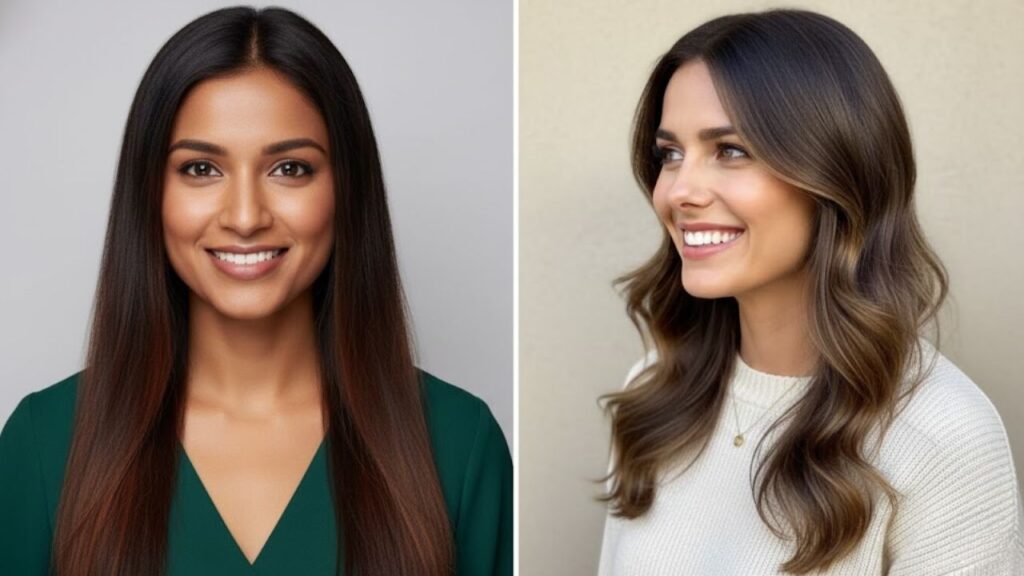
Her colorist smiles, lowering her voice. “There’s another option now. No full coverage. We work with your grey instead of battling it.” Around the room, it’s visible on other heads too: light-catching strands, soft shadows, hair that glows rather than looks painted. They don’t appear artificially younger. They look rested. Calmer.
The question lingers: what if covering grey no longer meant pretending it wasn’t there?

Grey coverage reimagined: from concealment to subtle blend
Grey hair is no longer treated as a flaw to erase. The emerging approach is to blend it gently, not smother it under opaque dye. Stylists speak of “grey veiling,” “low-maintenance blending,” and “reverse highlights” designed to reduce contrast between silver strands and natural color.
The result avoids the familiar helmet-like finish. Instead, hair looks translucent and dimensional, reflecting light and softening greys rather than creating a hard edge at the roots. People don’t ask if you’ve colored your hair. They ask something far more flattering: “Did you sleep better?”
On a quiet Tuesday in London, colorist Jade Morgan scrolls through photos of a 52-year-old client. In the first image, her hair is a uniform chocolate brown—shiny, but heavy, sharpening her jaw and deepening shadows under her eyes.
The second image tells a different story. Smoky beige highlights and deeper lowlights frame her face, allowing natural grey at the temples to remain visible. The grey isn’t erased; it’s strategically placed. Her skin appears brighter, her eyes clearer. No fillers. No weight loss. Only a new way of treating grey.
“She messaged me the next day,” Jade says. “Her colleagues thought she’d taken time off. Same haircut. Completely different effect.”
Why blending works better than solid color
The reasoning becomes obvious once you notice it. Solid dye turns hair into a single block of color, especially with darker shades. As grey grows in, the contrast is harsh, forcing constant root touch-ups every few weeks.
Blended coverage softens that boundary. By mixing tones close to your natural shade and letting some grey exist between them, regrowth fades into a gradual transition instead of a stark line. Light moves through the hair, creating a natural soft-focus effect around the face.
This isn’t about denying the presence of grey. It’s about guiding where the eye settles. And visually, that reads as fresher, lighter, and more youthful.
| Key point | Details | Why it matters to readers |
|---|---|---|
| Choose blending, not full coverage | Ask your colorist for grey blending, lowlights, or a gloss that softens harsh lines instead of a single permanent shade from roots to ends. | Reduces visible root regrowth, makes grey look intentional, and typically means fewer salon visits across the year. |
| Match technique to your natural base | Dark hair often benefits from subtle shadow roots and soft lowlights; lighter hair usually looks fresher with babylights and a cool‑toned glaze. | A method adapted to your starting color avoids flat, wig‑like results and keeps you in the “you, but rested” zone rather than “obviously dyed”. |
| Maintain with gentle, tinted care | Use sulfate‑free shampoo, occasional purple or blue shampoo to fight yellow tones, and weekly masks with a hint of pigment (beige, pearl, or smoky). | Keeps grey and blended strands bright instead of dull, extends time between color appointments, and protects already delicate hair from damage. |
How modern grey-blending techniques actually work
The foundation of this trend is targeted color, not full saturation. Often, that means a semi-permanent gloss to neutralise yellow tones in grey hair, paired with ultra-fine lowlights where natural color looks flat. It’s closer to airbrushing than repainting.
For darker hair, stylists often use “shadowing,” subtly deepening the root area so grey appears softer without disappearing. On lighter hair, delicate “babylights” blur silver strands into a luminous, halo-like finish. The appointment feels less like an emergency fix and more like a thoughtful plan.
At home, the same philosophy applies. Modern root sprays and pens are more sheer, designed to blur rather than mask. Tinted masks cool brassy tones or add hints of beige or pearl, turning dull grey into something intentional.
Practically speaking, this approach extends the time between major salon visits. Many women shift from four-week appointments to eight or even twelve. That’s less expense, less time, and less mental load. Soyons honnêtes : personne ne fait vraiment ça tous les jours.

The aim isn’t flawlessness in every mirror and every light. It’s looking like yourself on a good day, most days.
There’s also an emotional side. Paris stylist Nina B. describes the moment clients see their blended grey for the first time. Shoulders relax. Some tear up. It’s more than hair—it’s a quiet agreement with time.
She cautions against a common mistake: jumping straight from dark permanent dye to icy silver. That path is stressful for hair and patience alike. A smarter route is gradual blending—warmer tones first, then cooler, then silver—allowing both hair and perception to adapt.
How to approach grey blending wisely
- Begin with a consultation and bring photos that actually show grey hair.
- Use specific language: ask for lowlights, gloss, or grey blending, not total coverage.
- Plan a 6–12 month transition rather than a single dramatic change.
- Choose gentle shampoos and heat protection—partly grey hair is more fragile.
- Photograph your hair in daylight after each visit to see what truly flatters your face.
Why blended grey often looks younger than total coverage
When people say you look younger, they’re usually responding to light. Patchy or yellowed grey absorbs light unevenly, casting shadows on the face. A thoughtful blend redirects that light, like a soft lamp that’s always on.
These techniques rely on micro-shifts in tone—subtle caramel, muted ash, cool beige. Those tiny contrasts signal vitality rather than fatigue. Flat, uniform color tends to do the opposite, especially as skin naturally loses brightness over time.
The irony is hard to miss: chasing perfect coverage can age you more than the grey itself.
Culturally, things are shifting. Younger people deliberately add silver streaks, while women in their 40s and 50s discuss transition plans openly with their stylists. The old shame around grey is weakening.
This doesn’t mean everyone should go fully silver. It means you can decide how visible your grey is, rather than defaulting to “same as always.” Giving names to options—blending, veiling, contouring—creates space for something less defensive.
Yes, there’s vanity in it. There’s also relief.
At its core, this trend is about control. You don’t choose when the first white hair appears. You do choose how to respond. For some, that’s bold silver. For others, a refined mix that leaves people wondering what changed.
The modern approach to grey doesn’t force a choice between embracing everything or hiding everything. It offers a middle ground. A softer narrative when you look in the mirror.
Maybe you’ll keep coloring—just more intelligently. Maybe you’ll let the grey take over slowly, on your terms. Or maybe you’ll catch your reflection in a bus window one day and realise the best compliment isn’t “You look young,” but “You look like yourself again.”