Tuesday, which is honestly the least magical day of the week, was the night I finally felt my shoulders drop. When I got home, I was glued to my phone, scrolling through headlines and half-reading emails. I was already mentally apologising for everything I hadn’t done. The lights were too bright, the living room was a mess, and my mind felt like it had 37 tabs open at once. I didn’t want to order food to go again. I didn’t want another sad yoghurt to sit by the sink. I just wanted less noise, both inside and outside.
Dinner that feels like a hug, not a show
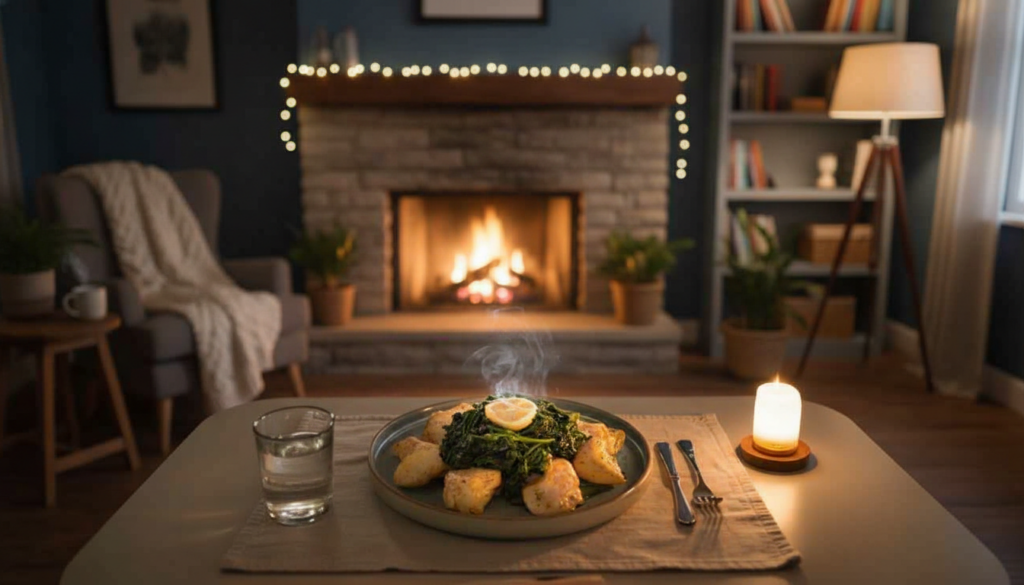
I made what I now call my “reset bowl”: roasted potatoes, chicken with garlic, and a pile of buttery spinach with a squeeze of lemon. The kind of plate that feels like a jumper you forgot you had. The oven did most of the work, and I moved slower than usual, almost on purpose. I turned off the big ceiling light without even realising it when I dimmed the light over the table. The flat smelt like thyme and olive oil. Time went by a little bit. Dinner wasn’t something I had to do this time. It felt like a place to land. I once read a study that said people who eat home-cooked meals together often feel less stressed and more connected. That night, I was the only one at the table, but I still felt that same quiet comfort. I put down a real placemat. I used the “good” plate that is usually set out for guests who never show up. I even filled a small glass with water instead of drinking straight from the bottle like a thirsty camel. That simple ritual made the meal feel important, like telling my brain, “This moment matters.” I wasn’t scrolling or answering texts. I was just eating something real and warm. A nice dinner can make a bad day feel better for a reason. Warm food tells your body that you are safe and that you are not in an emergency. Chopping, stirring, and tasting take your mind off the bad thoughts and put it on something physical, rhythmic, and predictable. Carrots from the store. A pan that is getting hot. The little sizzle that happens when butter hits metal. This kind of quiet repetition is good for our brains. It’s like a reset button that looks like “just cooking.”
And when you sit down to eat a meal you made with your own tired hands, your stress stops being the main character.
How to make your own “I can breathe again” meal
One pan, one pot, and one bowl changed my nights. That’s all. I choose a protein that doesn’t need a lot of attention (like chicken thighs, salmon, or tofu), a vegetable that roasts without any problems (like carrots, broccoli, or sweet potato), and a base that is soft and warm, like rice or mashed potatoes. I put everything in olive oil, salt, pepper, and maybe garlic and paprika. Then I put the tray in the oven. While it’s cooking, I only do one small reset. It can be as simple as cleaning off the table. Sometimes it means lighting a candle. Putting my phone in another room like a bad kid is one way I deal with it. The goal isn’t to be perfect. It makes a little island of peace at the end of the day. Many people believe that they need a special recipe or a perfect kitchen to make a comforting dinner. Just thinking that is tiring. We scroll past styled tables and twelve-step meals and quietly tell ourselves that we “don’t have it together enough” for that. So we just go with whatever is quickest and least painful. Eating frozen pizza again while staring at a glowing screen, brain still racing. To be honest, no one really does this every single day. The key is to lower the bar. A nice dinner isn’t about showing off. It’s about not giving up on yourself when you’re already tired.

Cooking for someone you love can be very healing, even if that person is you.
Make the recipe as simple as possible.
One pan on the stove, one sheet pan or one pot. Put it off until another night if it needs more than 20 minutes of work.
Use what you really have
Eggs on toast with cherry tomatoes that have been blistered in a pan make for a cosy dinner. Or pasta with frozen peas, butter, and garlic. No special ingredients are needed.
Not just the food, but the mood too.
Turn off the light above you. Put on some soft music or nothing at all. Make a fold in a serviette. Even if it’s only for eight minutes, sit down.
Take care of the bubble
No email. No more “just one more” TikTok. While you eat, you can step out of the stream of demands.
Don’t try to be “perfect,” try to be “better.”
You might still eat on the couch tonight. Okay. Still, light a candle. Use a real fork. Even small changes are still changes.
The quiet strength of one soft meal
What surprised me the most was how that cosy dinner affected the rest of the night. Of course, I didn’t get better right away. The deadlines were still there. The laundry still looked down on me from its chair. But my mind stopped racing quite as quickly. I had just enough room in my head to enjoy my tea and read three pages of a book instead of three pages of notifications.
One peaceful meal didn’t change the course of my life. It changed the mood of one night.
That can help you remember that your life is more than just a list of things to do.
The truth is that many of us need more than just food. We need softness.
We call it multitasking when we eat breakfast quickly, lunch at our desks, and then go back to work. By dinner, we’re so tired that we don’t even realise we’ve silenced our own needs. A nice dinner is a small way to fight that pace. It says, “I can take a break.” It’s okay for me to enjoy this. Even if my day was bad, I can still be nice to myself.
You don’t have to share it. You don’t have to take a picture of the steam.
You only need to taste it slowly while it’s still warm.
If you feel like you can’t handle everything, you might not be able to fix your boss, your inbox, or that complicated relationship you’ve been thinking about too much. You might not be able to get away from the noise of the world. But you can cook potatoes. You can stand over a pot of simmering food and breathe in the garlic, onion, and butter like it’s medicine. You can sit at a table that is a little bit clear, with a plate that says “you’re home now,” even if home is a small studio with a chair that wobbles.

| Key point | Detail | Value for the reader |
|---|---|---|
| Simple structure | One pan, one pot, one bowl approach for easy cozy dinners | Reduces decision fatigue and makes relaxation realistically achievable |
| Ritual over perfection | Small gestures like dimmer lighting, a real plate, and a few quiet minutes | Turns everyday meals into grounding moments without extra pressure |
| Emotional reset | Warm, home-cooked food signals safety and calm to the body | Helps lower stress at the end of the day and improves overall well-being |
What does the term “cosy dinner” mean?
The recipe isn’t as important as how it feels to have a cosy dinner. Food that is warm, simple, and low-pressure, eaten slowly in a calmer setting than your usual rushed, distracted meals.
Do I have to make it from scratch for it to work?
No. You can definitely make something that is only partially prepared better. For example, you can add vegetables to instant ramen, warm bread with store-bought soup, or put fresh greens and olive oil on top of frozen pizza.
How long should it take to eat this kind of dinner?
Think of it as cooking for 20 to 30 minutes with little to no work. The goal is to make things easy and comfortable, not to spend two hours in the kitchen and end up more tired than before.
Can I have a nice dinner by myself?
Yes, and it can be very strong. Even if it’s just you, making a space for yourself sends a strong message that your presence is worth honouring.
What if my house is small and messy?
Start with a small amount. Clear off one side of the table or counter, light a candle, and turn off the bright lights. You can make a little pocket of calm around your plate, even in a messy, crowded room.