
When I first saw someone spray vinegar on their front door, I thought it was a joke. It was a warm night, and kids were riding scooters in the street. My neighbour came out with a small spray bottle, misted her doorframe like she was watering a very tall plant, and then went back inside as if nothing strange had happened. No reason given. No tag. That sharp, familiar smell coming down the hall.
The next day, another neighbour asked her about it. By the end of the week, everyone in the building’s WhatsApp group was arguing about it: “Natural disinfectant!” “Bad for wood!” “Of course it’s for cleaning energy.”
Some people rolled their eyes. Some people quietly copied her.
Suddenly, the front door was a place where people fought over their beliefs.
Why people are suddenly spraying their front doors with vinegar
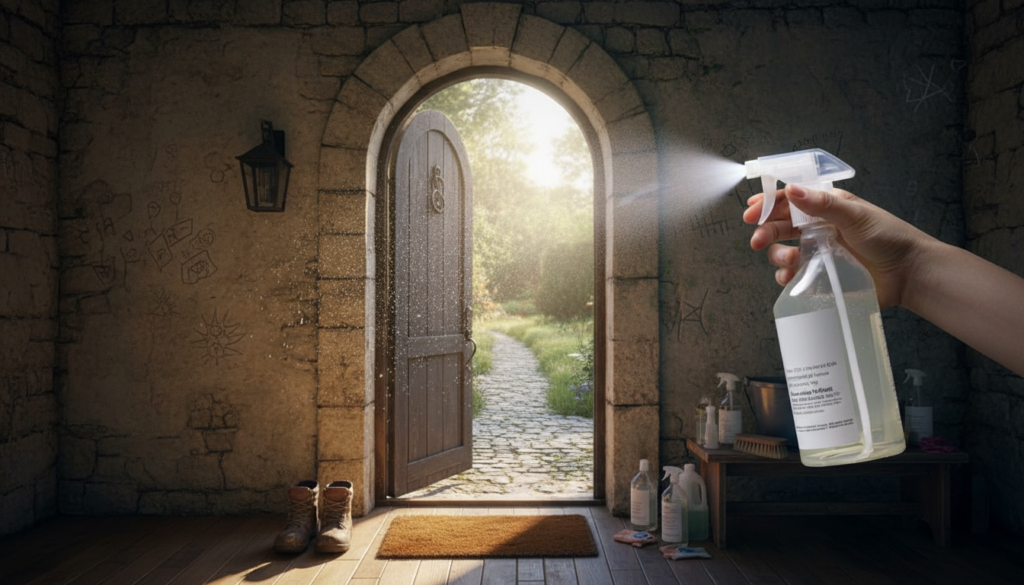
You will eventually come across it on TikTok or home-cleaning forums: a hand, a spray bottle, and a front door. A quick spray on the frame, a swipe on the handle, and maybe a cross shape on the door. “Changed my life,” the caption read. The comment section is a mess.
Some people use it as a cleaning tip. For some, it’s a spiritual barrier, a way to “reset the energy” after a fight or a bad visit. Vinegar has become the unlikely star of a quiet revolution at home, thanks to the cleaning nerds and the manifestation crowd.
There is a viral video that keeps getting shared that shows a young mother in a small, messy flat. You can see kids’ shoes stacked by the door, a pram that isn’t fully folded and delivery menus stuck in the frame. She sprays white vinegar mixed with water along the doorjamb and writes, “I do this every time something bad happens.”
The comments are crazy. Some people say their homes feel “lighter” after doing the same thing. Some people post pictures of scientific articles about acetic acid and bacteria. Some people say the whole thing is “witchy nonsense.”
What used to be a common household item for making pickles and salad dressings has turned into a cultural Rorschach test.

The logic behind the drama is surprisingly simple. Vinegar is acidic, which means it can help get rid of dirt, kill some germs, and make things smell better. Your front door is one of the dirtiest and most touched places in your home. It collects everything from greasy fingerprints to sneeze residue. A vinegar spritz is a cheap and easy way to clean up the area where germs shake hands, at least from a practical point of view.
Then there’s the symbolic side. The front door is the line between “out there” and “in here,” between chaos and your idea of safety. It feels good to spray something new and clean on that exact line, whether you’re thinking about germs, bad luck or the last time your mother-in-law came to visit.
How people really do it (and what works and what doesn’t)
Without the superstition and popular music, the most common method is very easy. People put plain white vinegar and water in a spray bottle, usually one part vinegar to two or three parts water. Some people add a few drops of essential oil to make the smell less strong, while others like it sharp because “it smells like clean.”
They spray the door, the handle, the lock, and sometimes the edge of the doormat. Some people wipe right away with a clean cloth, especially on doors that are painted or made of wood. Some people let a light mist air-dry on metal or plastic surfaces, using it as a quick disinfecting spray between deeper cleans.
The ritual part starts when they say a phrase, think of something, or just clear their mind while doing the motion.
Experts hate the version that uses pure vinegar and puts it directly on any surface, any material, every day. Certain metals tarnish, paint peels, and rubber seals don’t like the acid all the time. Let’s be honest: even if the captions say so, no one really does this every day.
There is also the emotional trap. Some people think that if they don’t mist the door before every visit, job interview, or date, something bad will happen. It can be hard to tell the difference between a comforting habit and an anxious superstition, especially when social media keeps rewarding stories about “my secret ritual.”
But if you use it with some common sense, it can be gentle, grounding, and even strangely satisfying. One therapist I talked to said she tells anxious clients to clean their doorways as a way to mark changes, not as magic.
She said, “Our brains love signals.” “Cleaning or spraying the threshold can say, “That was outside.” This is the inside. “I’m safe here.” Vinegar is an easy way to hold that gesture in place.

In addition to the emotional side, there are some practical rules that people follow:
Try vinegar on a small, hidden area of paint or wood first.
Apply the diluted mixture to wood and painted doors, then wipe them dry.
Don’t spray directly on locks if you’re worried about rust.
Don’t use marble or natural stone around the entrance because vinegar can etch it.
Don’t think of the ritual as a replacement for real-life action; think of it as a way to help.
What this ritual that some people don’t like really says about our homes
When you take a step back from the vinegar bottle, something else shows up. People are not just cleaning; they are trying to control things they can’t see. Germs, bad moods, gossip, and long weeks that stay with you after you close the door. Spraying the threshold is a small, quiet way to protest the feeling that life keeps coming in without permission.
We all know what it’s like to come home and feel like you’ve had a long day. Wiping or misting that border is now less about cleaning and more about making a point: this stops here.
The trend also has a cultural memory in it. For hundreds of years, people have used vinegar as a cheap way to clean, a folk remedy, and a way to get rid of germs before big events. Grandmothers used it to wash floors, nurses used it before stronger products were available, and landlords swore by it to get rid of bad smells in hallways. The TikTok version looks new, with pretty labels and pastel bottles, but underneath it’s the same old instinct: protect your home with what you have on hand.The internet makes it louder, faster, and more dramatic, but the gesture itself is almost timeless.
So does spraying vinegar on the front door “work”? Yes, it does work on bacteria and some smells, but only to a point because it is a mild acid. It’s up to you what you believe and how your nervous system reacts to small rituals when it comes to energy, luck, and gossip. This trend shows that people really want simple, cheap ways to feel less invaded by the world.
Seeing a neighbour quietly misting their doorway makes you think of some good questions, whether you think it’s smart or silly. What do you do, even if you don’t mean to, to tell yourself, “I’m home now”? What things that you can’t see are you trying to keep behind that door?
Main pointDetail: What the reader gets out of it
Vinegar as a cleanerAn acidic solution helps get rid of dirt and some germs on door handles and frames.Provides a cheap and easy way to clean up a high-touch area
Ritual and feelingsSpraying the threshold becomes a sign of safety and change.Gives readers a simple way to feel more at home when they get home
Material safety: Avoiding stone, delicate paint, and sensitive metals, as well as dilution and spot tests.People can try the trend without hurting their front door or hardware.