
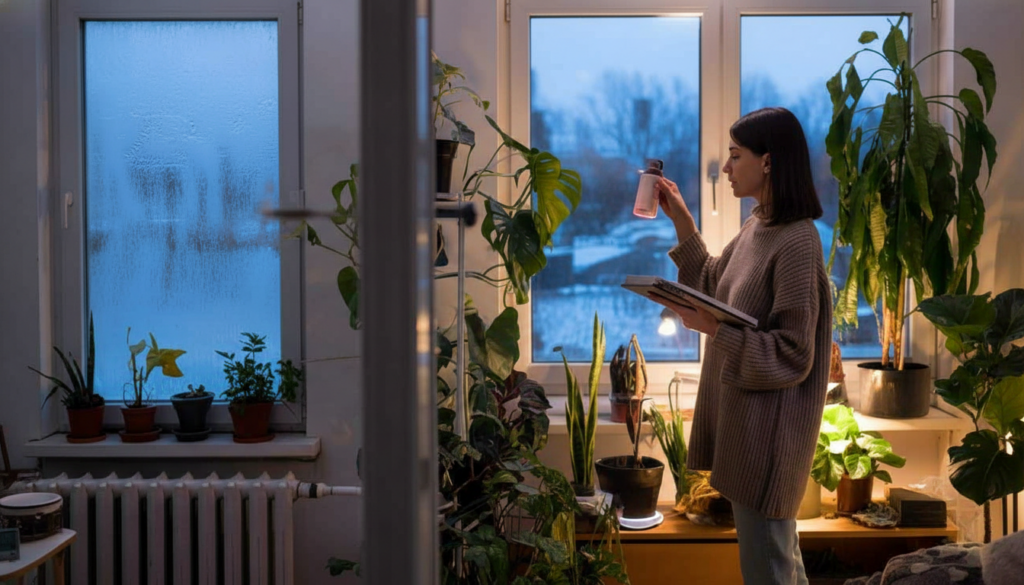
Across many apartments, winter tells the same story: drooping monsteras, yellowing pothos, and fiddle-leaf figs with curled, papery leaves. Yet sometimes one glowing window still looks like a small jungle. The difference is rarely luck. It’s a simple seasonal shift. Instead of caring for plants the way they did in summer, experienced plant lovers completely reset their routine for winter conditions. Shorter days, dry indoor heating, and colder glass surfaces create a new indoor climate. Treating winter like an extension of summer is often what leads to root rot, leaf drop, and slow decline.
From Automatic Care to Seasonal Awareness
The biggest change successful plant owners make is moving from autopilot care to seasonal awareness. They don’t water on fixed days just because it’s Sunday. They don’t keep plants in the same bright corner that worked in July. Instead, they reassess light patterns, air dryness, and temperature shifts. In winter, plants slow down. Photosynthesis decreases, soil stays wet longer, and roots absorb moisture more slowly. Watering less frequently and adjusting placement becomes essential. This small mindset shift prevents overwatering and protects plants from cold shock near windows and radiators.
Observe First, Water Later
The real winter rule is simple: check before you water. Touch the soil at least a couple of inches deep. If it still feels cool and slightly damp, wait. Notice if leaves are crisp from dry heat or soft from excess moisture. Look at where light actually falls in the late afternoon, not just at noon. Slide pots a little away from icy glass and strong heaters. Grouping plants together can create a mild humidity pocket. These small, thoughtful adjustments prevent weeks of silent stress and reduce emergency “plant rescues” later.

Understanding Winter Plant Behavior
Houseplants are not growing actively in winter; many enter a slower survival phase. Reduced daylight and cooler indoor temperatures lower their metabolic activity. When soil remains wet for too long, roots struggle to function, which often causes yellowing leaves and rot. Fertilizing during this time usually does more harm than good. Rather than pushing growth, winter care is about stability. Let plants rest. Allow natural leaf shedding without panic. Adjust location before increasing water. A patient approach keeps plants steady until longer spring days return.
Simple Winter Adjustments Anyone Can Follow
Check soil moisture deeply before watering.
Reduce watering frequency and volume.
Keep plants slightly away from cold windows and direct heat.
Group plants together to improve local humidity.
Avoid routine fertilizing unless using strong grow lights.
| Main Idea | Detail | Reader Benefit |
|---|---|---|
| Switch to seasonal care | Adjust light exposure, watering schedule, and placement during colder months | Reduces winter plant stress without expensive equipment |
| Observe before watering | Check soil depth, drafts, leaf texture, and afternoon light patterns | Prevents overwatering and unexpected leaf loss |
| Make small location changes | Move away from cold glass and radiators, group plants for humidity | Creates a safer winter microclimate with minimal effort |
Frequently Asked Questions
How often should I water my plants in winter?
Much less than in summer. Many houseplants need watering every two to three weeks, sometimes even less. Always check soil moisture before deciding.
 Is prohibiting junk food promotion safeguarding children or expanding government oversight
Why are my plant leaves turning yellow in winter?
Yellowing often signals overwatering in cold conditions. Let the soil dry more between waterings and ensure proper drainage.
Can I keep plants on a windowsill during winter?
Yes, but avoid pressing them against very cold glass. Leave a small gap and move sensitive tropical plants slightly inward.
Should I fertilize houseplants in winter?
Usually no. Most plants slow their growth and cannot use extra nutrients effectively until daylight increases.
Do I need a humidifier for winter plant care?
It can help tropical plants, but grouping plants together and keeping them away from heaters can also improve local humidity naturally.