
The first thing you notice is how quiet it is. Not the total kind, but the soft, city silence that you can hear under distant traffic and footsteps. You go out “just for a walk” in the late afternoon because your brain is fried from all the calls. You tell yourself you’ll go quickly, get your steps in, and tick off the box. But five minutes later, without really thinking about it, you slow down. Your shoulders go down. The email thread in your head starts to let go. You envy the dog that sniffs the same tree with almost religious focus. You raise your head. You can really see the sky.
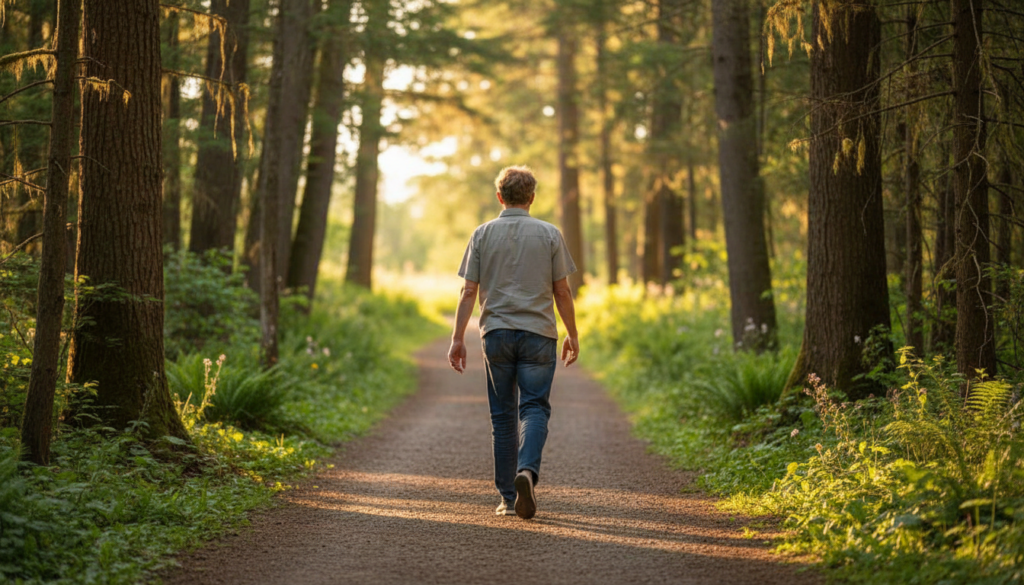
When your feet move slower than your thoughts, something changes.
You begin to notice thoughts that aren’t yours.
The quiet science of moving slowly
Walking slowly looks like doing nothing. It can seem suspicious to someone who is obsessed with productivity. You’re outside, not sweating, and your phone is in your pocket instead of your hand. You’re just moving. Softly. Calmly. The city keeps moving quickly. People pass you with purpose, earbuds in, and arms pumping. You look like you missed a meeting.
But even though your body is moving slowly, your nervous system is secretly resetting itself. Your breathing has time to get into a rhythm. Your brain waves slow down. The world stops trying to hurt you and starts to be around you. That’s the exact spot where mental healing starts to happen.

Psychologists sometimes call it “soft fascination,” which means that something holds your attention without taking it away. A branch on a tree swaying. A laugh from someone you don’t know. The way your own footsteps sound on gravel or pavement. Walking slowly makes it easier to notice things like this. No alerts. No screens that flash. Just low-intensity input that gives your prefrontal cortex, the part of your brain that makes too many decisions, a rare break.
A Japanese study on “forest bathing” found that taking a slow walk among trees lowered blood pressure, lowered stress hormones, and made people feel better. Similar studies in cities have found that even 15–20 minutes of easy walking can help with mental fatigue. Your body moves, your mind relaxes, and your emotional needle slowly moves from “fight” to “okay, maybe I’m safe.”
It’s surprising how technical what’s going on under the surface is for such a simple gesture. When you walk slowly, your heart rate usually stays in a low, comfortable range. That gets your parasympathetic nervous system going, which is the “rest and digest” part. Your muscles relax, your digestion gets better, and your breathing gets deeper without you having to try. That rhythmic left-right stepping also helps keep the emotional centers in the brain that are linked to movement in check.
It’s like your body is telling your brain: “We’re not running from anything. You can sit down.
When you slow down, mental recovery doesn’t shout; it sneaks in.
How to walk slowly and not feel bad about it
“Just go slower” isn’t the only thing you need to know about slow walking. Start with a small ritual. Take two deep breaths before you start. Pay attention to how heavy you are on your feet. Then start moving at a speed that feels almost too easy. If you’re out of breath, you’re going too fast. You’re right there if you can talk without stopping.
Let your arms move around a bit. Instead of staring at the ground or your phone, let your gaze relax. Choose a path that doesn’t seem like it needs to be done right away, like a side street, a park loop, or even the longest way to the store. For 10 or 20 minutes, your job is not to burn calories. It’s to give your nervous system more time to breathe.
This is where most of us mess up: we make even our walks into a show. Steps, calories, speed, and weekly streak. The app makes a sound, your wrist vibrates, and all of a sudden you’re racing against a graph. You speed up because slow walking isn’t “good enough,” and the recovery effect goes away. We all know what it’s like to have a simple walk turn into a low-key fitness test.

For once, try this very human rule: leave one metric behind. No speed. No pulse. Only time or only distance. It’s fine if you don’t go some days. Let’s be honest: not everyone does this every day. When you walk slowly, think of it as a friend you see a lot, not a boss you have to report to.
A tired teacher told me, “I thought walking slowly would make me feel lazy.” “But after two weeks of 15-minute slow loops around my block, I started to feel less scared about Sunday. I didn’t switch jobs. “I sped up.”
Begin small
About 5 to 10 minutes around your street or building. Lower the bar until your brain can’t argue.
Choose a “no-rush” area
Pick a path where you don’t have to avoid traffic or deadlines every ten meters.
Hold on to your senses
One round for sounds, one for sights, and one for how the air feels on your skin.
Keep it away from screens.
Podcasts and music are fine, but one “notification rabbit hole” can make the recovery effect go away.
Don’t use it to fix things; use it to reset.
Walking slowly won’t fix your life, but it can help you get your mind back to neutral more often.
When being slow is a quiet way to fight back
In a culture that values speed, moving slowly can feel like a rebellion. You turn into that person who doesn’t walk across the street, power walk with a protein shaker, or listen to a podcast at 2x speed. You’re just you, at regular human speed, letting your mind trail a few steps behind your feet until it catches up. At first, it might feel strange, like everyone is watching. No, they aren’t. They are in their own race.
Over time, walking slowly can change how you deal with stress. The to-do lists, the arguments you go over in your head, and the made-up disasters that go around in your head all lose some of their power when you take a break from them every day. You might find that your best ideas don’t come to you at your desk, but three blocks away, when you stop trying to make them happen. Or that your worst fears seem a little less scary when you look at them at three kilometres per hour instead of six.
Slow walking can help your mind heal in ways that aren’t just about getting less stressed or sleeping better, though those are common effects. It’s about remembering how your mind feels when it isn’t always racing. When it can sit still, wander, and then quietly come back together. You can’t see that kind of recovery on a smartwatch, but it changes your days from the inside. Some people find it on a path through the woods, some on a sidewalk in the city, and some just walk around a quiet parking lot after work. It’s not as important where you do it as the simple, stubborn choice to go slower than everyone else thinks you should.
Important pointDetailValue for the reader
Walking slowly helps the nervous system relax. Gentle movement activates the parasympathetic “rest and digest” response Less stress and easier to get back to normal after a stressful day
Soft interest brings back focus.Seeing and hearing simple things gives the brain a break.When you go back to work or home, you’ll have a clearer head and better focus.
It lasts because of small rituals.Short, no-pressure walks with little tracking keep you from getting burnt out and feeling guilty.More likely to stick with a habit that quietly helps your mental health