
The little boy is lying on the floor of the grocery store, like a starfish, and screaming because the yoghurt is the wrong colour. People look, act like they’re not looking, and scroll through their phones. His mother, who is tired but determined, crouches down and calmly talks to him about “big feelings” and “using our words.” No danger. No hand raised. No “because I said so.” The meltdown lasts for ten long minutes, and you can almost feel the tension in the aisle, which is as thick as spilt milk. After that, it goes away. He wipes his nose on his sleeve, hugs his mom, and they walk away. The cart is left with a silent question: Are we raising kids who are emotionally smart, or the most fragile generation ever?
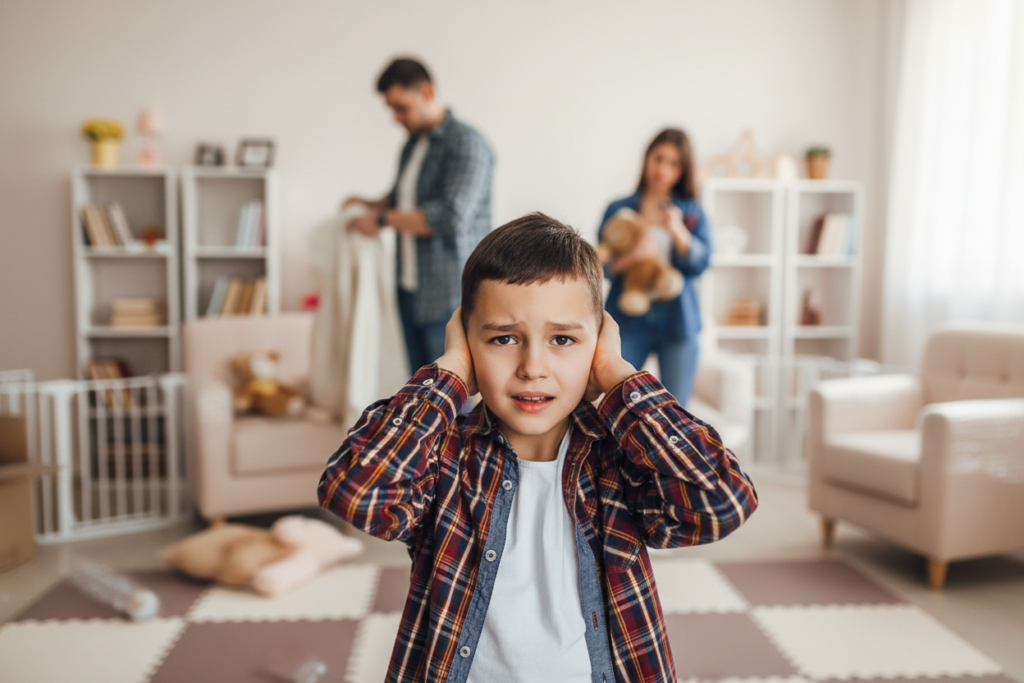
Are kids really getting too weak, or are parents just afraid to be tough?
Teachers and managers are seeing the same thing happen in classrooms, on sports fields, and even in their first jobs. Young people who lose it at the smallest amount of criticism. Teenagers who say they were “bullied” because someone didn’t agree with them. Interns who quit on day three because the work “felt stressful.” Many of them grew up in homes where hitting was not allowed, fights were avoided, and adults did everything they could to keep the child from being upset. Non-violent education became a way to show that you were a good person. But something surprising came with it: a generation that can’t stand being frustrated. Researchers in psychology who study resilience have begun to keep track of this change. One big survey of college counselling centers in the U.S. found that the number of students who needed help with anxiety and emotional overload has doubled in the past ten years, even though the number of actual trauma indicators has not. A different study from the UK found that 52% of teachers think their students are “less emotionally strong” than they were ten years ago.
They’re not just more aware. They don’t know how to deal with things as well. A school principal in France talked about a new trend: parents coming to the office because their child got a bad grade and “felt humiliated,” and demanding that the teacher say sorry. The child never has to deal with the pain of not being the best by themselves. Scientists are not advocating for the reinstatement of hitting. What they are saying is sharper and more disturbing: when parents stop using physical punishment but don’t set clear limits, teach kids how to deal with frustration, and give them real consequences, kids end up emotionally unprepared. A child who never hears “no” that actually sticks, never experiences “you didn’t do your part, so you lose something,” and never faces a firm limit from a calm adult grows up thinking that any discomfort is unfair.
Not hitting doesn’t mean not confronting. Here’s how to set limits without hitting.
More and more researchers are talking about “stress inoculation” for kids. The basic idea is that small, safe doses of frustration can help the nervous system get stronger. You don’t have to hit a child to do this. You have to stop saving them from every bad feeling.
One useful tip is to choose one situation each day and let the natural outcome happen. You don’t write a note to say why your teen was late if they don’t wake up on time. If your 6-year-old doesn’t want dinner, you don’t make another one. No drama, calm voice, and a steady limit. The world teaches us. Parents often go to two extremes. They either repeat the threats they heard as kids and promise not to “raise soft kids.” Or they go too far and are always negotiating, explaining, and bargaining because they are scared of making someone cry. Both paths lead to stress at home and kids who don’t feel safe with their own feelings.
A good compromise is this: warm connection and cold consistency. You can hug a child who is crying and still say, “I love you, but the answer is no.” You can be kind and still not move.
 Outer space narrowly avoided its first major diplomatic conflict between China and the United States
We’ve all been there: your child has a meltdown in public and you feel like everyone is watching you and judging your parenting. One child psychologist I talked to said something that stuck with me: “Kids don’t break when you say no.” They break when there isn’t always someone bigger, stronger, and calmer than them.
The science is clear:
“We speak respectfully,” “Screens go off at 8 pm,” and “Homework before games” are some of the short, clear rules.
Punishments that are fair, not random.
Stay calm, even when you’re mad.
As long as behaviour stays within the rules, there is room for feelings, no matter how loud they are.
Sometimes, honest repair: “I lost my cool earlier.” I’m working on it too.
Are they weak or just different? What this generation is really teaching us
Some scientists are careful when they use the word “fragile.” They say that kids today are better at understanding their emotions than kids in the past and are more open about their feelings and mental health. They cry in front of other people, ask for therapy, and speak out against unfairness. People who were taught to swallow everything see that as weak. It could be something else: a messy but needed change.
Let’s be honest: no one does this every single day. No parent is perfect; they never yell, never give in, and always say the right thing. In real life, you have homework to do, work texts to read, a late bus, pasta boiling over, and a ten-year-old crying about PE class. Not letting people hit is the real danger. The real danger is thinking that not hitting is enough. Parenting without violence and structure is like taking the walls off a house and calling it “freedom.” Kids need us to be soft, to say we’re sorry, and to be interested in how they feel.
They also need us to be the calm, steady adult who doesn’t freak out when they do.
Scientists who warn us about how fragile we are are talking less about kids and more about us. Because we are afraid of conflict. Our unease with being disliked. Our guilt about our own childhoods. Our desire to be the “cool” and understanding parent instead of the one who stands firm and takes the storm. So maybe the real question isn’t “Are we raising the most fragile generation ever?” Maybe it’s: what kind of adults do we want them to be when we’re not around to help them? A child who has never been able to handle boredom will have a hard time with a boring job. The teen who has never been told “no” will fall apart in a tough meeting. A stranger who doesn’t love them will tell the young adult who has never been told “no” at home for the first time.
| Key point | Detail | Value for the reader |
|---|---|---|
| Non-violent is not “no limits” | Removing hitting must be paired with clear rules and consistent consequences | Helps you raise kids who are kind and strong, not anxious and entitled |
| Frustration is training, not trauma | Small daily disappointments build emotional “muscle” when handled safely | Reduces meltdowns over time and prepares kids for real-world stress |
| Warm connection, firm backbone | Combine empathy for feelings with steadiness on rules | Creates a calmer home and more secure, confident children |
Frequently Asked Questions:
Question 1: Are scientists really telling us to hit kids again?
Most researchers agree that physical punishment leads to more aggression, anxiety, and mental health problems. They are not warning about a return to violence; they are warning about the void that is left when parents stop hitting but don’t add structure.
Question 2: What should I do if my child throws a fit every time I say no?

Start with one or two rules that you can’t change and say them calmly every time. At first, expect things to blow up. Your job is to stay steady, not to make them happy all the time. When your child sees that you won’t give in, the storms usually don’t last as long.
Question 3: Does crying a lot mean my child is weak?
Crying is not a sign of weakness; it is a release. What happens next is what counts. It’s a sign of growing resilience, not weakness, if your child can cry, get over it, and still deal with the limit or hear it.
Question 4: What about kids who are neurodiverse or have anxiety?
They usually need more tools, more time to get ready, and sometimes professional help, but the basic idea is the same: gentle exposure to stress with a calm adult close by. Expectations that are tailored to you, not cancelled.
Question 5: Have we really made this generation too weak?
Yes, some are more protected. But they also have to deal with things like online pressure, climate anxiety, and money worries that their parents never thought of. The goal isn’t to make them tough, but to give them the tools they need: emotional vocabulary and practice dealing with real frustration at the same time.