
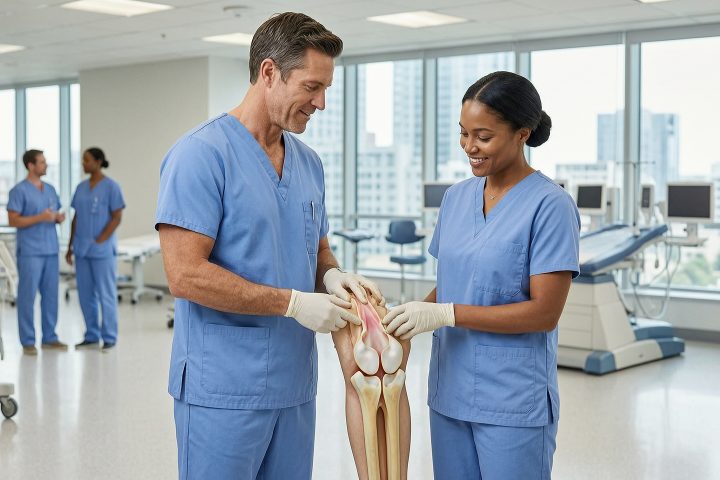
Understanding the Critical Role of Specialized Care in Cartilage Repair
Injury to articular cartilage represents one of the most challenging scenarios in modern orthopedic medicine. Unlike bone, which possesses a robust blood supply that facilitates natural healing, cartilage is an avascular tissue with limited regenerative capacity. Once damaged, the body struggles to repair the defect on its own, often leading to progressive joint degeneration, chronic pain, and early-onset osteoarthritis. For patients facing meniscal tears, focal chondral defects, or complex joint injuries, the decision to pursue surgical intervention is pivotal. This is where the distinction between general orthopedic care and specialized joint preservation becomes paramount. The search for cartilage repair hospitals USA has become increasingly sophisticated as patients recognize that outcomes are heavily dependent on the expertise of the surgical team, the availability of advanced biological technologies, and the comprehensive nature of post-operative rehabilitation programs.
The landscape of orthopedic surgery in the United States has evolved significantly over the past two decades. What was once a field dominated by joint replacement procedures for younger, active patients has shifted toward joint preservation strategies. These procedures aim to restore the native joint surface, delay or eliminate the need for total joint arthroplasty, and return patients to their pre-injury activity levels. However, not all medical centers possess the requisite infrastructure, multidisciplinary teams, or clinical volume to execute these highly technical procedures effectively. Selecting the right facility involves evaluating specific criteria such as surgeon subspecialty training, access to cutting-edge techniques like MACI (Matrix-Induced Autologous Chondrocyte Implantation) or OATS (Osteochondral Autograft Transfer System), and the integration of physical therapy into the recovery continuum.
Potential patients often face a daunting array of choices when seeking treatment for cartilage damage. The term cartilage repair hospitals USA encompasses a wide range of institutions, from academic research hubs to private specialty clinics. The quality of care varies based on the hospital’s focus on sports medicine, its commitment to innovative research, and its ability to provide personalized treatment plans. A successful outcome relies not just on the surgical technique but on the holistic approach to patient care, including pre-operative assessment, intraoperative precision, and long-term follow-up. This guide explores the top-tier medical centers recognized for their excellence in joint preservation, detailing why they stand out and what patients can expect when choosing these facilities for critical orthopedic interventions.
Key Criteria for Identifying Top-Tier Joint Preservation Facilities
When evaluating potential destinations for cartilage repair hospitals USA, it is essential to look beyond general hospital rankings and focus on specific metrics related to joint health. The primary indicator of excellence is the specialization of the surgical team. Leading centers typically employ surgeons who have completed fellowships specifically in sports medicine and joint preservation, rather than general orthopedics. These specialists dedicate their practice exclusively to treating ligament injuries, meniscal repairs, and cartilage restoration, ensuring they encounter a high volume of complex cases annually. High-volume surgeons tend to have refined techniques and better outcomes due to their extensive experience with the nuances of cartilage biology and surgical execution.
Beyond surgeon expertise, the technological arsenal available at a hospital plays a crucial role in determining the success of cartilage repair. Advanced imaging capabilities, such as 3D MRI analysis and computer-assisted navigation systems, allow surgeons to map defects with millimeter precision. Furthermore, the availability of biologics and regenerative medicine options is a significant differentiator among top facilities. Centers offering cartilage repair hospitals USA services often integrate platelet-rich plasma (PRP), stem cell therapies, and tissue engineering products into their treatment protocols. These biological adjuncts can enhance the healing environment and improve the longevity of the graft or implant used during surgery.
Another critical factor is the multidisciplinary nature of the care model. Successful joint preservation requires seamless collaboration between orthopedic surgeons, rheumatologists, radiologists, and physical therapists. The best hospitals operate within integrated networks where data sharing and coordinated care are standard. This approach ensures that a patient’s biomechanical alignment, muscle strength, and overall health status are optimized before, during, and after surgery. Additionally, the presence of dedicated research programs allows these institutions to stay at the forefront of medical innovation, often providing patients access to clinical trials for emerging treatments that are not yet widely available elsewhere.
Leading Academic Medical Centers for Complex Cartilage Restoration
Academic medical centers often lead the way in advancing the science of joint preservation due to their dual mission of clinical care and research. Institutions like Mayo Clinic in Rochester, Minnesota, and Massachusetts General Hospital in Boston have established themselves as global leaders in orthopedic innovation. At Mayo Clinic, the Department of Orthopedic Surgery boasts a dedicated division for sports medicine and joint preservation. Their approach combines rigorous scientific inquiry with clinical application, making them a premier destination for patients seeking cartilage repair hospitals USA that offer the latest evidence-based treatments. The center’s ability to perform complex revision surgeries and utilize cutting-edge biomaterials sets a high standard for patient care.
Similarly, the University of California, Los Angeles (UCLA) Health system is renowned for its Center for Sports Medicine and Orthopaedic Research. UCLA has been instrumental in developing and refining various cartilage restoration techniques, including autologous chondrocyte implantation. Their faculty includes world-renowned experts who frequently publish groundbreaking research on cartilage biology and surgical outcomes. Patients traveling to UCLA benefit from a collaborative environment where multiple specialists review each case to ensure the most appropriate treatment plan is selected. This level of scrutiny and expertise is particularly valuable for patients with large or complex cartilage defects that require customized surgical solutions.
Hospital for Special Surgery (HSS) in New York City represents another pinnacle of orthopedic care, consistently ranking as one of the best hospitals in the nation for orthopedics. HSS operates as a dedicated orthopedic and rheumatology hospital, meaning every aspect of their infrastructure is designed around musculoskeletal health. Their Cartilage Restoration Program is a flagship service, featuring a team of surgeons who specialize exclusively in joint preservation. The hospital’s focus on high-volume joint preservation procedures allows them to maintain exceptional proficiency rates. For patients seeking cartilage repair hospitals USA that prioritize specialized, focused care over generalist models, HSS offers a compelling option with a proven track record of restoring function and alleviating pain.
The Importance of Surgeon Fellowship Training and Subspecialization
The depth of a surgeon’s training is perhaps the most significant predictor of success in cartilage repair procedures. While many orthopedic surgeons complete a general residency, those who pursue additional fellowship training in sports medicine or joint preservation gain specialized skills that are critical for this type of surgery. These fellowships provide intensive exposure to the unique challenges of repairing articular cartilage, including graft harvesting, fixation techniques, and management of biological responses. When searching for cartilage repair hospitals USA, patients should inquire about the specific fellowship backgrounds of the surgical team members.
Surgeons with subspecialty training are more likely to be familiar with the full spectrum of available treatments, from microfracture to newer matrix-induced techniques. They understand the biological timeline of cartilage healing and can tailor rehabilitation protocols accordingly. This specialized knowledge extends to managing complications, which can occur if the graft fails to integrate or if the joint mechanics are not properly addressed. By choosing a facility where the majority of their cartilage surgeons hold these advanced credentials, patients increase their chances of a successful outcome and a smoother recovery process.
Regional Leaders in Joint Preservation Across the United States
While coastal academic giants dominate national rankings, several regional medical centers have emerged as leaders in cartilage repair, offering world-class care accessible to patients across different parts of the country. In the Midwest, the Cleveland Clinic in Ohio is a powerhouse for orthopedic and spine care. Their Musculoskeletal Institute is internationally recognized for its comprehensive approach to joint preservation. The clinic’s cartilage program utilizes advanced imaging and surgical robotics to enhance precision. Patients from throughout the region choose Cleveland Clinic for its reputation of excellence and its commitment to minimizing invasive procedures while maximizing joint longevity.
In the Southeast, Emory Healthcare in Atlanta and Duke University Hospital in North Carolina have built strong reputations for sports medicine and joint preservation. Emory’s partnership with the Georgia Tech Biomedical Engineering department fosters innovation in tissue engineering and regenerative medicine. This interdisciplinary approach allows Emory to offer patients access to experimental therapies and advanced biological treatments that are still in development at other institutions. Duke University Hospital similarly leverages its research capabilities to provide state-of-the-art cartilage restoration services, with a focus on returning athletes and active individuals to peak performance.
The West Coast also hosts several top-tier facilities, including Stanford Health Care and Cedars-Sinai Medical Center in Los Angeles. Stanford’s Orthopaedic Surgery department is known for its pioneering work in minimally invasive techniques and biologic augmentation. Cedars-Sinai, with its Smidt Heart Institute and Orthopaedic Center, offers a holistic view of patient health, integrating cardiac and musculoskeletal care to optimize surgical outcomes. These institutions represent the breadth of cartilage repair hospitals USA, demonstrating that high-quality joint preservation care is available in major metropolitan areas across the nation, not just in traditional academic hubs.
| Medical Center | Location | Key Strengths in Cartilage Repair | Notable Programs/Techniques |
|---|---|---|---|
| Hospital for Special Surgery (HSS) | New York, NY | Dedicated orthopedic focus; high-volume joint preservation | MACI, OATS, Microfracture, Custom Grafts |
| Mayo Clinic | Rochester, MN | Research-driven care; multidisciplinary teams | Advanced Biologics, Robotics-Assisted Surgery |
| University of California, Los Angeles (UCLA) | Los Angeles, CA | Sports medicine expertise; innovative research | ACI, Osteochondral Allografts, Stem Cell Therapy |
| Cleveland Clinic | Cleveland, OH | Musculoskeletal Institute leadership; minimally invasive | 3D Planning, Regenerative Medicine |
| Emory Healthcare | Atlanta, GA | Biomedical engineering partnerships; tissue engineering | Tissue Engineering Trials, Custom Scaffolds |
| Duke University Hospital | Durham, NC | Academic excellence; athlete-focused care | Combined Ligament/Cartilage Repair, Rehabilitation |
Procedural Options and Technological Advancements in Cartilage Repair
Understanding the procedural landscape is vital for any patient considering cartilage repair hospitals USA. The choice of procedure depends heavily on the size, location, and severity of the cartilage defect, as well as the patient’s age and activity level. Traditional methods like microfracture involve creating small holes in the bone beneath the defect to stimulate bleeding and clot formation, which eventually turns into fibrocartilage. While effective for smaller lesions, this tissue is less durable than native hyaline cartilage. Consequently, many leading centers now favor more advanced techniques for larger defects to ensure long-term joint health.
Autologous Chondrocyte Implantation (ACI) and its matrix-induced variant (MACI) represent a significant leap forward in cartilage restoration. In these procedures, a sample of healthy cartilage cells is harvested from the patient, grown in a laboratory, and then reimplanted into the defect site. This method aims to produce hyaline-like cartilage, which closely mimics the original tissue and offers superior durability. The success of ACI/MACI relies on the precision of the surgical team and the quality of the laboratory processing, factors where top-tier hospitals excel. These procedures require a longer recovery period but offer the potential for a permanent solution to cartilage loss.
Osteochondral Autograft Transfer System (OATS) and Osteochondral Allograft Transplantation are other sophisticated options. OATS involves transferring a plug of healthy bone and cartilage from a non-weight-bearing area of the same joint to the defect. Allografts use donor tissue, which is useful for larger defects where autograft harvest would cause too much morbidity. Leading hospitals often utilize 3D printing and computer modeling to create custom allografts that perfectly match the patient’s anatomy. This level of customization ensures optimal fit and integration, reducing the risk of failure and enhancing functional outcomes.
The Patient Journey: From Evaluation to Recovery
Choosing a top facility for cartilage repair hospitals USA means engaging in a comprehensive patient journey that begins long before the surgery date. The initial evaluation typically involves a detailed history, physical examination, and advanced imaging studies such as MRI or CT scans. Some centers may even utilize weight-bearing X-rays to assess joint alignment under load. This thorough diagnostic phase is crucial for formulating a precise treatment plan. Patients should expect a discussion of all available options, including the risks, benefits, and expected recovery timelines for each procedure.
Once a treatment plan is agreed upon, the preparation phase focuses on optimizing the patient’s physical condition. This may include pre-habilitation exercises to strengthen the muscles surrounding the joint, weight management counseling, and smoking cessation support, as smoking can significantly impair healing. The hospital’s multidisciplinary team will coordinate these efforts to ensure the patient enters surgery in the best possible state. On the day of the procedure, the surgery itself is performed using sterile, state-of-the-art operating rooms equipped with advanced lighting and imaging technology to assist the surgeon.
Post-operative care is arguably the most critical component of the entire process. Recovery from cartilage repair is a marathon, not a sprint, often requiring months of structured rehabilitation. Top hospitals provide access to dedicated physical therapy departments with therapists trained in post-operative orthopedic protocols. These therapists guide patients through stages of motion, strengthening, and eventually sport-specific drills. Regular follow-up appointments allow the medical team to monitor healing progress via imaging and adjust the rehabilitation plan as needed. This continuous support system is a hallmark of the best cartilage repair hospitals USA and is essential for achieving optimal long-term results.
Navigating Insurance Coverage and Financial Considerations
Financial planning is an important aspect of seeking treatment at specialized medical centers. Procedures for cartilage repair can be costly, and insurance coverage varies significantly depending on the plan, the specific procedure, and the provider network. Many top-tier hospitals have dedicated financial counselors who can help patients navigate these complexities. It is advisable to verify whether the chosen facility is in-network with your insurance provider before scheduling consultations.
Patients should also be aware that some advanced biological treatments, such as certain stem cell therapies or custom tissue engineering products, may not be fully covered by insurance and might be considered elective or investigational. Understanding the out-of-pocket costs upfront is crucial for avoiding unexpected financial burdens. Reputable hospitals will provide transparent pricing estimates and discuss payment options or financing plans if necessary. Being informed about these financial aspects allows patients to make decisions based on both clinical needs and economic realities.
Recovery Expectations and Long-Term Outcomes
Realistic expectations regarding recovery are fundamental for patient satisfaction. Cartilage repair is not a quick fix; it is a biological process that takes time. Depending on the procedure and the size of the defect, patients may be non-weight bearing or restricted in range of motion for several weeks to months. The goal of surgery is not merely pain relief but the restoration of normal joint function and the prevention of future arthritis. Studies indicate that patients treated at high-volume centers with experienced surgeons report higher satisfaction rates and better functional scores compared to those treated at general practices.
Long-term success is also influenced by lifestyle modifications. Even after a successful surgery, maintaining a healthy weight, engaging in low-impact exercise, and avoiding high-stress activities on the joint are necessary to protect the repaired tissue. The best hospitals emphasize education and lifestyle counseling as part of their discharge planning. By adopting a proactive approach to joint health, patients can maximize the lifespan of their repair and enjoy an active life free from the limitations of cartilage degeneration.
Frequently Asked Questions
What is the typical cost of cartilage repair surgery in the USA?
The cost of cartilage repair surgery varies widely depending on the specific procedure, the hospital facility fees, surgeon fees, anesthesia, and the length of the hospital stay. Generally, procedures can range from $15,000 to over $50,000 without insurance. Factors such as the use of biologics, custom implants, or extended rehabilitation can influence the final price. Most major cartilage repair hospitals USA offer financial counseling to help patients understand their coverage and out-of-pocket responsibilities.
How long does it take to recover from cartilage repair surgery?
Recovery times vary based on the procedure performed and the size of the defect. Simple microfracture procedures may allow for a return to light activities within 3 to 6 months, while more complex procedures like MACI or osteochondral allografts can require 9 to 12 months or longer for full recovery. Patients must adhere strictly to physical therapy protocols, which are designed to protect the healing tissue while gradually restoring strength and mobility.
Is cartilage repair suitable for older adults?
Cartilage repair is traditionally performed on younger, active patients with isolated defects. However, advancements in joint preservation techniques have expanded eligibility to include older adults with specific conditions. The decision is highly individualized and depends on the overall health of the joint, the extent of arthritis, and the patient’s activity goals. A consultation with a specialist at a top cartilage repair hospitals USA facility is necessary to determine if joint preservation is a viable option versus joint replacement.
Can cartilage repair prevent the need for a knee replacement?
Yes, successful cartilage repair can significantly delay or potentially eliminate the need for total knee replacement, especially in patients with early-stage osteoarthritis or focal defects. By restoring the joint surface and improving biomechanics, these procedures can preserve the native joint for many years. However, the success rate depends on proper patient selection, surgical technique, and adherence to post-operative rehabilitation.
What questions should I ask a surgeon before choosing a hospital?
Patients should ask about the surgeon’s specific fellowship training in joint preservation, the number of similar procedures they perform annually, the specific techniques they recommend for their condition, and the hospital’s success rates for those procedures. It is also important to inquire about the rehabilitation program and whether the hospital offers access to advanced imaging or biologics. Asking these questions helps ensure you are selecting a qualified cartilage repair hospitals USA provider.
Sources
- Mayo Clinic – Orthopedic Surgery & Joint Preservation
- Hospital for Special Surgery (HSS) – Cartilage Restoration Program
- UCSF Health – Orthopaedic Surgery & Sports Medicine
- Cleveland Clinic – Musculoskeletal Institute
- Duke University Health System – Orthopaedics & Sports Medicine
- UPMC – Orthopaedic Surgery & Sports Medicine
- American Academy of Orthopaedic Surgeons (AAOS) – Sports Medicine