
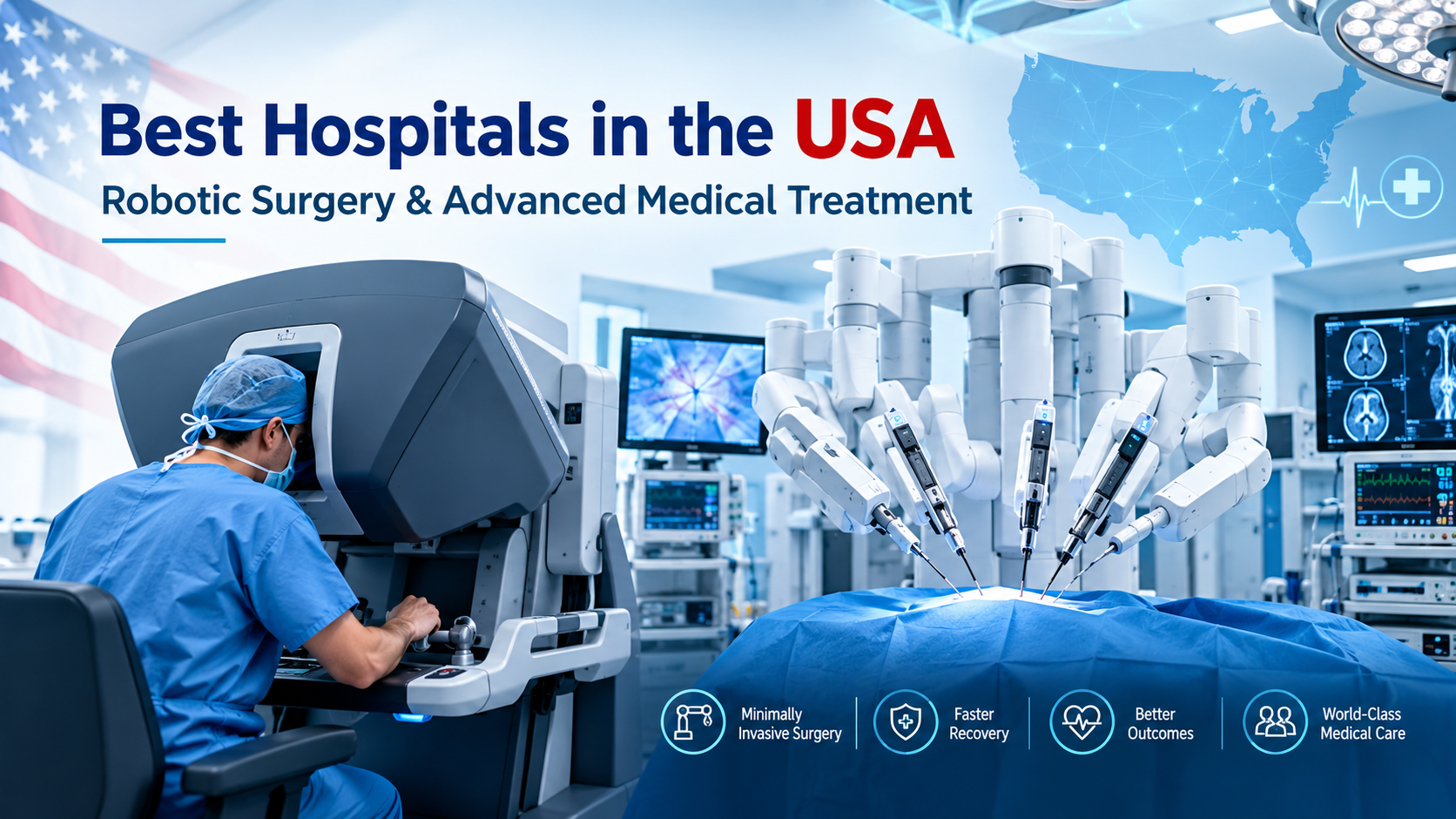
Patients researching robotic surgery in the United States quickly discover that there is no single hospital that is “best” for every operation. The right choice depends on the procedure, the surgeon’s experience with that procedure, the hospital’s broader clinical capabilities, your insurance or self-pay status, and whether you need highly specialized care such as cancer treatment, transplantation, complex heart surgery, or advanced diagnostics.
This guide highlights prominent U.S. academic medical centers and health systems with established robotic surgery programs and broad capabilities for complex medical treatment. The hospitals are presented as leading institutions to research rather than as a definitive numerical ranking. Their programs, procedures, insurance participation, prices, and availability can change, so patients should confirm current details directly with the hospital and their insurer.
You will also find practical guidance on how robotic surgery works, when it may be useful, how to compare surgeons, what hospital prices actually mean, how Medicare and private insurance affect costs, and what international patients should arrange before traveling to the United States.
Information checked: September 2026.
What Makes a U.S. Hospital a Strong Choice for Robotic Surgery?
Robotic surgery is not a treatment in itself. It is a surgical approach that allows a trained surgeon to control specialized instruments and a high-definition camera through a console. The U.S. Food and Drug Administration describes robotically assisted surgical systems as computer-assisted technologies that can help surgeons perform minimally invasive procedures, including selected cardiac, colorectal, gynecologic, head and neck, thoracic, general, and urologic operations.
The robot does not independently diagnose a condition, decide what to remove, or perform surgery without the surgeon. The surgeon remains responsible for controlling the instruments and making clinical decisions.
For that reason, the presence of a sophisticated robot should not be the main reason for choosing a hospital. A better evaluation looks at the entire surgical program.
- Procedure-specific surgical expertise: How frequently does the surgeon perform the particular operation you need?
- Multidisciplinary care: Can surgeons work closely with oncology, cardiology, radiology, pathology, rehabilitation, intensive care, or other specialists when required?
- Complex-case capability: Can the center manage complications or convert to another surgical approach if necessary?
- Research and innovation: Does the institution participate in clinical research, surgical education, or development of new techniques?
- Robotic experience: Does the program have established teams, trained operating-room staff, and experience with the relevant robotic platform?
- Postoperative care: What happens after the operation, including rehabilitation, follow-up imaging, pain management, and management of complications?
- Financial transparency: Can the hospital explain facility charges, physician fees, anesthesia, pathology, imaging, and other expected costs?
The FDA specifically advises patients considering robotically assisted surgery to discuss the risks and benefits with their physician and to ask about the surgeon’s training and experience with the technology.
Leading U.S. Hospitals to Research for Robotic Surgery and Advanced Treatment
The following institutions were selected because their official medical websites document substantial robotic surgery capabilities, specialist programs, academic or research activity, or broad capacity for complex care. This is not a claim that one institution is clinically superior to another for every condition.
| Hospital or Health System | Location | Notable Robotic Surgery Areas | Why Patients May Research It |
|---|---|---|---|
| Mayo Clinic | Rochester, Minnesota; Phoenix/Scottsdale, Arizona; Jacksonville, Florida | Urologic, cardiovascular, abdominal, colorectal, gynecologic, head and neck, spine and orthopedic surgery | Broad specialty coverage, multidisciplinary care and international-patient infrastructure |
| Cleveland Clinic | Cleveland, Ohio | Urologic, cardiac, general and other minimally invasive procedures | Strong robotic and image-guided surgery programs, particularly in urology and complex care |
| Johns Hopkins Medicine | Baltimore, Maryland | Minimally invasive and robotic surgery across multiple specialties | Academic medical center with research, specialty care and international-patient services |
| UCLA Health | Los Angeles, California | Colorectal, gynecologic, cardiac, thoracic, head and neck, general and urologic surgery | Large academic surgical program and broad robotic-surgery coverage |
| UCSF Health | San Francisco, California | Urologic, gastrointestinal, thoracic, gynecologic, bariatric, orthopedic and other robotic procedures | High-volume academic program and complex specialty care |
| Stanford Health Care | Palo Alto, California | Robotic cancer and minimally invasive surgery, including urologic procedures | Strong connection between advanced surgery, cancer treatment and research |
| NYU Langone Health | New York, New York | Cardiothoracic, colorectal, general, gynecologic, urologic, ENT and orthopedic robotics | Dedicated robotic surgery center and broad specialty coverage |
| UPMC | Pittsburgh and other locations | General, pancreatic, colorectal, thoracic, head and neck and other robotic procedures | Large multi-hospital robotic surgery network and extensive procedural experience |
| University of Michigan Health | Ann Arbor, Michigan | Urologic, colorectal, gynecologic, thoracic, head and neck and other robotic surgery | Longstanding robotic program with academic research and multidisciplinary care |
| Massachusetts General Hospital | Boston, Massachusetts | Urologic, colorectal, gastrointestinal and oncologic robotic surgery | Major academic medical center with advanced surgical oncology and minimally invasive programs |
1. Mayo Clinic
Locations: Rochester, Minnesota; Phoenix/Scottsdale, Arizona; Jacksonville, Florida.
Official website: Mayo Clinic
Mayo Clinic is one of the most prominent U.S. institutions to research when a patient needs highly specialized or multidisciplinary care. Its official robotic surgery program covers abdominal and colorectal surgery, cardiovascular surgery, gynecologic surgery, head and neck surgery, spine surgery, urologic surgery and selected orthopedic procedures.
Mayo reports that its surgeons perform thousands of robotic procedures each year and emphasizes collaboration among surgeons and specialists. Importantly, not every robotic procedure is available at every Mayo location, so patients should identify the specific campus and department relevant to their diagnosis.
What Mayo Clinic may be particularly useful for
- Complex conditions requiring input from several medical specialties.
- Robotic urologic procedures, including prostate surgery.
- Selected cardiovascular and minimally invasive heart procedures.
- Complex abdominal and colorectal surgery.
- Robotic-assisted orthopedic procedures.
- Patients seeking an integrated second opinion before major treatment.
Mayo also maintains a dedicated international-patient service. Its official information states that patients from more than 130 countries receive care through its U.S. locations and that international staff can help with appointment coordination, travel, language services, billing questions and medical records.
Cost and insurance considerations
Mayo’s international-patient financial team can provide information about estimates, insurance, deposits and payment options. Domestic patients should still verify network status with their insurer because participation can differ by location and plan.
A Mayo appointment should therefore be viewed as a clinical evaluation rather than an automatic commitment to surgery. For complex cases, the initial consultation may determine whether robotic surgery, conventional minimally invasive surgery, open surgery, medication, radiation, or another treatment is most appropriate.
2. Cleveland Clinic
Location: Cleveland, Ohio, with a broader health-system network.
Official website: Cleveland Clinic
Cleveland Clinic is particularly notable for its combination of advanced surgical care and specialty expertise. Its Center for Robotic & Image-Guided Surgery has a strong focus on robotic and laparoscopic urologic procedures, including surgery involving prostate, bladder and kidney cancers.
The institution also uses robotic approaches in areas such as cardiac, general, gastrointestinal and other surgery. Its patient education materials emphasize that robotic surgery is one surgical method among several, rather than an inherently superior approach for every patient.
Why it may be worth researching
Patients with complex urologic disease may find Cleveland Clinic especially relevant because robotic and minimally invasive surgery are deeply integrated into its urology program. The hospital has also continued adopting new robotic technologies; in 2026, Cleveland Clinic announced the first U.S. use of a newly FDA-cleared robotic system for prostatectomy.
That kind of technology adoption can be relevant to patients interested in newer surgical platforms, but it should not be confused with proof that a newer robot produces better long-term outcomes for every patient.
Questions to ask Cleveland Clinic or any robotic center
- How many operations like mine does the surgeon perform each year?
- How often is the robotic approach used for patients with my condition?
- What are the alternatives to robotic surgery?
- What happens if the surgeon needs to change the surgical approach?
- What are the expected facility, surgeon, anesthesia and pathology charges?
3. Johns Hopkins Medicine
Location: Baltimore, Maryland, with additional Johns Hopkins Medicine locations in Maryland, Washington, D.C., and Florida.
Official website: Johns Hopkins Medicine
Johns Hopkins Medicine is another major academic institution to consider for complex surgery. Its minimally invasive surgery program describes robotic technology as a way to expand the range of procedures that can be performed through less invasive approaches.
The institution’s robotic capabilities span multiple specialties. Johns Hopkins is particularly relevant for patients whose surgical needs intersect with complex gastrointestinal disease, cancer, transplant medicine or other highly specialized fields.
International-patient support
Johns Hopkins Medicine International provides dedicated care coordinators for patients traveling from other countries. According to its official patient-services information, coordinators can assist with appointments, costs, interpretation, medical records and other logistical issues.
International patients should send complete medical documentation before traveling. Johns Hopkins asks international patients to provide relevant medical records, including physician notes, test results and radiology studies where applicable. This can help the clinical team determine which specialist is appropriate and whether an in-person visit is worthwhile.
Who may want to research Johns Hopkins?
It can be particularly useful for people seeking multidisciplinary academic care where surgery is only one part of a larger treatment plan. Patients with complicated or rare conditions may benefit from asking whether their case will be reviewed across several specialties.
4. UCLA Health
Location: Los Angeles, California.
Official website: UCLA Health
UCLA Health operates a broad robotic surgery program covering colorectal, general, gynecologic, cardiac, head and neck, thoracic and urologic surgery. The institution describes its robotic teams as including surgeons, specialized operating-room staff and anesthesiologists.
UCLA also emphasizes the role of robotics in complex procedures where the surgeon benefits from enhanced visualization and instrument maneuverability. Its official program specifically describes robotic treatment options for conditions involving the liver, biliary tract, gallbladder, stomach, pancreas and other abdominal organs.
Why UCLA stands out
One practical advantage is breadth. A patient who needs robotic surgery but also requires complex cancer treatment, cardiology, imaging or another subspecialty can investigate whether those services are available within the same academic health system.
UCLA’s program also provides an example of why the surgical team matters as much as the technology. The robot is controlled by the surgeon, while nurses, anesthesiologists and other operating-room professionals contribute to the procedure and recovery.
What to verify before scheduling
- The surgeon’s experience with your specific operation.
- Whether the operation is routinely performed robotically at the selected UCLA location.
- Whether your surgeon and the facility are in-network for your insurance plan.
- Whether preauthorization is required.
- Whether postoperative visits are included in the estimate or billed separately.
5. UCSF Health
Location: San Francisco, California.
Official website: UCSF Health
UCSF Health is a major academic medical center with an established robotic surgery program. Its official program states that UCSF surgeons perform more than 2,000 robot-assisted procedures per year and use robotic techniques across areas including cancer, digestive disease, lung disease, bariatric surgery, orthopedics, ear-nose-and-throat conditions, gynecology and urology.
That breadth makes UCSF particularly relevant for patients whose surgical problem is complex or whose treatment involves more than one specialty.
Robotic surgery at UCSF
UCSF describes robotic surgery as a form of minimally invasive surgery in which the surgeon controls instruments from a nearby console. Enhanced visualization, instrument movement and precision may make certain technically difficult operations easier to perform through smaller incisions.
However, UCSF also explicitly states that robotic surgery is not the best choice for every patient. The type of procedure, medical history, age and other clinical considerations can influence which approach is most appropriate.
That qualification is important. A high-volume robotic center is valuable because it gives patients access to expertise, but the best operation may still be laparoscopic or open surgery in a particular case.
6. Stanford Health Care
Location: Palo Alto, California.
Official website: Stanford Health Care
Stanford Health Care has a strong focus on robotic and minimally invasive surgery, particularly in cancer treatment. Its official robotic surgery program highlights procedures including nerve-sparing robotic radical prostatectomy, robotic cystectomy with urinary diversion, partial nephrectomy, adrenalectomy and retroperitoneal lymph-node surgery.
A useful choice for complex cancer care
Patients researching robotic surgery for cancer should look beyond the surgical robot itself. Cancer treatment can involve pathology, imaging, radiation oncology, medical oncology, genetics and postoperative care. An academic cancer center can be particularly useful when treatment decisions are complicated or several approaches are possible.
Stanford also offers an online second-opinion service, which may be useful for patients who want specialist input before traveling to California.
Questions for a cancer patient to ask
- Is robotic surgery appropriate for the exact stage and location of my cancer?
- Would open or conventional laparoscopic surgery provide comparable or better treatment?
- How does the surgical plan fit with radiation, chemotherapy or other treatment?
- How will pathology results affect the next stage of treatment?
- What follow-up care will be required after returning home?
7. NYU Langone Health
Location: New York City, with locations in Manhattan, Brooklyn, Staten Island and Long Island.
Official website: NYU Langone Health
NYU Langone has a dedicated Robotic Surgery Center and reports robotic surgery across cardiothoracic, colorectal, general, gynecologic, urologic, bariatric and ear, nose and throat specialties. Its orthopedic surgeons also use robotic and computer-assisted techniques for selected hip and knee replacements.
NYU Langone states that its robotic program performs more than 2,000 robotic-assisted operations annually and operates dedicated robotic operating rooms. Its program includes advanced imaging capabilities and dual consoles that can allow surgeons to work collaboratively.
Why patients may consider NYU Langone
The combination of a dedicated robotic center and multiple specialty programs can be useful for patients seeking minimally invasive treatment for conditions ranging from uterine fibroids and endometriosis to colorectal disease, lung disease, cardiac problems and urologic cancer.
As with other major academic hospitals, patients should compare the individual surgeon and procedure rather than assuming that the institution’s overall reputation predicts the outcome of a particular operation.
8. UPMC
Location: Pittsburgh, Pennsylvania, with a large regional network.
Official website: UPMC
UPMC operates robotic surgery programs across more than 20 hospitals in Pennsylvania, Maryland and New York. Its official robotic surgery information reports more than 70,000 advanced robotic surgical procedures since the program began.
UPMC highlights experience in complex robotic procedures, including pancreatic surgery and transoral robotic surgery, or TORS, which can allow selected throat tumors to be approached through the mouth rather than through a larger external incision.
Why network size can matter
A large health-system network can be useful for patients who need specialized surgery but also require care close to home afterward. Before choosing a hospital, ask whether follow-up appointments, imaging, rehabilitation and other services can be coordinated at a convenient location.
Patients should also distinguish between a health system’s overall robotic volume and the experience of the individual surgeon performing their operation. A high system-wide number does not automatically mean that every surgeon performs every procedure frequently.
9. University of Michigan Health
Location: Ann Arbor, Michigan.
Official website: University of Michigan Health
University of Michigan Health has offered robotic surgery since 2001 and reports robotic expertise across colorectal, gynecologic, head and neck, pediatric and thoracic surgery, among other specialties.
Its urologic program is particularly established. The institution reports more than 450 robotic-assisted urologic procedures annually and describes a dedicated group of surgeons focused on robotic surgery for both cancerous and noncancerous conditions.
A notable feature: selective use of robotics
University of Michigan’s colorectal surgery program makes an especially useful point for patients comparing hospitals. It explains that robotic surgery is offered when surgeons believe there is a measurable safety or patient benefit, rather than simply because the technology is available.
That approach reflects a sound principle for evaluating any robotic program: the technology should serve the operation, not the other way around.
University of Michigan Health also describes multidisciplinary care and research as central parts of its surgical services, including care for patients with complex conditions and access to clinical trials.
10. Massachusetts General Hospital
Location: Boston, Massachusetts.
Official website: Massachusetts General Hospital
Massachusetts General Hospital, part of Mass General Brigham, is another academic center worth researching for robotic and minimally invasive surgery. Its surgical programs include robotic approaches in urology, colorectal surgery and gastrointestinal oncology.
Mass General’s urology program lists robotic and laparoscopic surgery among its expertise, while the hospital has also expanded minimally invasive robotic surgery for gastric cancer. In 2024, Mass General announced a program offering robotic gastrectomy as an alternative to laparoscopic or open surgery for selected patients with gastric cancer.
Why academic integration matters
For patients with cancer or unusually complex disease, surgical treatment may be only one component of care. A major academic center can offer access to medical oncology, radiation oncology, pathology, imaging, clinical trials and other specialists within the same broader system.
Patients should still ask whether robotic surgery has a meaningful advantage for their individual diagnosis. A hospital’s ability to perform an operation robotically does not mean that robotic surgery is automatically the most appropriate option.
How Robotic Surgery Actually Works
Robot-assisted surgery is usually performed through several small incisions. The surgeon inserts specialized instruments and a camera through these openings and controls the instruments from a console.
The system can provide a magnified three-dimensional view and instruments with a greater range of movement than conventional straight laparoscopic tools. These features can be especially useful in confined anatomical spaces.
The FDA notes that robotically assisted systems are intended to assist trained physicians rather than replace them. The exact advantages depend on the procedure, anatomy, surgical technique and experience of the clinical team.
Potential advantages
- Smaller incisions compared with many open operations.
- Enhanced visualization of the surgical field.
- Greater instrument articulation in confined areas.
- Potential for less blood loss in some procedures.
- Potential for less postoperative pain and shorter recovery compared with selected open procedures.
- Ability to perform certain technically demanding minimally invasive operations.
Limitations and risks
Robotic surgery still carries the risks associated with surgery and anesthesia. These can include infection, bleeding, blood clots, injury to nearby organs, complications related to anesthesia and the possibility that an operation may need to be changed to another approach.
Robotic surgery is also not automatically better than conventional laparoscopy. Research comparing robotic surgery with other minimally invasive techniques has found that advantages can vary by procedure, and evidence quality differs across specialties.
The best question is therefore not “Does this hospital have a robot?” but “For my particular operation, what evidence supports using a robotic approach, and how experienced is the surgeon with it?”
How to Compare Hospitals Beyond Reputation
Hospital reputation can be useful for identifying institutions worth investigating, but it should be only the starting point.
1. Compare procedure-specific expertise
Ask for the surgeon’s experience with your exact operation rather than the hospital’s total number of robotic procedures. A surgeon who frequently performs robotic prostatectomies may not have comparable experience with robotic colorectal or cardiac surgery.
2. Look at the entire care pathway
For cancer, transplant, major heart disease or complex neurological conditions, the operation is only part of treatment. Investigate whether the hospital has the specialists, imaging, intensive care, rehabilitation and follow-up services your condition may require.
3. Ask about alternatives
A responsible surgical consultation should cover reasonable alternatives. Ask why robotic surgery is recommended and how it compares with conventional laparoscopy or open surgery in your particular situation.
4. Review the surgeon, not just the hospital
Check the surgeon’s specialty, board certification, training and clinical focus through the hospital’s official profile and appropriate professional-board resources. Avoid relying solely on advertisements, patient testimonials or generic “top surgeon” claims.
5. Consider convenience and follow-up
A distant hospital may be worthwhile for unusually complex care, but travel can complicate postoperative visits. Ask whether follow-up can be coordinated with a local physician and what happens if you develop a problem after returning home.
How Much Does Robotic Surgery Cost in the USA?
There is no reliable single national price for robotic surgery. The final cost depends on the procedure, hospital, surgeon, anesthesia, facility, geographic area, length of stay, medications, imaging, laboratory work and insurance arrangements.
A hospital’s advertised or published price should also not be confused with what an insured patient actually pays. Insurers negotiate allowed amounts with participating providers, while a self-pay patient may receive a different estimate or discount.
| Cost Component | Why It Matters |
|---|---|
| Hospital or facility fee | Covers use of the hospital, operating room and associated facility services. |
| Surgeon fee | Professional charge for the surgeon’s services. |
| Anesthesia | May be billed separately by an anesthesiology group. |
| Pathology | Important when tissue is removed and examined. |
| Imaging and laboratory testing | Preoperative and postoperative tests can create additional charges. |
| Medications and supplies | Costs can vary according to the procedure and length of stay. |
| Follow-up care | Postoperative visits, rehabilitation and additional testing may be separate from the initial surgical estimate. |
What Medicare data can and cannot tell you
Medicare’s Procedure Price Lookup provides useful examples of how procedure costs are structured. For selected outpatient procedures, Medicare shows the approved amount and separates professional and facility components. The figures are national averages based on Medicare payments and are not a quote for a specific hospital or an individual’s commercial insurance bill.
For example, Medicare’s 2026 data for selected outpatient procedures demonstrates that facility and physician components can be substantial and that patient cost-sharing varies by procedure. Medicare also advises beneficiaries to determine whether they are receiving inpatient or outpatient care because the payment rules can differ.
These figures should therefore be used for orientation rather than as a prediction of what a privately insured or self-pay patient will owe.
Hospital Price Transparency: How to Find Published Prices
CMS requires U.S. hospitals to publish pricing information in a machine-readable file and a consumer-friendly display of shoppable services. The goal is to make it easier for patients to understand and compare hospital prices before receiving care.
That does not mean every patient can look up a single definitive price for a complicated robotic operation. A surgical episode may include multiple services and professional providers, and the final clinical plan may not be known until after evaluation.
When using a hospital’s price-transparency page, look for:
- The specific procedure or service code.
- Whether the figure is a gross charge, discounted cash price or negotiated rate.
- Whether physician fees are included.
- Whether anesthesia is included.
- Whether the price applies to inpatient or outpatient care.
- Whether the price is location-specific.
- Whether additional services are likely to be billed separately.
CMS’s Hospital Price Transparency resources are a useful starting point when comparing published hospital prices.
How Health Insurance Changes the Cost
The amount a patient pays can be dramatically different from a hospital’s published charge. For insured patients, the most important questions concern network status, the insurer’s allowed amount, deductible, coinsurance, copayments and out-of-pocket maximum.
| Insurance Term | Plain-English Meaning |
|---|---|
| In-network | The hospital or professional provider has a contract with the health plan. |
| Out-of-network | The provider does not have the same contracted relationship with the plan, often resulting in higher costs or different coverage. |
| Deductible | The amount you generally pay for covered services before the plan begins paying according to its benefits. |
| Copayment | A fixed amount you pay for a covered service. |
| Coinsurance | A percentage of the allowed amount that you pay after applicable deductible requirements. |
| Out-of-pocket maximum | The plan-year limit on what you pay for covered in-network services under the plan’s rules. |
| Prior authorization | Approval that an insurer may require before a service is covered. |
HealthCare.gov explains that deductibles, copayments and coinsurance contribute to cost sharing. Its 2026 Marketplace guidance also sets a maximum annual out-of-pocket limit for covered services under applicable Marketplace plans, although individual plans can have lower limits and different network rules.
Do not verify only the hospital
One of the most common insurance mistakes is checking whether the hospital “accepts” an insurer without verifying the actual plan and providers involved.
Before major surgery, confirm all of the following:
- The hospital or facility is in-network for your exact plan.
- The surgeon is in-network.
- The anesthesiology provider is in-network where applicable.
- The procedure is a covered benefit.
- Prior authorization has been completed if required.
- Your deductible and out-of-pocket maximum are understood.
- The estimate includes expected professional and facility charges.
Ask the insurer for a written explanation of benefits or pre-treatment estimate where available. Also ask the hospital’s financial counselor to identify charges that may be billed separately.
Medicare and Robotic Surgery
Medicare covers many medically necessary inpatient and outpatient surgical procedures. Coverage depends on the procedure and the circumstances rather than simply whether a robotic system is used.
For Original Medicare, Part A and Part B can apply differently depending on whether care is inpatient or outpatient. Medicare advises patients to ask the doctor or facility about expected costs and to determine whether the procedure is being performed in an outpatient hospital department, ambulatory surgical center or inpatient setting.
Medicare Advantage members should contact their specific plan because network rules, prior authorization and cost-sharing can differ from Original Medicare.
The most useful question is not “Does Medicare cover robotic surgery?” but “Is the medically necessary procedure covered, where will it be performed, which providers are involved, and what will my plan require me to pay?”
Self-Pay and International Patients
Patients without insurance, patients choosing not to use insurance, and international patients need a different financial strategy.
Ask for a written estimate
Under federal No Surprises Act requirements, providers generally must give uninsured or self-pay patients a good faith estimate when applicable. CMS explains that the estimate should identify expected charges for scheduled health care items and services. A single estimate may not include charges from every provider involved, so patients should ask whether separate estimates are needed.
CMS also states that an uninsured or self-pay patient may have a right to dispute a bill if the final bill is at least $400 more than the good faith estimate, subject to applicable rules and deadlines.
International patients should plan for more than the operation
Medical travel to the United States can involve:
- Specialist consultation.
- Medical-record and imaging review.
- Diagnostic testing.
- Surgical fees.
- Hospital and facility fees.
- Accommodation and local transportation.
- Visa requirements.
- Interpreter services.
- Follow-up care.
- Potential additional treatment if findings change the original plan.
Mayo Clinic and Johns Hopkins Medicine both maintain dedicated international-patient services. These programs can help with appointment coordination, medical records, interpretation and financial questions, although the exact services differ by institution.
International patients should obtain a written financial plan before traveling and clarify whether payment is required before admission. They should also arrange how postoperative care will be handled after returning home.
When Is Robotic Surgery Worth Considering?
Robotic surgery can be especially useful when the procedure involves a confined anatomical area or when precise instrument control is important. Examples include selected prostate, colorectal, gynecologic, thoracic, cardiac and abdominal procedures.
It may also be useful for selected patients who would otherwise require an open operation, although the evidence and benefit vary by procedure.
Patients should be cautious about choosing robotics simply because it sounds more advanced. A conventional laparoscopic procedure can be highly effective, and open surgery remains essential for some complex operations.
The right decision is individualized and should be based on the diagnosis, anatomy, surgeon expertise, evidence for the procedure, risks and alternatives.
Questions to Ask Before Choosing a Robotic Surgery Hospital
Take this checklist to your consultation:
- What exact procedure do you recommend?
- Why is robotic surgery appropriate for my condition?
- What are the alternatives?
- How many times have you personally performed this operation robotically?
- What are the main complications associated with the procedure?
- How often do patients need conversion to another surgical approach?
- How long is the expected hospital stay?
- What follow-up care will I need?
- Will another specialist be involved in my treatment?
- Is the hospital in-network for my insurance?
- Is the surgeon in-network?
- Is prior authorization required?
- What are the expected facility, surgeon and anesthesia costs?
- Are pathology, imaging and laboratory charges included?
- Can I receive a written estimate?
- Who should I contact if I develop a problem after returning home?
Frequently Asked Questions
What are the best hospitals in the USA for robotic surgery?
There is no single hospital that is best for every robotic procedure. Prominent institutions to research include Mayo Clinic, Cleveland Clinic, Johns Hopkins Medicine, UCLA Health, UCSF Health, Stanford Health Care, NYU Langone Health, UPMC, University of Michigan Health and Massachusetts General Hospital. The most appropriate choice depends on the exact operation, surgeon experience, specialty, location, insurance and complexity of the patient’s condition.
Which U.S. hospitals have advanced robotic surgery programs?
Many major academic medical centers have established robotic programs. The institutions discussed in this guide document robotic surgery across specialties such as urology, colorectal surgery, gynecology, thoracic surgery, cardiac surgery and general surgery. When comparing programs, look for procedure-specific experience rather than simply the number of robotic systems a hospital owns.
Is robotic surgery better than traditional surgery?
Not necessarily. Robotic surgery can offer enhanced visualization, instrument movement and minimally invasive access, but the benefits vary by procedure. It may provide advantages over some open operations while offering less additional benefit compared with conventional laparoscopy. The FDA recommends discussing the risks, benefits and alternatives with the treating physician rather than assuming that robotic surgery is automatically superior.
How much does robotic surgery cost in the United States?
There is no universal price. Costs depend on the operation, hospital, surgeon, anesthesia, facility, length of stay, location, insurance and additional services. Published hospital charges also may not represent the amount an insured patient owes. Patients should request a procedure-specific estimate and confirm their insurer’s allowed amount, deductible, coinsurance and network requirements.
Does Medicare cover robotic surgery?
Medicare covers many medically necessary surgical procedures, whether they are performed through open, laparoscopic or selected robotic approaches. Coverage depends on the medical necessity and the specific procedure rather than simply the use of a robotic system. Medicare beneficiaries should determine whether care is inpatient or outpatient and confirm expected cost-sharing. Medicare Advantage members should also contact their specific plan about network and authorization rules.
Does health insurance cover treatment at these hospitals?
Coverage varies by insurer and individual plan. A hospital may participate with an insurance company but not necessarily with every plan offered by that company. Before surgery, verify the exact hospital, surgeon and other professional providers involved, along with procedure coverage and prior authorization requirements. Ask the insurer for a written cost estimate when possible.
Can international patients receive robotic surgery in the USA?
Yes. Major U.S. academic medical centers treat international patients, although processes and payment requirements vary. Mayo Clinic and Johns Hopkins Medicine have dedicated international-patient services that assist with appointments, medical records, interpretation and other logistics. International patients should send medical records in advance, obtain a financial estimate and plan for travel, visa requirements and postoperative follow-up before scheduling treatment.
How can I compare two hospitals for the same robotic procedure?
Start with the surgeon’s experience with the exact procedure. Then compare the hospital’s ability to manage complex cases, multidisciplinary support, postoperative care, expected complications, location and insurance status. Ask both hospitals for the same information so that the comparison is meaningful. For self-pay care, request written estimates and clarify whether professional and facility fees are included.
Can I request a hospital cost estimate before surgery?
Yes. Hospitals generally have financial counseling or estimation services, and CMS requires hospitals to make certain pricing information publicly available under federal hospital price-transparency rules. For uninsured or self-pay patients, federal rules generally provide for a good faith estimate for scheduled services or when requested, subject to applicable requirements. Complex care may require multiple estimates because different providers can bill separately.
What should international patients bring to a U.S. hospital?
International patients should generally prepare relevant medical records, imaging, pathology reports or slides when requested, medication information, identification and insurance or payment documentation. Hospitals may require records in English or may provide translation support. Contact the hospital’s international-patient office before traveling because required documents differ by institution and medical condition.
Should I travel across the country for robotic surgery?
Travel may make sense for a rare or highly complex condition when a specialist has substantial experience with the specific operation. For routine procedures, the advantages of traveling may be smaller if an experienced surgeon is available closer to home. Consider not only the operation but also consultations, recovery, follow-up visits, emergency access and the logistics of returning home after surgery.
Choosing the Right Hospital for Your Situation
The strongest hospital choice is rarely determined by a single ranking, a new surgical robot or an impressive marketing claim. It is usually the institution that matches the patient’s clinical needs with appropriate specialist expertise, evidence-based treatment options and reliable follow-up.
For a common robotic procedure, start by comparing surgeons who perform that operation regularly. For cancer, transplant, major heart disease or other complex conditions, give greater weight to multidisciplinary expertise and the hospital’s ability to provide the entire treatment pathway.
Cost should be evaluated separately from clinical quality. Check network status, prior authorization, deductibles and out-of-pocket exposure before committing to treatment. If you are paying yourself, request a written good faith estimate and ask whether separate physician or facility bills are expected.
For international patients, add travel time, visa requirements, medical-record review, interpreter support, accommodation and postoperative coordination to the decision.
The hospitals in this guide provide useful starting points for researching advanced robotic and complex medical care in the United States. The final decision should be made with a qualified physician who understands the individual diagnosis, available alternatives and risks.
Medical and Informational Disclaimer
This article is for general informational purposes only and is not a substitute for professional medical advice, diagnosis or treatment. Robotic surgery is not appropriate for every patient or procedure. Hospital services, surgeon availability, prices, insurance participation and coverage rules can change, so confirm current information directly with the hospital, treating physician and health insurer before making medical or financial decisions.
