
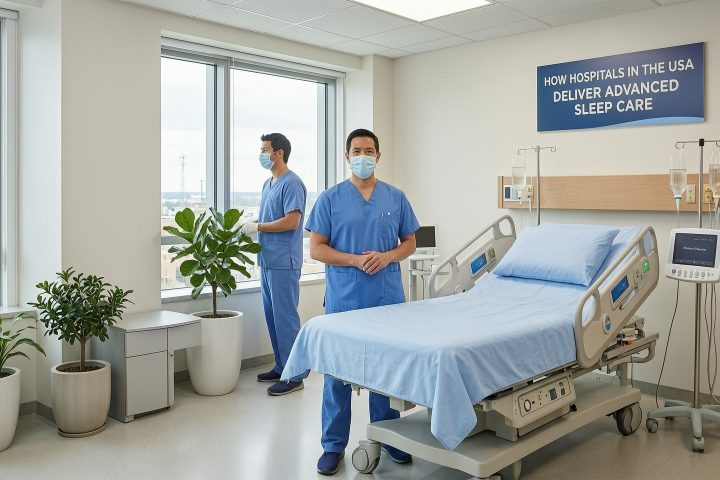
The Evolution of Sleep Medicine Within the Modern Hospital System
In an era where chronic health conditions are increasingly linked to lifestyle and physiological rhythms, the importance of restorative sleep has moved from a peripheral concern to a central pillar of public health strategy. How hospitals in the USA deliver advanced sleep care has become a critical inquiry for patients seeking relief from disorders that range from mild snoring to life-threatening respiratory failures. The modern American hospital system has undergone a significant transformation, evolving from facilities that merely treated acute physical injuries to comprehensive centers capable of diagnosing and managing complex neurological and respiratory conditions during sleep.
This shift is driven by a growing body of evidence linking untreated sleep disorders to severe comorbidities such as hypertension, heart disease, stroke, diabetes, and cognitive decline. Consequently, leading medical institutions have invested heavily in specialized infrastructure, including state-of-the-art sleep laboratories and multidisciplinary teams of board-certified physicians. The delivery of this care is no longer limited to overnight stays; it encompasses a continuum of services ranging from home-based diagnostic monitoring to intensive inpatient management for rare and complex cases. Understanding the mechanisms behind how hospitals in the USA deliver advanced sleep care requires an examination of the technological tools, clinical protocols, and regulatory frameworks that define this specialized field.
The complexity of sleep medicine demands a level of precision that general practice cannot provide. Conditions like narcolepsy, REM sleep behavior disorder, and severe obstructive sleep apnea require nuanced diagnostic approaches that often involve multiple nights of monitoring and sophisticated data analysis. Hospitals are uniquely positioned to handle these complexities because they can integrate sleep diagnostics with other critical care departments. For instance, a patient presenting with sudden onset sleep paralysis may need immediate cardiac evaluation, while a child with suspected pediatric sleep apnea may require coordination between pulmonology, otolaryngology, and neurology. This integrated approach ensures that the root causes of sleep disturbances are identified and treated holistically, rather than addressing symptoms in isolation.
Diagnostic Infrastructure: In-Lab Polysomnography vs. Home Testing
The cornerstone of advanced sleep care within the United States healthcare system is accurate diagnosis, which relies heavily on the distinction between in-laboratory polysomnography (PSG) and home sleep apnea testing (HSAT). How hospitals in the USA deliver advanced sleep care begins with determining the appropriate diagnostic pathway for each patient based on their clinical presentation, risk factors, and insurance coverage. While HSAT has gained popularity for its convenience and lower cost, making it ideal for uncomplicated cases of moderate-to-severe obstructive sleep apnea, it remains insufficient for the broad spectrum of sleep disorders that require comprehensive monitoring.
In-lab PSG represents the gold standard for diagnosing sleep disorders. These procedures take place in dedicated sleep laboratories housed within hospitals or large outpatient clinics, equipped with high-fidelity sensors that record brain waves (EEG), eye movements (EOG), muscle activity (EMG), heart rhythm (ECG), airflow, respiratory effort, and oxygen saturation levels. The presence of a trained technologist allows for real-time adjustments to sensor placement, ensuring data integrity even if a patient moves significantly or experiences technical issues. This level of detail is essential for identifying parasomnias, seizures during sleep, periodic limb movement disorder, and central sleep apnea, which are often missed by home devices.
- Comprehensive Data Collection: In-lab studies capture a full night’s architecture, allowing physicians to analyze sleep stages and identify subtle abnormalities in brain activity that home monitors cannot detect.
- Immediate Intervention: Technologists can intervene immediately if a patient experiences a severe adverse event, such as a prolonged apneic episode requiring assistance, ensuring patient safety during the diagnostic process.
- Broad Disorder Spectrum: Facilities offering in-lab PSG can diagnose a wide array of conditions beyond simple apnea, including narcolepsy, idiopathic hypersomnia, and sleep-related movement disorders.
The decision to utilize one method over the other is a critical component of how hospitals in the USA deliver advanced sleep care. Insurance guidelines, such as those from Medicare and private payers, often dictate eligibility for in-lab studies, requiring specific criteria to be met before authorizing the more expensive procedure. However, for patients with complex medical histories, such as those with heart failure, neuromuscular diseases, or obesity hypoventilation syndrome, in-lab PSG is frequently mandated to ensure a safe and accurate diagnosis. The hospital environment provides the necessary support staff and equipment to manage these high-risk patients effectively.
The Role of Technology in Diagnostic Precision
Technological advancements have revolutionized the way sleep data is collected and analyzed. Modern sleep laboratories utilize digital systems that transmit data in real-time to centralized servers, where it can be reviewed by technicians and physicians remotely. This capability enhances efficiency and allows for rapid interpretation of results, reducing the time between testing and treatment initiation. Furthermore, the integration of artificial intelligence in scoring sleep studies is becoming increasingly common, helping to flag potential abnormalities and reduce human error in the initial review process.
How hospitals in the USA deliver advanced sleep care also involves the use of actigraphy and multiple sleep latency tests (MSLT) for specific indications. Actigraphy, which involves wearing a wrist-worn device similar to a fitness tracker, helps monitor sleep-wake patterns over extended periods, providing valuable context for circadian rhythm disorders. MSLT is a daytime follow-up test used to quantify sleepiness and is essential for diagnosing narcolepsy and idiopathic hypersomnia. These advanced diagnostic tools allow clinicians to construct a detailed picture of a patient’s sleep physiology, guiding personalized treatment plans that address the unique needs of the individual.
Treatment Modalities: From CPAP Titration to Surgical Interventions
Once a diagnosis is established, the next phase of how hospitals in the USA deliver advanced sleep care focuses on effective treatment. The most common intervention for obstructive sleep apnea is Positive Airway Pressure (PAP) therapy, which includes Continuous Positive Airway Pressure (CPAP), Bi-Level PAP (BiPAP), and Adaptive Servo-Ventilation (ASV). In a hospital setting, the initiation of PAP therapy is not merely about dispensing a machine; it involves a rigorous titration process to determine the optimal pressure settings for each patient. This process, known as a “titration study,” is performed in the sleep lab where pressures are adjusted minute-by-minute based on the patient’s breathing patterns, ensuring maximum efficacy and comfort.
For patients who fail to tolerate CPAP or have complex forms of sleep apnea, alternative treatments must be considered. Hospitals in the USA deliver advanced sleep care through a multidisciplinary approach that includes oral appliance therapy, positional therapy, and pharmacological interventions. Oral appliances, fitted by dentists specializing in sleep medicine, can reposition the jaw and tongue to keep the airway open, offering a viable alternative for patients with mild to moderate apnea or those who cannot use PAP devices. Positional therapy, which encourages sleeping on the side rather than the back, is another non-invasive option that can be monitored and prescribed by hospital specialists.
- CPAP/BiPAP Titration: A supervised overnight procedure to find the exact pressure needed to eliminate apneas and hypopneas.
- Surgical Evaluation: Referral to otolaryngologists for procedures such as uvulopalatopharyngoplasty (UPPP), maxillomandibular advancement, or hypoglossal nerve stimulation.
- Nasal Surgery: Correction of anatomical obstructions like deviated septums or turbinate hypertrophy to improve airflow.
- Weight Management Programs: Integrated nutrition and exercise counseling for patients whose apnea is exacerbated by obesity.
- Behavioral Therapy: Cognitive Behavioral Therapy for Insomnia (CBT-I) for patients suffering from chronic sleep maintenance issues.
Surgical interventions represent the frontier of advanced sleep care for patients with anatomical abnormalities that cannot be managed with conservative therapies. Hospitals offer a range of surgical options, from minimally invasive procedures to major reconstructive surgeries. Hypoglossal nerve stimulation, a relatively new technology, involves implanting a device that stimulates the nerve controlling the tongue to prevent it from collapsing during sleep. This treatment is typically reserved for patients who meet strict criteria and have failed CPAP therapy. The availability of such advanced surgical options underscores the capacity of US hospitals to provide cutting-edge solutions for difficult-to-treat sleep disorders.
Multidisciplinary Collaboration in Complex Cases
The complexity of sleep disorders often necessitates collaboration across various medical specialties. How hospitals in the USA deliver advanced sleep care is exemplified by the formation of multidisciplinary sleep committees where pulmonologists, neurologists, cardiologists, psychiatrists, and surgeons convene to discuss challenging cases. This collaborative model ensures that all aspects of a patient’s health are considered when formulating a treatment plan. For example, a patient with both severe sleep apnea and congestive heart failure requires careful coordination between sleep specialists and cardiologists to optimize both respiratory and cardiac function without compromising either.
Pediatric sleep care presents another area where hospital-based multidisciplinary teams are vital. Children with sleep disorders often present with different symptoms than adults, such as behavioral problems, hyperactivity, or growth delays. Diagnosing and treating sleep apnea in children may involve ENT surgeons, orthodontists, and developmental pediatricians working together to address airway obstruction and associated developmental issues. The hospital setting provides the necessary resources to coordinate these diverse expertise areas, ensuring that young patients receive comprehensive care tailored to their developmental stage.
Specialized Departments and Patient Pathways
The organizational structure of sleep services within US hospitals varies, but the most effective models feature dedicated sleep departments or centers that operate as distinct entities within the larger healthcare system. These centers serve as hubs for referrals, diagnostics, and treatment, creating a streamlined pathway for patients. How hospitals in the USA deliver advanced sleep care is heavily dependent on the efficiency of this referral network and the accessibility of services for both primary care providers and direct patient access. Large academic medical centers often lead the way in establishing these specialized departments, serving as regional referral centers for complex cases.
The patient journey typically begins with a referral from a primary care physician or a specialist who suspects a sleep disorder. Upon contact with the sleep center, patients undergo a triage process to determine the appropriate level of care. This may involve scheduling a home sleep test, an in-lab study, or a consultation with a specialist. Once the diagnosis is confirmed, the care team develops a personalized treatment plan, which may include medication management, device fitting, or surgical planning. Follow-up appointments are scheduled to monitor progress, adjust therapies, and address any complications or adherence issues.
| Service Type | Description | Typical Setting | Best Suited For |
|---|---|---|---|
| Home Sleep Apnea Test (HSAT) | Portable device measuring airflow, effort, and oxygen levels at home. | Patient’s Home | Uncomplicated Obstructive Sleep Apnea (OSA) |
| In-Lab Polysomnography (PSG) | Full-night monitoring of brain, heart, and breathing functions. | Hospital Sleep Lab | Complex OSA, Narcolepsy, Parasomnias, Central Apnea |
| Titration Study | Determining optimal pressure settings for PAP therapy. | Hospital Sleep Lab | New PAP Candidates, Complex Respiratory Issues |
| Multiple Sleep Latency Test (MSLT) | Daytime nap tests to measure sleepiness and diagnose narcolepsy. | Hospital Sleep Lab | Narcolepsy, Idiopathic Hypersomnia |
| Surgical Consultation | Evaluation for anatomical correction or nerve stimulation. | Hospital OR/Consult Room | CPAP Failure, Anatomical Obstruction |
The table above illustrates the variety of services available and how they fit into the broader scope of how hospitals in the USA deliver advanced sleep care. Each service type serves a specific purpose and requires a different level of resource allocation and expertise. By offering this full spectrum of services, hospitals can cater to the diverse needs of their patient population, ensuring that no case is too complex to be managed effectively.
Cost, Insurance Coverage, and Access Challenges
A significant factor influencing how hospitals in the USA deliver advanced sleep care is the financial landscape, characterized by a complex mix of insurance coverage, out-of-pocket costs, and varying reimbursement rates. The cost of sleep studies and treatments can be prohibitive for many patients, leading to disparities in access to care. While Medicare covers a wide range of sleep services for eligible beneficiaries, private insurance plans often have strict prior authorization requirements and varying coverage limits. This creates a barrier for patients who may need advanced diagnostics but lack the necessary financial resources or insurance benefits.
Hospitals navigate this challenge by employing dedicated billing and insurance coordinators who assist patients in understanding their coverage and navigating the approval process. These professionals play a crucial role in ensuring that patients receive the care they need without facing unexpected financial burdens. Additionally, many hospitals offer financial assistance programs or payment plans to help low-income patients afford essential sleep treatments. The goal is to make advanced sleep care accessible to all, regardless of their economic status.
Despite these efforts, access to specialized sleep care remains uneven across the country. Rural areas often suffer from a shortage of sleep specialists and sleep laboratories, forcing patients to travel long distances for diagnosis and treatment. To address this issue, some hospitals are exploring telemedicine solutions, allowing patients to consult with sleep specialists remotely and even conduct certain aspects of their care via digital platforms. While telemedicine cannot replace the need for in-person polysomnography, it can facilitate initial consultations, follow-up visits, and device management, thereby expanding the reach of sleep care services.
The Future of Sleep Medicine in American Healthcare
Looking ahead, the trajectory of how hospitals in the USA deliver advanced sleep care points toward greater integration with digital health technologies and a more proactive approach to preventive medicine. Wearable devices and smartphone applications are becoming increasingly sophisticated, capable of detecting sleep disturbances and providing preliminary data to clinicians. While these tools are not yet a replacement for clinical-grade diagnostics, they hold promise for early detection and continuous monitoring of sleep health.
The future will likely see a shift towards value-based care models, where hospitals are incentivized to improve patient outcomes rather than simply providing services. This could lead to more aggressive screening for sleep disorders in primary care settings, earlier interventions, and better long-term management of chronic conditions related to poor sleep. As research continues to uncover the deep connections between sleep and overall health, the role of hospitals in delivering advanced sleep care will only become more critical. The ability to diagnose and treat sleep disorders effectively will be seen as a key indicator of a healthcare system’s quality and responsiveness.
Frequently Asked Questions
What is the difference between a home sleep test and an in-lab sleep study?
A home sleep test is a simplified diagnostic tool used primarily for detecting obstructive sleep apnea in patients with a high probability of the condition. It measures limited parameters like airflow and oxygen levels. An in-lab sleep study, or polysomnography, is a comprehensive test that monitors brain waves, eye movements, muscle activity, and heart rhythm. In-lab studies are necessary for diagnosing complex disorders like narcolepsy, parasomnias, and central sleep apnea, and they are conducted under the supervision of trained technicians.
Do hospitals offer treatment for insomnia?
Yes, hospitals and sleep centers offer specialized treatment for insomnia, particularly Chronic Insomnia Disorder. The gold standard treatment provided by sleep specialists is Cognitive Behavioral Therapy for Insomnia (CBT-I), which addresses the thoughts and behaviors that cause sleep problems. While medications may be prescribed temporarily, hospitals focus on long-term behavioral strategies to improve sleep hygiene and restore natural sleep patterns.
Is sleep apnea surgery covered by insurance?
Most insurance plans, including Medicare, cover sleep apnea surgery if specific criteria are met. Typically, patients must first demonstrate that they have tried and failed to tolerate CPAP therapy. The surgery must be deemed medically necessary to treat the obstructive sleep apnea. Prior authorization is almost always required, and the specific procedure must be approved by the insurance provider before the surgery takes place.
Can children be diagnosed with sleep disorders in a hospital?
Absolutely. Pediatric sleep disorders are a major focus of hospital sleep programs. Children can experience sleep apnea, restless leg syndrome, narcolepsy, and parasomnias just like adults. Diagnosis often requires a pediatric-specific approach, sometimes involving parents during the sleep study to ensure the child feels comfortable. Treatment plans are tailored to the child’s age and developmental needs.
How long does a typical sleep study last?
A standard in-lab sleep study typically lasts one full night, usually starting in the evening around 9:00 PM and ending in the morning around 6:00 AM. If a Multiple Sleep Latency Test (MSLT) is required, this is a separate daytime procedure consisting of five nap opportunities spread throughout the day. The entire process, from arrival to departure, can take up to 12 hours depending on the specific tests ordered.